

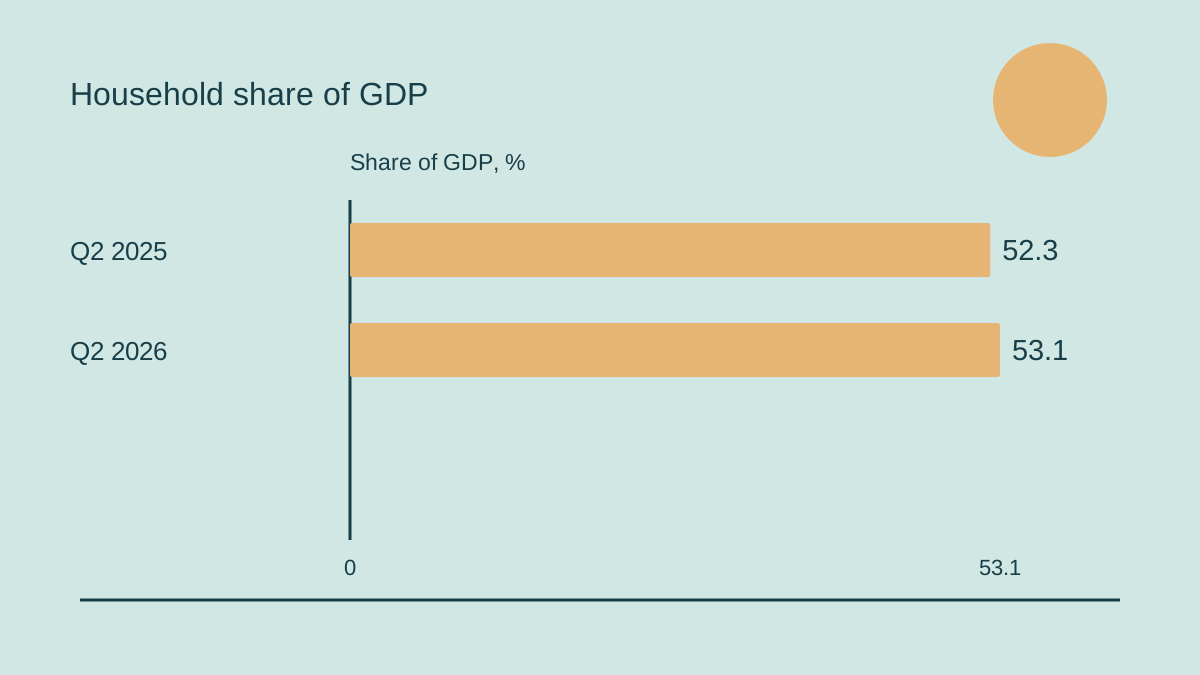
Household expenditure represented 53.1% of gross domestic product in Russia in the second quarter of 2026, compared with 52.3% a year earlier. Interfax reported the figures on October 2, citing Rosstat's report on the use of GDP. The measure describes a share of the economy. It does not mean that expenditure by each household increased by the same amount.
The composition of GDP changed
The same report puts the government consumption share at 19.5%, against 20.0% in the second quarter of 2025. Gross capital formation accounted for 23.3%, down from 25.2%. The structural change therefore extended beyond household spending: the relative weight of capital formation decreased while the household expenditure share rose. Both comparison periods are second quarters, so the figures do not mix a quarterly share with an annual one.
- Household expenditure: 52.3% in the second quarter of 2025 and 53.1% in the second quarter of 2026.
- Government consumption: 20.0% and 19.5%, respectively.
- Gross capital formation: 25.2% and 23.3%, respectively.
Shares and growth rates answer different questions
A structural measure describes the place of a component within total GDP. Measuring the change in that component itself requires a separate series in comparable prices or another clearly identified basis. A share can rise under different combinations of changes in the numerator and in the economy's total value. These figures should consequently not be converted directly into claims about purchasing power, household income or the sales volume of an individual business.
The difference between 53.1% and 52.3% is 0.8 percentage point. It is a change in a share, rather than a statement that expenditure increased by 0.8%. Similarly, a lower capital formation share does not independently establish the change in each investment program. The aggregate comprises several elements, and decisions made by individual companies can differ substantially from the broader picture.
What the release can tell businesses
For businesses serving consumers, the publication provides a reference point for evaluating the economy's composition. Purchasing and production plans still need to be compared with a company's own orders, product mix and payment terms. An aggregate share does not reveal how expenditure is distributed among goods, services and groups of customers. Nor does it replace evidence about seasonality, regional differences or changes in prices.
When reviewing the next statistical release, readers should preserve the same period and definition. Comparing a quarterly share with an annual total without explanation can create a false impression of acceleration or deceleration. The published GDP structure provides a basis for further examination, while conclusions about an individual market need more detailed evidence. All values presented here belong to the second-quarter report published on October 2, 2026.





















ADI News
Leave a comment