

For travellers comparing Uzbekistan cultural and regional tour itineraries, the country's Silk Road cities, living crafts and varied landscapes offer several distinct routes. Uzbekistan's national tourism programme brings together international arrivals, regional travel services and the cultural places around which journeys are organised. Its scope extends from aircraft and tour operators to family travel, craft traditions and historic urban neighbourhoods, alongside routes through mountain villages, lake shores and the former Aral Sea port of Muynak.
A presidential decree dated May 15, 2025 set out tourism measures for 2025–2026. The programme covered aircraft, tour operators, regional planning and domestic travel alongside targets for international arrivals and service exports. Historic cities, craft workshops and landscapes supply the destinations around which individual journeys are organised. Transport and accommodation provide other parts of those routes.
1. The tourism programme announced in 2025
Uzbekistan’s May 2025 tourism programme set end-of-year targets of 15.8 million foreign tourists and $4 billion in tourism-service exports. The decree was dated May 15, 2025, and UzA journalist Muhayyo Toshqorayeva covered the measures on May 21. The two figures were programme objectives for the year, with visitor arrivals and export income measured through different units.
Agreements covered the purchase of fourteen Airbus aircraft and the lease of five, alongside a plan to create 378 additional tour operators. Other measures included a thirty-day visa-free arrangement for citizens of Bahrain, Kuwait and Oman from Jun 1, 2025. Regional tourism programmes were to be prepared annually by Nov 30, with International Tourism Week in the third week of November.
Domestic travel formed another part of the programme. From June 2025, the second weekend of each month was to be designated for family and team travel under the national initiative. The measure concerned residents travelling within Uzbekistan, alongside the programme’s international visitor plans. Families and groups have their own routes, transport and accommodation arrangements within those regional journeys.
Regional measures described before the decree
At the Apr 9, 2025 presidential meeting on regional tourism, officials put investment in the sector at $6.5 billion over the preceding eight years, with 130,000 hotel rooms created. Those figures cover the stated multi-year period. Accommodation formed one part of the wider discussion of services, local tourism opportunities and the organisation of trips in individual regions.
The April meeting used a prospective annual visitor figure of fifteen million and a tourism-service export target of $4 billion. The May decree programme set a visitor target of 15.8 million. These targets belong to their respective announcements. Both stages included work on regional tourism opportunities and services, alongside the national objective for income from tourism-service exports.
Accommodation, air transport and travel organisation occupied different parts of the expansion programme. Aircraft agreements concerned aviation provision, the tour-operator plan concerned businesses assembling journeys, and regional programmes concerned destinations and local services. The May measures were plans and arrangements announced at that stage. Each operational development has its own implementation period within the wider programme.
2. Travel services around the historic cities
A domestic tourism fair took place at Registan Square in Samarkand on Mar 29, 2025. Tour operators, travel agents and representatives of hotels, hostels and guesthouses attended. Handicrafts, national costumes and a performance by the Chavki folklore and ethnographic group formed part of the event. Cultural displays and service discussions shared the setting of the historic square.
Rustam Kobilov, deputy hokim of Samarkand region, outlined plans for five million foreign tourists and seven million local tourists that year. These were regional ambitions for 2025. Participants at the fair discussed service quality, tourist flows and cooperation between businesses. Accommodation providers and travel organisers contributed different services within the region’s tourism activity.
Operators assemble itineraries, accommodation providers receive overnight guests, and craft producers or performers contribute particular cultural encounters. These groups met during the Samarkand fair. Their services occupy different stages of a visitor’s journey, from planning and arrival to meals, stays and guided visits. A regional programme can connect those stages through its route and the activities booked for the group.
The Silk Roads as a network
The Silk Roads were interconnected land and maritime routes carrying textiles, spices, foodstuffs, tools and works of art. Travellers also exchanged knowledge, languages and religious beliefs. Cities along the network provided places for commerce and learning. Modern journeys between Uzbek heritage cities encounter buildings and practices from several periods within that much wider history of movement and exchange.
Caravanserais supplied accommodation, food and places to exchange goods before travellers continued their journeys. These facilities expanded in Central Asia from the tenth century onward. Their courtyards and rooms served the movement of people and merchandise between settlements. Historic trading spaces form one part of cultural routes today, alongside religious buildings, domestic architecture and workshops with their own histories.
A contemporary cultural itinerary can introduce several aspects of that network without suggesting that all its monuments belong to the same century. Urban layouts, religious buildings, domestic architecture and workshops have different histories. The distinction is especially useful when a journey combines Samarkand, Bukhara and Khiva within one programme.
3. Samarkand, Bukhara and Khiva have distinct histories
Samarkand: monuments and successive urban layers
Samarkand’s history reaches back to ancient Afrasiab and spans successive periods of urban development. Timurid construction in the fourteenth and fifteenth centuries added major monuments to the city. Archaeological ground, religious complexes and later neighbourhoods occupy different parts of that historical setting. The city’s World Heritage property recognises several components within this wider urban history.
The Registan ensemble, Bibi-Khanum Mosque, Shahi-Zinda, Gur-Emir and Ulugh Beg’s observatory are among Samarkand’s heritage sites. Afrasiab, the medieval city and later urban development form separate components. A journey within the city can therefore include archaeological remains, monumental architecture and scientific history, with transfers and walking between named places rather than one continuous monument.
The observatory introduces scientific history alongside monumental architecture. Religious complexes, archaeological remains and the urban landscape offer other subjects for interpretation. A city visit can therefore be organised around more than a sequence of decorated facades, while remaining focused on documented buildings and their settings.
Bukhara: a historic urban ensemble
Bukhara’s historic centre preserves a medieval Central Asian urban setting. Its streets and buildings retain relationships within the city’s fabric, alongside individual monuments such as the Ismail Samani tomb. Mosques, madrasas, trading structures and domestic spaces form parts of that setting. The World Heritage property concerns the urban ensemble as well as the history and architecture of its major buildings.
Bukhara's surviving madrasas, mosques and trading structures record different periods of construction. The historic centre combines monumental buildings with the spaces between them. Streets and neighbourhood relationships are consequently part of the heritage account, rather than merely access routes to standalone buildings.
That urban emphasis distinguishes Bukhara from a museum arranged as a collection of separate objects. A visitor moves through an architectural setting in which buildings retain relationships to adjoining streets and public spaces. Interpretation can address those relationships alongside dates, patrons and the functions of individual structures.
Khiva: the inner town of Itchan Kala
Itchan Kala is the fortified inner town of the Khiva oasis. It was a stopping place for caravans before the desert crossing towards Persia. Walls enclose mosques, madrasas, palaces and domestic buildings within a coherent urban ensemble. Streets connect residential courtyards with religious, educational and royal spaces, giving the historic town a different layout from other destinations on a regional journey.
Djuma Mosque contains a timber-column interior, while houses with enclosed courtyards preserve domestic architecture. Khorezmian builders contributed to the town’s building traditions. Later monuments were integrated into its older streets and spaces. Carved supports, porticoes and enclosed rooms appear across buildings with different functions, from household reception areas to the covered communal space inside the mosque.
These features give Khiva its own place in a regional journey. Samarkand's successive urban layers, Bukhara's historic centre and Khiva's inner town should each be presented through their particular geography and history. The shared Silk Road association does not erase those differences.
4. Living crafts extend the cultural route
Margilan is a historic centre for atlas and adras fabrics. The Crafts Development Centre’s safeguarding work entered UNESCO’s Register of Good Safeguarding Practices in 2017. That work concerns teaching and maintaining textile technologies. Training, exhibitions and public craft events form parts of the centre’s activity, with individual makers passing knowledge through demonstration and practical work.
The centre was established in 2007 through a local initiative to maintain traditional production knowledge. Its activities include training, exhibitions, craft fairs, textile festivals and the publication of safeguarding materials. Community participation and the transmission of skills are central to the description.
A textile encounter can introduce processes and people alongside finished fabrics. The documented subject is the continuity of making skills: how knowledge is taught, practised and shared. UNESCO's recognition concerns safeguarding work; it is not a certification of every workshop, product or visitor activity in the city.
Ceramics as work, learning and everyday objects
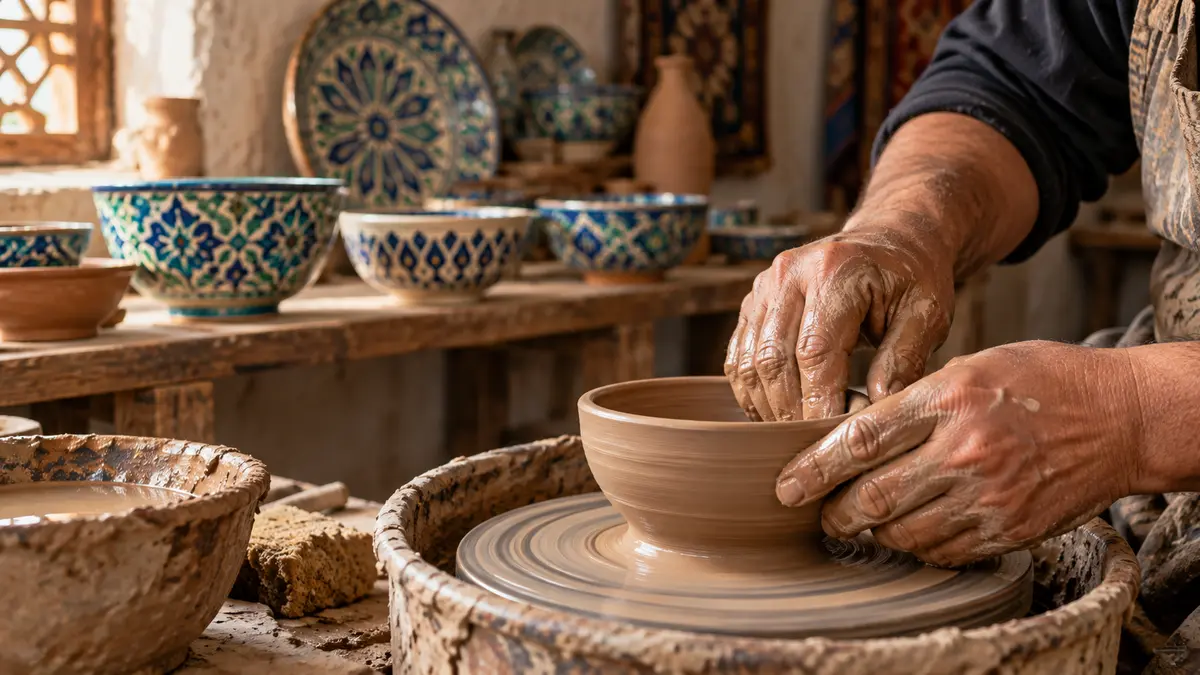
Ceramic arts in Uzbekistan entered UNESCO’s Representative List of the Intangible Cultural Heritage of Humanity in 2023. Forms include containers, ovens, jugs and toys used in everyday life. Preparing clay, shaping objects and firing them involve knowledge passed through teaching and practice. Finished ceramic pieces have uses in households and trade alongside their appearance in craft displays and visitor programmes.
Families traditionally passed ceramic skills between generations. Learning also takes place through observation, participation and independent practice, with community groups and educational institutions providing other settings. Festivals, fairs and exhibitions present makers’ work to wider audiences. A craft encounter can introduce one stage of production or a finished object, depending on the activity arranged with the workshop.
Ceramic production and sales provide livelihoods within participating communities. A workshop contains materials, tools and work in progress as well as completed pieces. Makers prepare objects for use or sale, while teaching introduces another activity in the same craft setting. Visitors encounter particular parts of that production according to the demonstration, lesson or display included in their programme.
Workshop visits differ from simply selecting souvenirs from a display. When a programme includes a demonstration, its description should identify whether visitors observe, participate or only view completed work. The UNESCO records document traditions and learning practices, but do not establish the inclusions of a particular commercial booking.
5. Food and hospitality belong to the same landscape
Palov is a rice-based dish prepared with meat, spices and vegetables in communities across Uzbekistan. It is eaten as an ordinary meal and served during hospitality, celebration, mutual assistance and remembrance. Its cultural practice includes preparation and sharing as well as ingredients. Palov culture and tradition entered UNESCO’s Representative List in 2016.
Knowledge of palov passes through families, peer groups, community institutions and vocational education. Informal learning and master-apprentice relationships provide different settings for acquiring cooking skills. Preparing ingredients, managing heat and serving food involve practical work. Sharing the dish brings cooks and guests together at a table, within occasions that range from everyday meals to larger gatherings.
Palov is prepared for births, engagements, weddings and commemorations, alongside meetings of friends, colleagues, neighbours and relatives. These occasions place the dish within social relationships and family calendars. A visitor meal has its own setting and hosts, while a cooking demonstration introduces selected stages of preparation. Private ceremonies and booked food activities have different participants and arrangements.
A food experience offered to visitors is therefore a specific activity within a broader tradition. A restaurant meal, a cooking demonstration and a meal hosted in a household have different settings and levels of participation. Describing the actual arrangement preserves those distinctions without implying that a visitor has taken part in a private ceremony.
6. Mountain, lake and Aral-area journeys broaden the map
Nuratau and the mountain setting
The Nuratinsky reserve lies in Jizzakh region in the central Nuratau ridge. Established in the 1970s, it protects Severtsov’s sheep and mountain walnut diversity. Its mountain setting differs from the historic urban centres, with terrain and vegetation forming part of the landscape. Conservation activity concerns the reserve’s species and habitats alongside visitor routes in the wider area.
Mountain villages, archaeological features and local landscapes lie among points of interest around Nuratau. A regional itinerary can connect settlements with terrain beyond the historic cities. Villages provide household and agricultural settings, while protected ground has its own conservation role. The route and activities for a particular visit determine which places are included and how visitors move between them.
Aydarkul and desert routes
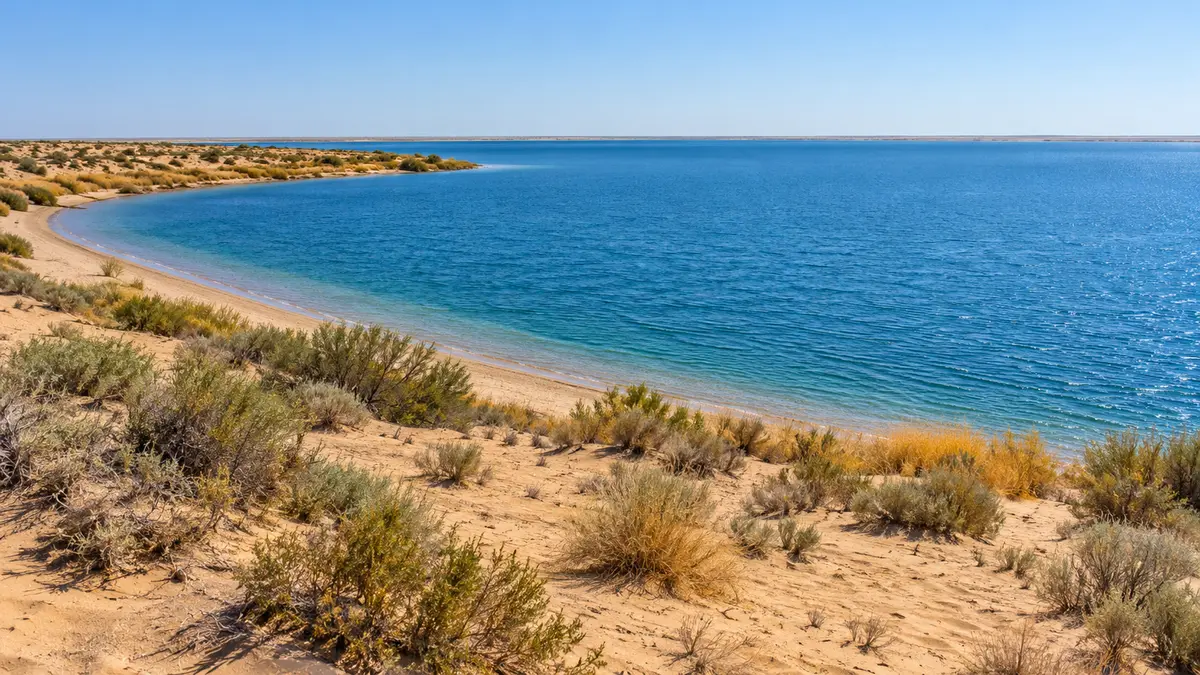
Lake Aydarkul lies within the Kyzylkum desert setting, with shores extending across parts of Navoi and Jizzakh regions. The lake adds water-based recreation to a landscape associated with desert travel. Shores, open water and dry surrounding ground form different parts of its setting. It can appear alongside mountain and village stops within a regional programme.
The lake and the Nuratau mountains are separate geographical features. A programme combining them needs an actual route connecting its stops, accommodation and activities. Their appearance in tourism descriptions does not establish driving times, access conditions or the facilities included in any particular package.
Muynak and the former sea port
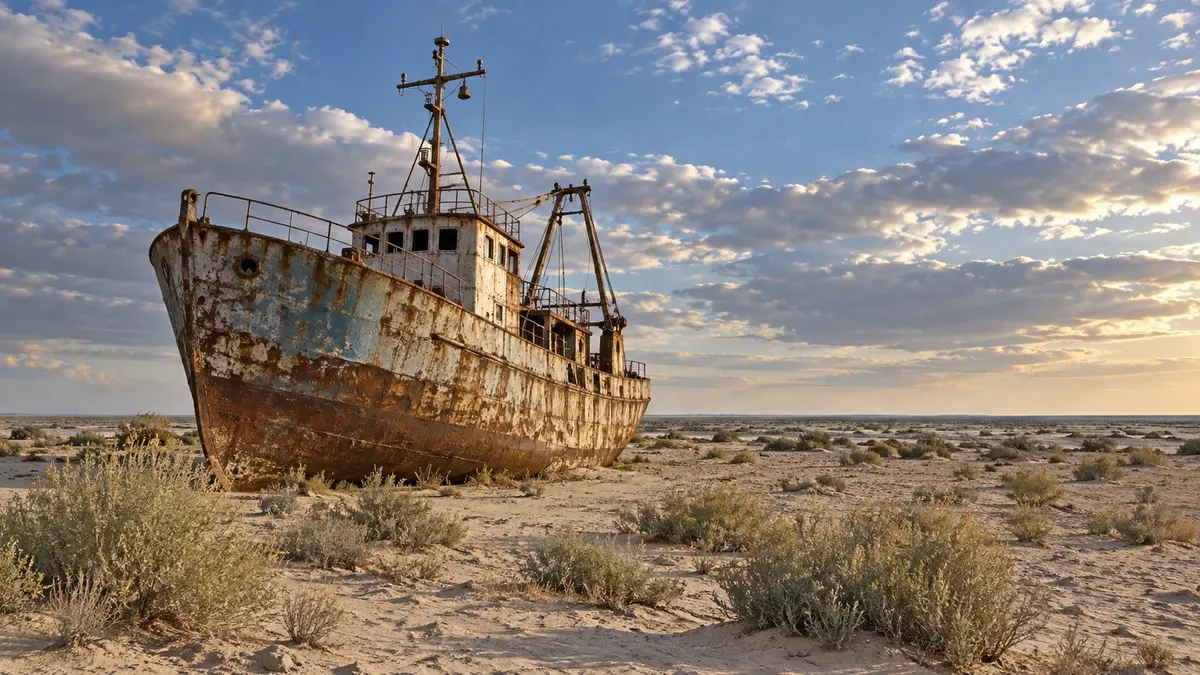
Muynak was a port associated with the Aral Sea and the Amu Darya delta. The retreat of the sea changed its fishing landscape, leaving ships on dry ground. Museum displays and remaining vessels relate to that history. The town occupies a different part of Uzbekistan from the central heritage cities, with its environmental and economic past forming the subject of the visit.
The Aral area, Kyzylkum desert, Nuratau and Aydarkul provide destinations beyond Uzbekistan’s historic cities. Mountains, lakes, protected areas and dry landscapes occupy different parts of the country. A regional journey connects selected places through its actual route and transport. Their terrain, settlement patterns and historical subjects give each stop its own setting within the wider itinerary.
Muynak’s remaining ships stand within a former fishing landscape changed by the retreat of the Aral Sea. Museum displays introduce the port’s history and the transformation of its surroundings. The hulls, dry ground and town occupy different parts of that setting. A visit can encounter the physical remains alongside interpretation of the former fishing economy and changing shoreline.
7. Reported results and the services a traveller books
Uzbekistan received more than eleven million tourists in 2025, and tourism-service exports reached $4.8 billion, according to the presidential presentation on Jan 15, 2026. At that reporting point, citizens of ninety-four countries were eligible for visa-free travel. The visitor and export figures concern 2025 results reported at the meeting, while entry status has its own date and applicable arrangements.
Plans discussed in January 2026 included regional tourism products, digital services and marketing. A proposed 6.6-kilometre Samarkand Heritage Trail would link the Registan, Bibi-Khanum, Shahi-Zinda and Ulugh Beg observatory sites. A new Silk Road museum was another project. These were development proposals at the time of the presentation, alongside the results reported for the preceding year.
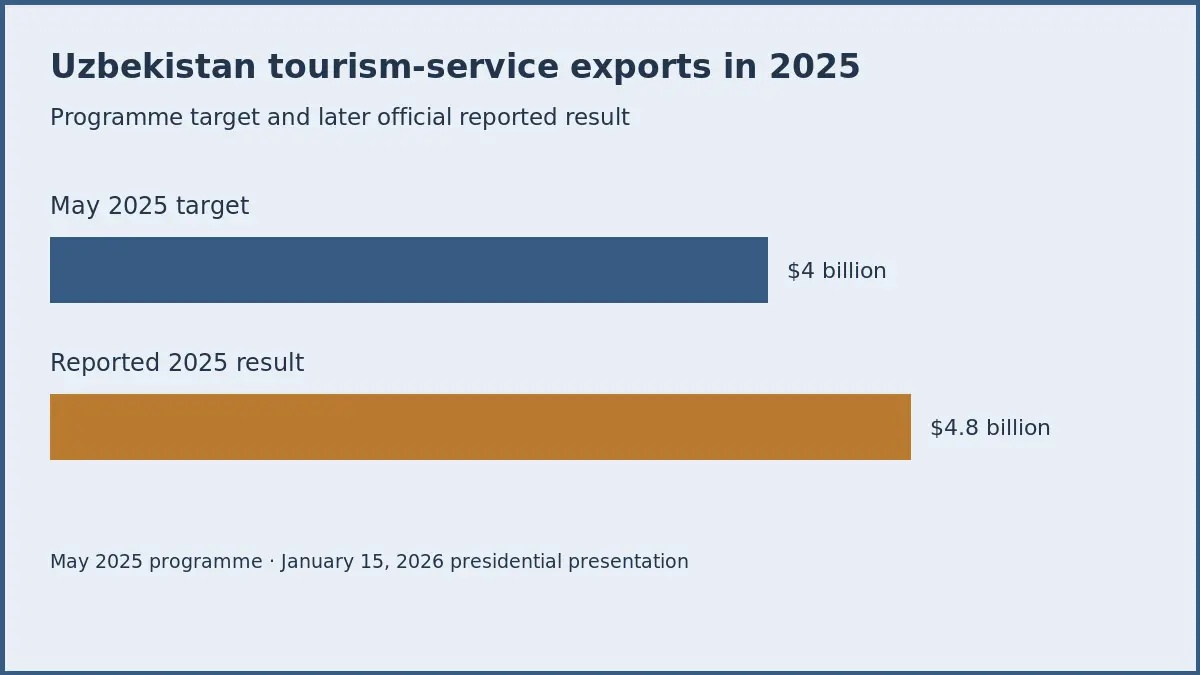
The $4 billion export target in the May 2025 programme and the $4.8 billion result reported for 2025 describe the same income category at different stages. The target was prospective; the later value was an official reported result. The chart retains those labels. It does not reconcile every visitor target or implementation measure within the broader tourism programme.
From regional subjects to a defined itinerary
Aba Travel's collection illustrates the variety of programme formats. Its listing includes classic city routes, Fergana Valley crafts, rural stays, religious heritage, desert experiences and an Aral Sea journey. The advertised durations range from a two-day Aral programme to a seventeen-day wider-country itinerary.
ABA Travel’s programmes have individual routes, durations and service arrangements. A classic city journey, a rural stay and an Aral programme involve different sequences of destinations. Individual, family and group formats can visit the same place with different transport or accommodation. The booking identifies the visits, transfers and time assigned to each stop within the selected itinerary.
A clear programme description should make those arrangements easy to identify. The following points organise a comparison without assuming that every listed service is included:
- Route: the cities, villages and landscape stops included, with the sequence of travel.
- Duration: the number of days and nights, and the time allocated to visits and transfers.
- Accommodation: the named type of lodging, room arrangements and any rural or yurt stays.
- Cultural activities: the distinction between a guided visit, a demonstration and practical participation.
- Transport: the services actually booked, rather than transport improvements announced nationally.
- Inclusions: meals, admission charges, guides and activities covered by the stated programme.
Uzbekistan’s tourism programme includes transport, accommodation and regional services around historic cities, living crafts and landscapes. Samarkand, Bukhara and Khiva have distinct architectural settings, while workshops and food encounters introduce people and practices. Lakes, mountains and the former Aral port extend the route beyond the cities. A booked itinerary connects particular destinations and activities through its own duration and service arrangements.




















ADI News
Leave a comment