
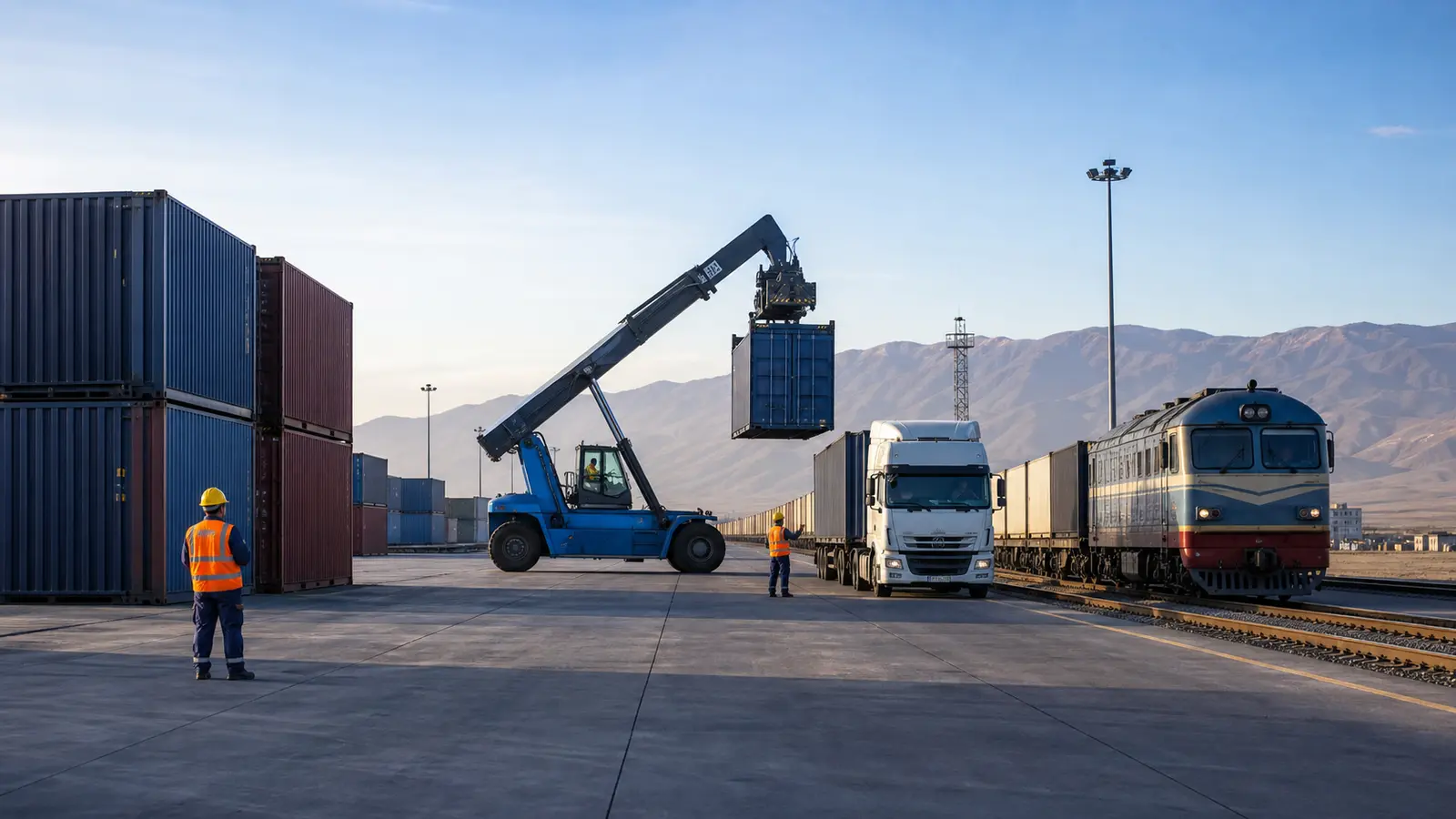
Regional supply chains are moving from an operational topic to a board-level question. Companies once treated transport routes mainly as a cost to be negotiated after production and sales plans were established. Recent experience has shown that route design can determine whether those plans are credible. A corridor influences delivery time, inventory, access to components, customer confidence and the speed with which a business can respond to a change in demand. For companies serving Central Asia and neighboring markets, the growing range of rail, road and intermodal options is creating choices that deserve the same attention as a factory location or distribution partnership.
Shorter does not always mean simpler. A regional route may cross several customs systems, rely on terminals with different capacity and require coordination among carriers that use separate information standards. The strategic advantage appears when the network is managed as one flow rather than a sequence of unrelated contracts. Businesses are beginning to compare routes using total lead-time variability, visibility and recovery options alongside the quoted freight rate. They are also assigning clear responsibility for intervention. A delayed container creates less damage when teams know who can change a mode, approve additional cost or redirect inventory before the customer deadline is missed.
The development has implications for working capital. Reliable regional corridors can reduce the buffer stock required to protect service, releasing cash for equipment, sales or product development. They can also make smaller and more frequent shipments economical, which helps companies test demand without committing to a large volume. The benefit depends on data quality. Estimated arrival times, customs status and warehouse availability must be visible to commercial and financial teams, not only to logistics specialists. When information reaches the whole business, purchasing can adjust orders, sales can set realistic expectations and treasury can understand how physical movement affects cash.
No single network design will fit every product. Critical components may justify two routes, low-value bulk goods may favor scale, and time-sensitive products may need capacity reserved in advance. The practical direction is segmentation. Companies identify the flows that protect revenue, the flows that can tolerate delay and the points where an alternative produces real resilience. Regional supply chains then become more than a response to disruption. They become a platform for entering nearby markets with controlled risk, learning from customers quickly and building an operating presence that can grow with demand.







ADI News
Leave a comment