
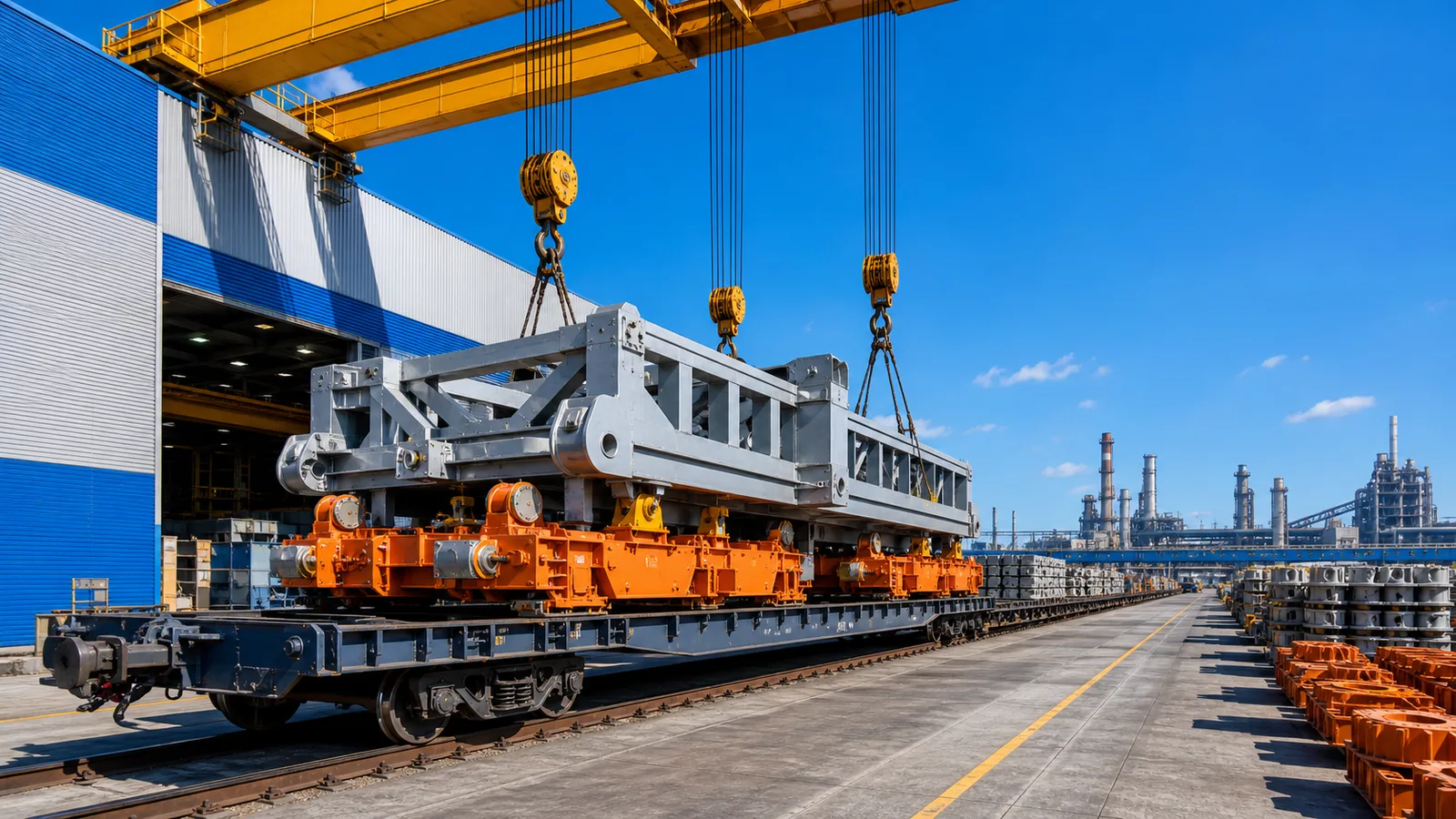
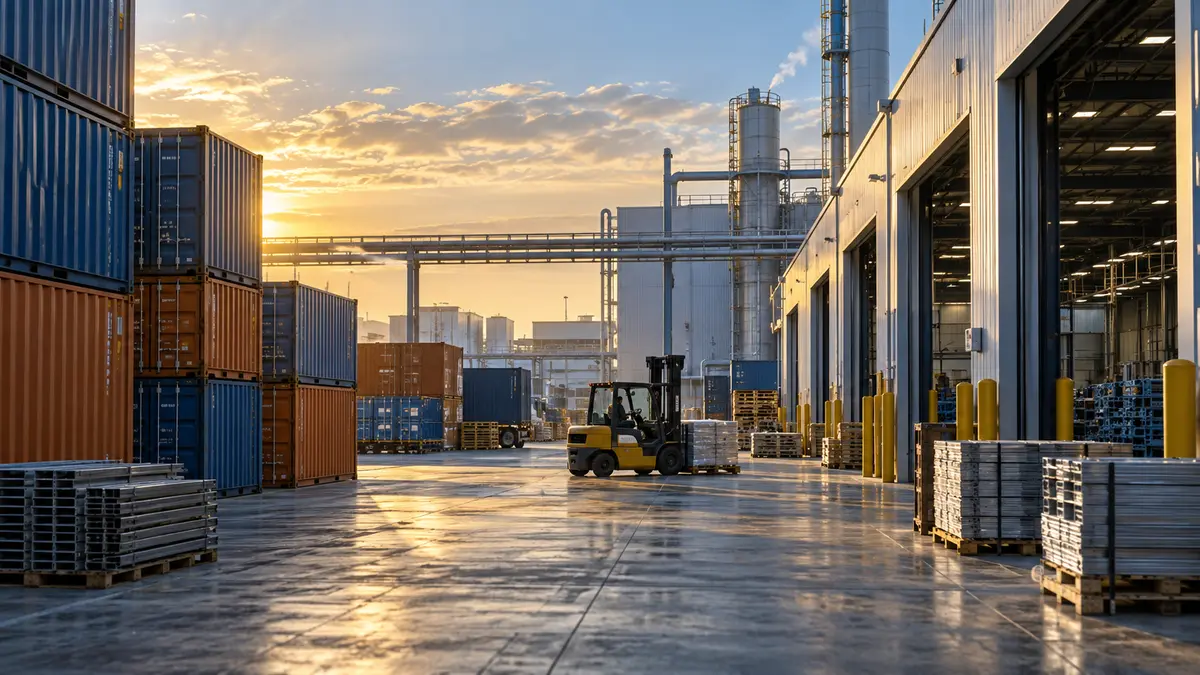
Magnitogorsk Iron and Steel Works has started production at a new heavy-engineering workshop intended to reduce shortages of specialised machinery for mining and metals companies. The facility will make lifting and transport equipment as well as non-standard heavy machinery. Business FM reported the launch on July 16, 2025.
The workshop's planned capacity exceeds 10,000 tonnes of products a year. It operates in cooperation with a recently built foundry and the forge-and-press section of the mechanical shop. That connection matters because large industrial machines require a sequence of castings, forgings, machining, welding, assembly and load testing rather than one isolated production operation.
Building machinery beside the steel supply
Locating heavy engineering within a major steel complex creates a practical industrial loop. Designers can specify large cast and forged parts, production teams can coordinate material grades and dimensions, and the finished equipment can be tested near the operations it is expected to serve. Shorter internal routes can reduce handling costs and make quality problems easier to trace.
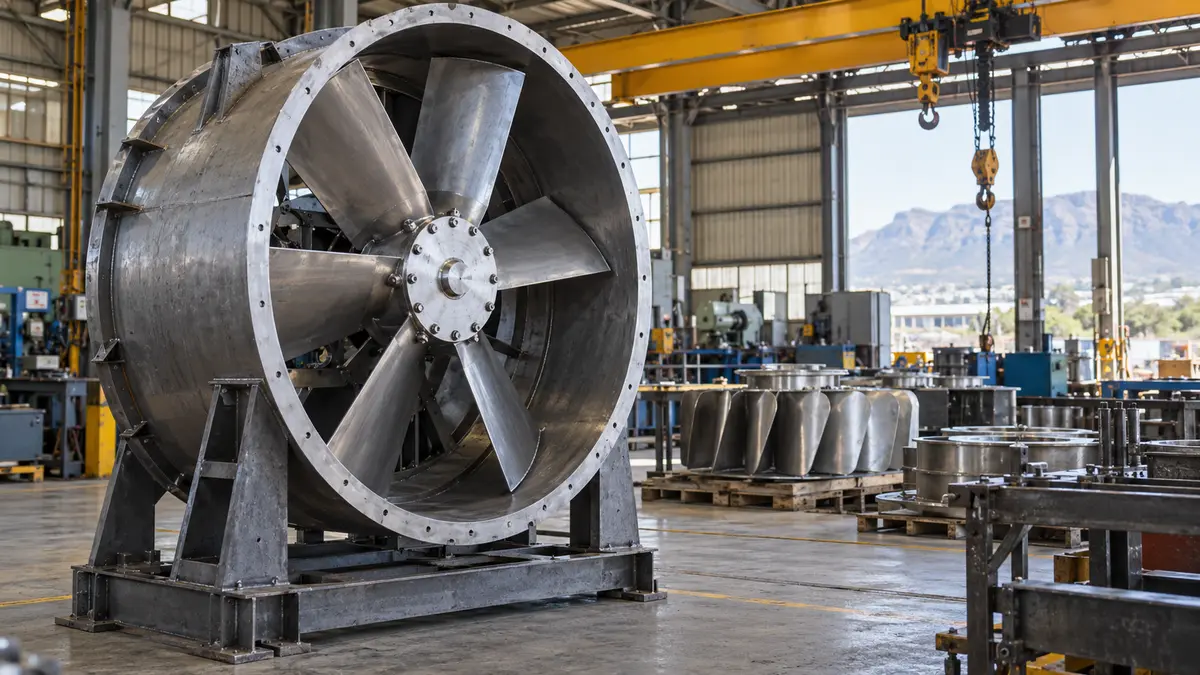
The product range is broader than one standard machine. Lifting and transport equipment includes structures and mechanisms that move heavy loads through workshops, warehouses and processing lines. Non-standard engineering covers custom systems built for a particular furnace, mill, mine or maintenance task. Such orders are usually produced in small series and demand close cooperation between customer and manufacturer.
The production chain combines
- Foundry capacity for large and complex metal castings.
- Forging and pressing for components that must withstand high loads.
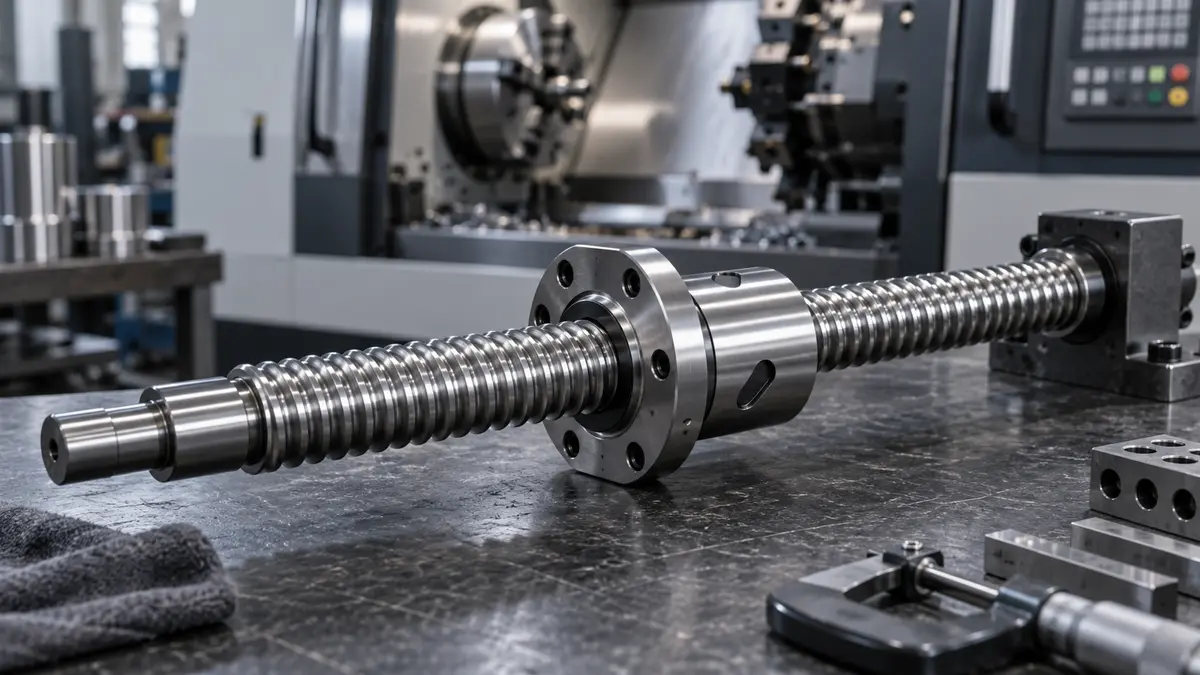
- Machining and welding to achieve final dimensions and structural integrity.
- Assembly, inspection and testing of complete industrial systems.
MMK expects the new output to help reduce an equipment deficit from 2026. The timing suggests that the first months will be used to stabilise processes, qualify products and form an order schedule. A nominal annual capacity is therefore a ceiling, not an immediate sales forecast. The commercial result depends on how quickly the workshop converts technical capability into accepted deliveries.
Import substitution becomes an engineering service
Replacing unavailable machinery is not simply a matter of copying a drawing. Equipment must fit existing foundations, power systems, safety rules and maintenance practices. It may need to handle different loads or integrate with controls installed decades earlier. A local producer can compete through access to the customer site, faster modification and a shorter spare-parts chain.
The new workshop also gives MMK an internal customer with real operating conditions. Steelmaking assets impose heat, dust, vibration and continuous-duty demands. Successful equipment can build a performance record before being offered more widely to mining and metals businesses in Russia.
Indicators to watch after launch
- The share of the 10,000-tonne capacity supported by firm customer orders.
- The balance between MMK's internal needs and sales to outside companies.
- Delivery times, warranty performance and repeat purchases.
- The number of imported equipment classes replaced by qualified local designs.
- Utilisation of the linked foundry and forge-and-press facilities.
There is a capital-efficiency argument as well. A foundry or forge becomes more valuable when downstream machining and assembly can turn its output into complete equipment rather than semi-finished components. Conversely, the engineering workshop gains a nearby supply of heavy parts. Coordinated planning may improve utilisation across the entire chain, although bottlenecks at any stage can still delay delivery.
A regional supplier must prove external competitiveness
Magnitogorsk has a dense base of metallurgical skills, rail connections and industrial contractors. The workshop can reinforce that ecosystem by creating demand for design, automation, tooling, inspection and maintenance services. Regional proximity is an advantage for urgent repairs and custom projects, but it does not remove the need to compete on lifecycle cost.
Customers will compare reliability, energy use, serviceability and delivery discipline. Large lifting systems and custom machines remain in operation for years, so documentation and spare-parts support can matter as much as the initial purchase price. The strongest evidence of success will be repeated outside orders rather than the number of tonnes produced for the parent complex.
The July launch therefore marks the start of an industrial test. MMK has assembled a connected manufacturing base and stated a clear capacity target. From 2026, the market will show whether that base can consistently deliver specialised machines, reduce equipment shortages and develop from an internal workshop into a competitive heavy-engineering supplier.





ADI News
Leave a comment