
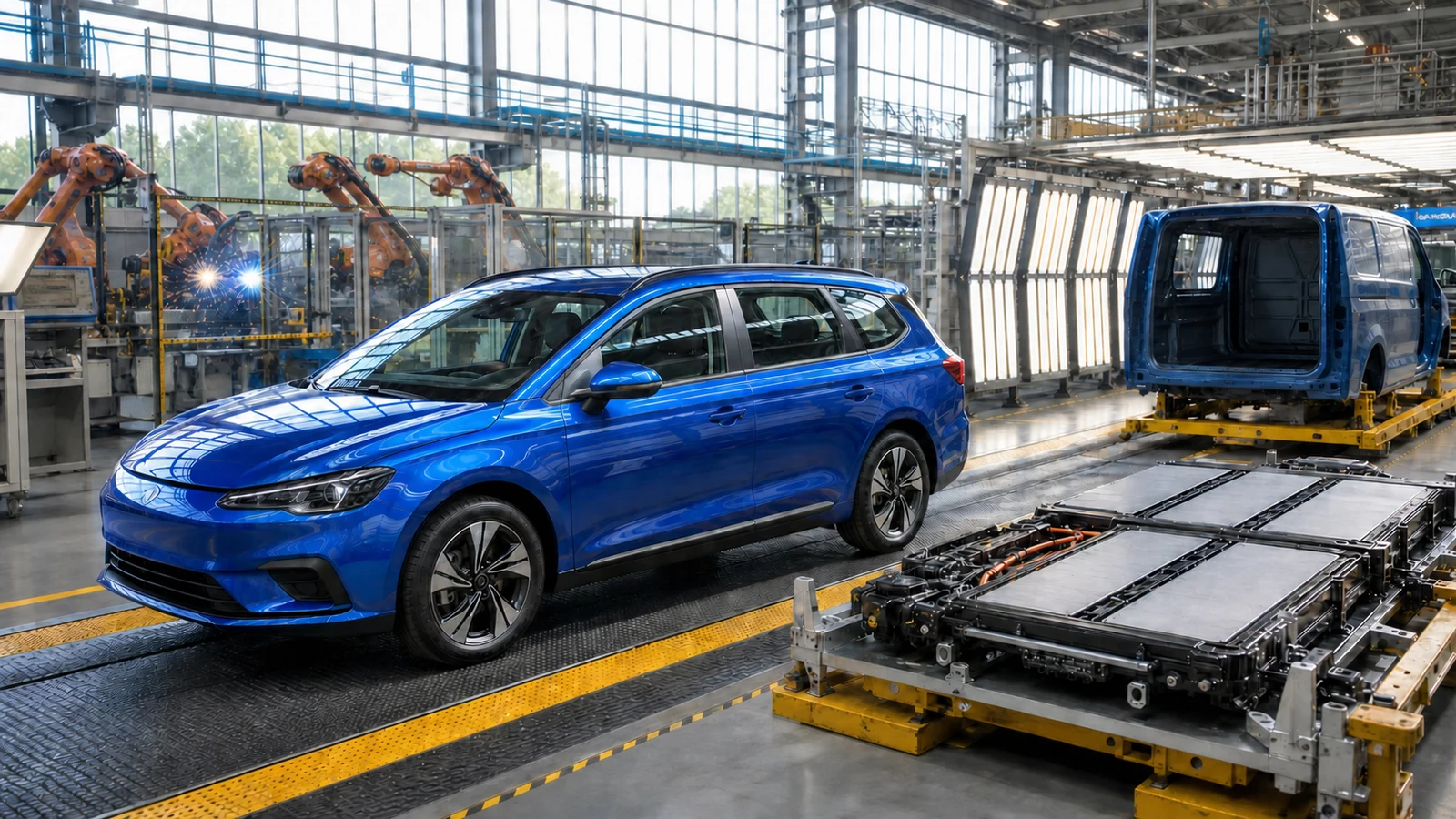
AvtoVAZ began industrial production of the Lada e-Largus electric vehicle at its Izhevsk plant on September 25, 2024. The launch covered both passenger and commercial estate-car formats, creating a locally assembled electric model for households and fleet operators. An Interfax report said the manufacturer planned to make several dozen vehicles by the end of the year. Later output would depend on customer demand, regional charging infrastructure and the focus of state incentives.
The event added a production milestone to the electric-vehicle market in Russia. Unlike a prototype presentation or an announced investment, industrial production requires a repeatable sequence of body welding, painting, battery installation, final assembly and quality control. The Izhevsk line therefore became a practical test of how an established automobile plant could adapt its capabilities to a battery-powered product.
One platform addressed passenger and commercial demand
AvtoVAZ planned passenger and commercial versions with different batteries and payload capacities. The passenger model was presented with a range of 420 kilometres, while the cargo-passenger derivatives were expected to travel from 320 kilometres depending on configuration. This distinction is commercially important. A family buyer values comfort and range flexibility, whereas a delivery fleet calculates payload, route length, charging time and the cost of every working day.
A shared vehicle family can spread engineering and production expenditure across several uses. Body components, service procedures and much of the assembly process remain common even when the interior, battery or cargo rating changes. The benefit appears only if volumes are sufficient and configurations remain controlled. Too many low-volume variants can increase parts inventory and complicate maintenance faster than they broaden demand.
Questions for the first production stage
- Demand. How many private buyers and commercial fleets are ready to order at the final price.
- Range. Whether the stated distance remains practical with cargo, heating and seasonal temperature changes.
- Charging. Which regions can support daily operation without excessive vehicle downtime.
- Service. How quickly dealers can diagnose battery, power-electronics and conventional chassis faults.
- Scale. Whether supplier output can rise together with assembly without reducing quality.
Localization extended beyond final assembly
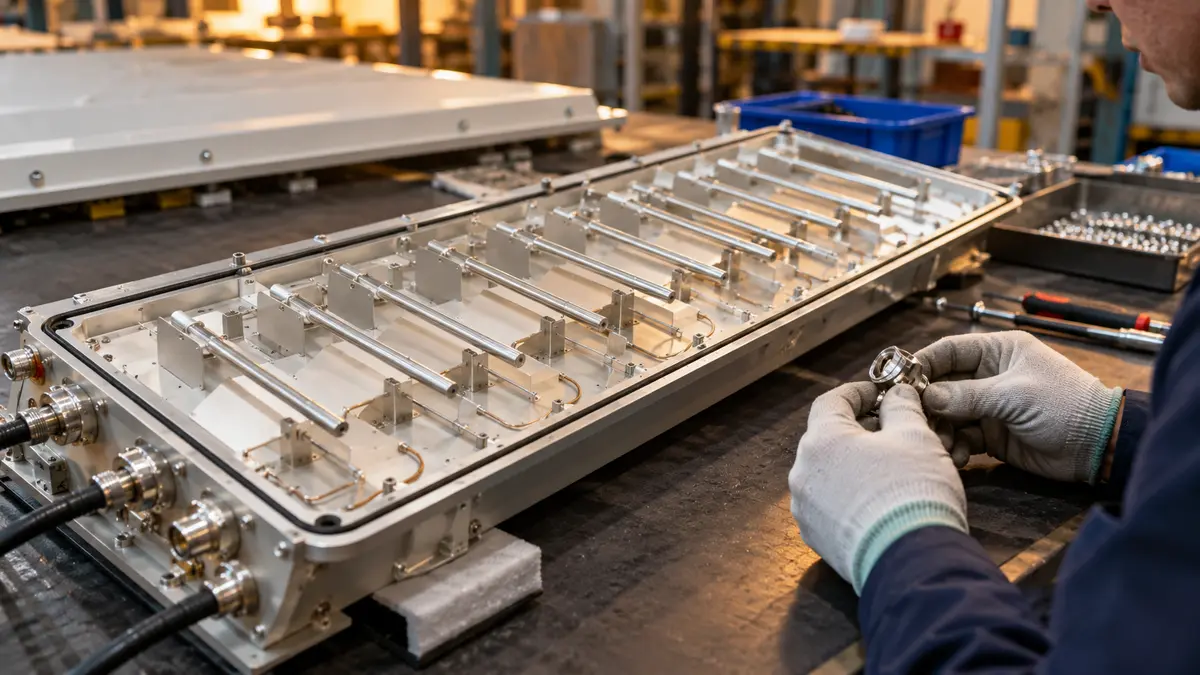
The manufacturer described the e-Largus as the first Russian electric vehicle with a deeply localized domestic battery. It also said localization exceeded 50%. The Izhevsk plant used a full production cycle including welding, body painting and final assembly. Those details separate the programme from importing a completed vehicle or fitting a small number of foreign kits.
Localization can reduce exposure to cross-border delivery disruptions and create learning among component suppliers. It does not automatically make a vehicle inexpensive or guarantee capacity. Battery cells, electronic controls, thermal systems, raw materials and test equipment form separate supply chains. The business result depends on their yield, reliability and cost as well as the percentage assigned under a localization formula.
A cautious opening volume preserved flexibility
Several dozen vehicles in the final months of 2024 represented a controlled industrial start rather than mass-market scale. That pace allowed the manufacturer to observe assembly defects, battery behaviour and customer use before committing to a much larger production plan. It also limited the financial risk of building inventory ahead of proven demand.
The trade-off was high unit cost. Tooling, engineering, certification and staff training are spread across very few vehicles during an early run. Suppliers may also charge more for small batches. The path to better economics requires volume, but increasing volume before charging access and buyer demand are visible can transfer a technical achievement into unsold stock.
What would demonstrate a durable business
- Repeat orders from fleets after real-world operating trials.
- Stable battery quality and warranty costs across seasons.
- Short charging and maintenance downtime relative to daily route needs.
- Rising local component output without supply bottlenecks.
- A production schedule that follows paid demand rather than headline capacity.
The September launch established that the e-Largus could move through an industrial line in passenger and commercial forms. Its longer-term significance would be measured outside the ceremony: in kilometres driven, payload delivered, charging availability, warranty performance and orders that returned after initial trials. By linking a localized battery to full-cycle assembly, AvtoVAZ created a more substantial manufacturing proposition. The small opening batch also made the next test clearturning a repeatable production process into a vehicle that fleets and private customers can operate economically.
















ADI News
Leave a comment