
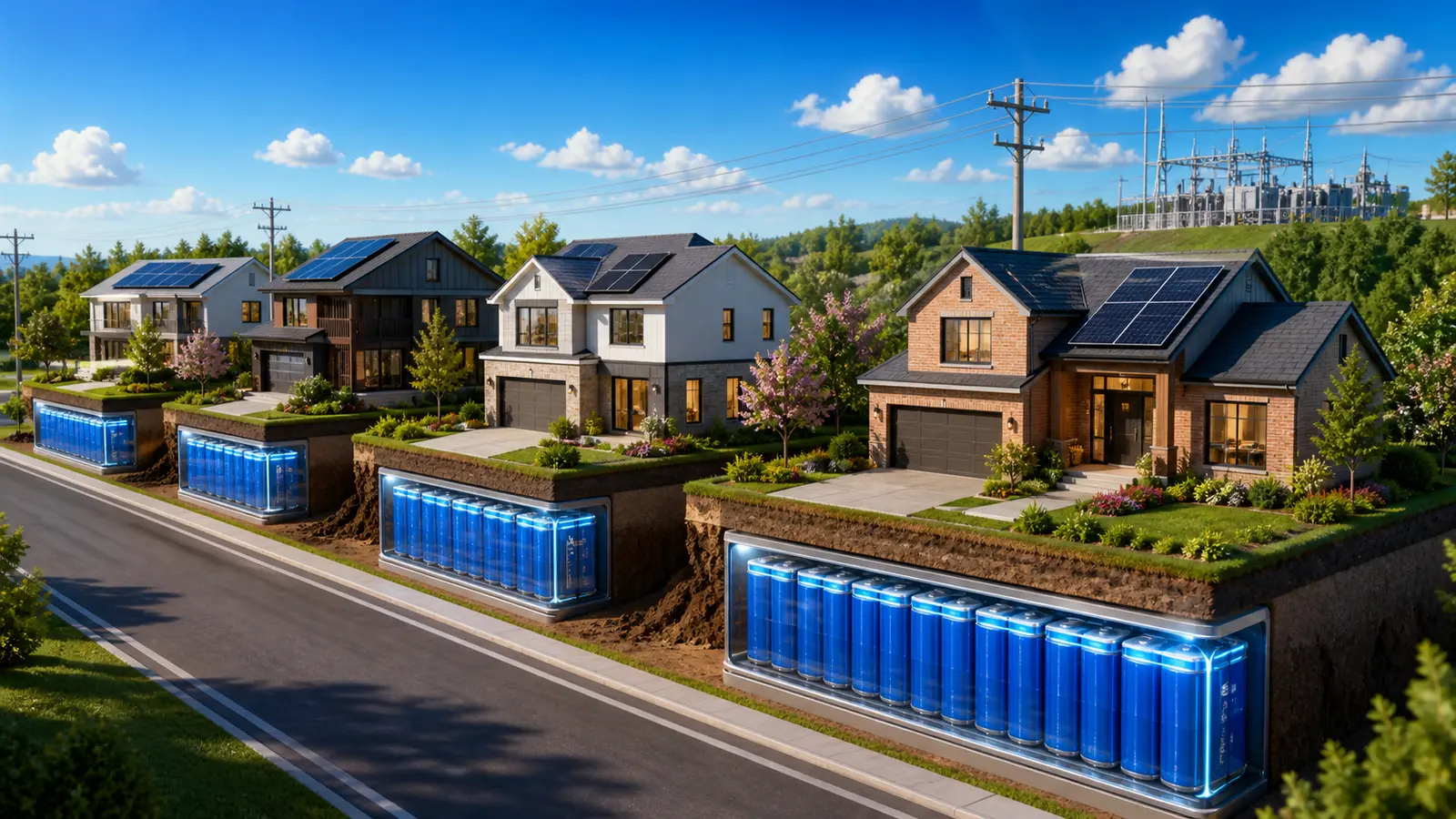
Base Power has raised $1 billion in a Series D round to expand a business that combines residential electricity service, backup power and a company-owned fleet of home batteries. The financing values the three-year-old company at $13 billion, up from $4 billion less than a year earlier. Fortune reported the funding and operating figures on August 6, 2026.
The Austin company says its installation pace has risen from one battery a day to more than 100, taking the customer base above 30,000. That growth makes the round more than a valuation event. Base is trying to prove that thousands of household systems can function as one distributed power asset while giving each customer a simpler alternative to buying an expensive backup generator or battery outright.
A service model replaces the large upfront purchase
A conventional home backup system can cost $15,000 or more before it delivers a single kilowatt-hour. Base lowers the entry barrier by retaining ownership of the equipment. A customer pays an installation fee of no more than $695 and a monthly membership of $19, then buys electricity through the service. In parts of Illinois, the company has tested an installation price as low as $95 to accelerate adoption.
This arrangement changes what the household is purchasing. The customer is not primarily acquiring a metal cabinet full of cells. The package includes power supply, automatic backup during an outage, maintenance and access to equipment whose upfront cost remains on Base's balance sheet. The company, in turn, receives a long-term relationship and the right to operate the battery in wholesale electricity markets when it is not needed for emergency use.
How one battery can serve two markets
- The system charges when wholesale electricity is relatively abundant and prices are lower.
- Stored energy can be released when demand and market prices rise.
- The household receives backup power when the local grid fails.
- Base aggregates many systems and manages them as a distributed infrastructure portfolio.
- Market revenue helps support a low installation charge instead of a high-margin equipment sale.
The model depends on balancing two obligations. A battery used aggressively for market trading may earn more revenue, but customers expect adequate reserve when an outage begins. Conserving too much energy for emergencies may reduce the economic return. Software must continuously account for weather, local demand, power prices, battery condition and the probability of a grid interruption.
A 39.2-kilowatt-hour system becomes a grid resource
Base's new battery stores 39.2 kilowatt-hours, more than many competing residential products. Customers can choose one or two units, although available space beside a house can limit the second installation. The company says the design switches cleanly during an outage and provides greater duration than the third-party batteries it previously installed.
Capacity alone does not determine resilience. Household consumption varies with air conditioning, heating, cooking, vehicle charging and the number of occupants. Fortune reported that the system can keep power running through an interruption, but a prolonged outage lasting more than two or three days can exceed the available reserve. Clear communication about usable capacity is therefore essential: a backup battery is not an unlimited independent power plant.
- For households: installation time, outage coverage, monthly bills and service response determine value.
- For utilities: predictable dispatch, geographic concentration and verification determine whether the fleet can relieve the grid.
- For Base: equipment life, financing cost, customer retention and trading margins determine profitability.
- For investors: repeatable deployment and stable revenue matter more than the headline valuation.
The opportunity is growing as electricity demand rises and local grids face capacity constraints. A neighbourhood battery fleet can reduce demand during expensive peaks without waiting for one large power station. It cannot replace transmission upgrades or dependable generation, but it can make existing infrastructure more flexible and give operators another controllable resource close to consumption.
Manufacturing is moving inside the company
Base initially depended on third-party battery suppliers. In 2026 it opened Base Factory 1 in Austin and began producing equipment designed specifically for homes and grid participation. A larger second factory is under construction for completion in 2027. Bringing manufacturing closer to the operating business can align hardware, installation and control software, but it also increases capital needs and execution risk.
A service company can change an application quickly; a manufacturer must manage component sourcing, quality, safety certification, factory yield and warranty exposure. Every unit remains an asset that Base owns for years. A defect or shorter-than-expected battery life therefore affects not only one sale but the economics of a portfolio financed on the assumption of dependable long-term operation.
Expansion started in Texas and recently reached Illinois. Base plans to enter more parts of the United States in 2027. It can operate directly in deregulated retail-electricity markets or partner with regulated monopoly utilities elsewhere. Those routes require different contracts, customer-acquisition methods and regulatory approvals, so national growth will not be a simple copy of the original Texas model.
Operating evidence to watch after the funding round
- Installations completed per crew and the time from order to activation.
- Customer bills compared with relevant local electricity alternatives.
- Availability during outages and the reserve remaining when an event begins.
- Revenue earned from wholesale-market dispatch after battery degradation and financing costs.
- Manufacturing yield, warranty claims and delivery performance from the Austin factory.
- Retention after promotional installation prices return to standard levels.
The valuation assumes infrastructure-scale execution
The round was co-led by Ribbit Capital, Addition, Valor Equity Partners and JPMorgan Chase's Strategic Investment Group, with several existing investors participating again. Fresh capital can finance manufacturing, inventory and geographic expansion before the installed fleet generates enough cash for self-funded growth. It also raises expectations: a $13 billion valuation requires Base to become much more than a successful regional installer.
Chief executive Zach Dell describes a long-term goal of reaching neighbourhoods across America and eventually other countries. He co-founded Base in 2023. His father, Dell Technologies founder Michael Dell, is a mentor but is not involved in the company. The younger Dell's business will ultimately be judged on its own operating data rather than family recognition.
The central test is whether Base can turn many small physical assets into reliable infrastructure. Fast installation growth, 30,000 customers and a large funding round establish momentum. They do not yet prove durable margins across electricity cycles, severe weather and varied regulation. Success would mean households receive dependable backup at an accessible price while the aggregated fleet earns enough in power markets to maintain, replace and expand the equipment. That combination—not the valuation alone—will show whether the home-battery membership model can scale.






ADI News
Leave a comment