
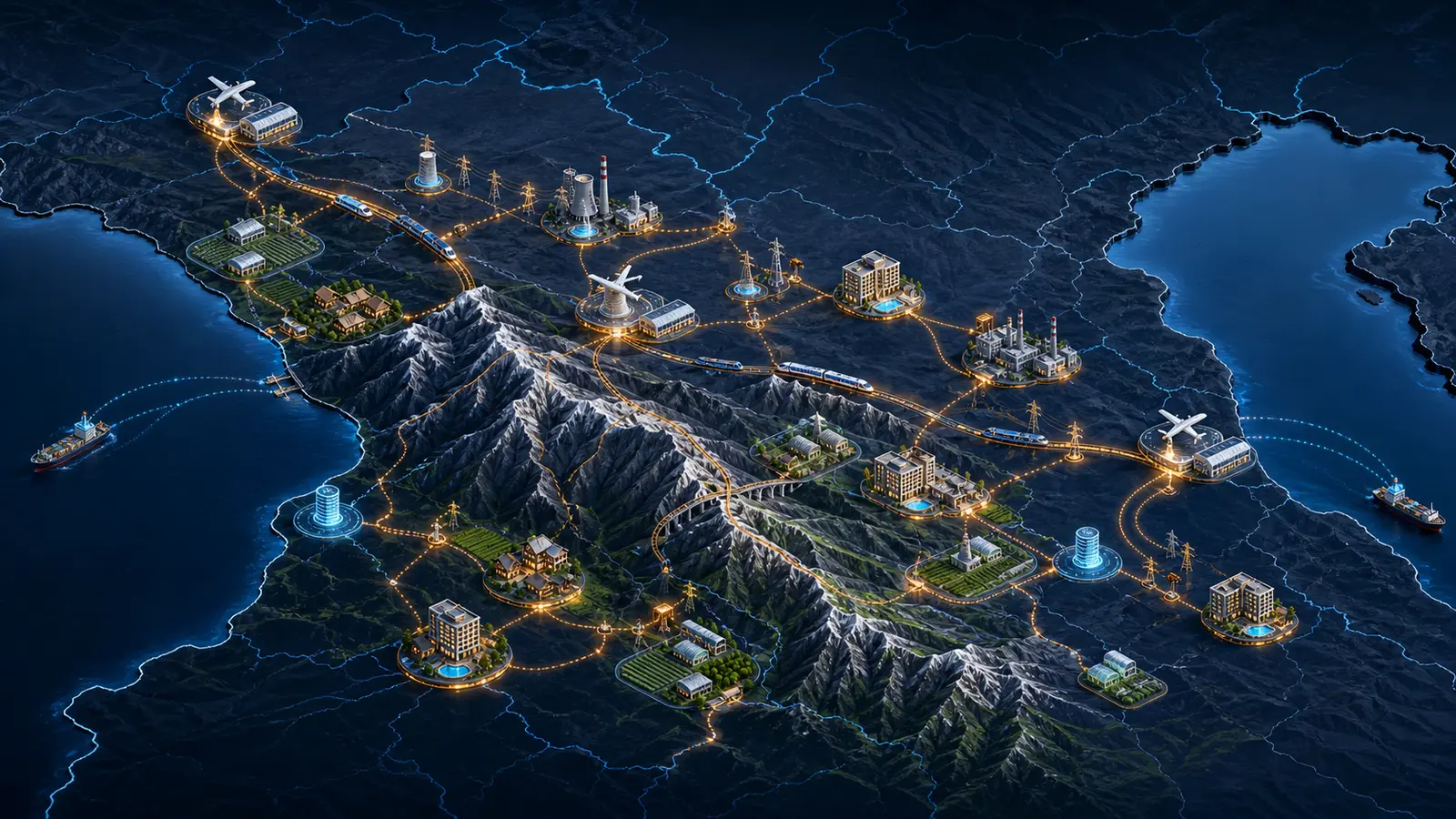
Regional investment policy is often described through the value of agreements signed at a forum. Business needs a more demanding measure: whether a project can obtain land, a utility connection, transport access, employees, financing and paying demand in one coordinated sequence. The North Caucasus offered a revealing example of that challenge in 2025. Vedomosti reported on May 27, 2025 that further investment growth in the district depended on removing infrastructure, financial and workforce constraints.
Reporter Daria Mosolkina assembled figures presented at the Caucasus Investment Forum. Economic Development Minister Maxim Reshetnikov said lending for investment purposes in the district had increased by one third during the preceding year. MSP Bank supported companies with almost 14 billion rubles in loans and guarantees, while the SME Corporation doubled the value of its umbrella guarantees to 16 billion rubles.
At the same time, six tourism special economic zones contained 83 residents with 190 billion rubles of announced investment. A subsidized hotel program selected 24 applications from five regions representing 3,600 rooms. National projects envisaged more than 500 social, engineering and transport facilities through 2027. The scale is substantial, but it creates value only when individual measures become one functioning investment portfolio.
For Russia, the question matters far beyond one federal district. Governments and companies everywhere make the same costly mistakes: financing a commercial asset without its critical infrastructure, or building public infrastructure without confirmed private demand. The strongest territory is not the one with the longest project list. It is the one that identifies dependencies and brings capacity into service in the right order.
An investment climate begins with executability
Transparent registration, permitting and support rules are necessary, but an investor evaluates more than documents. The real concern is the path from a decision to the first revenue. How long will land allocation take? When will electric capacity be available? Who will build the access road? Are qualified contractors and workers available? Can the facility expand after launch? The answers turn a general climate ranking into a calendar for a specific asset.
A region should examine that journey from the entrepreneur's perspective. One project passes through many organizations, each optimizing its own assignment. A land authority allocates a plot, a utility issues connection conditions, a bank examines collateral, and the education system schedules training. If their deadlines are unrelated, formally successful decisions add up to a commercially unusable result.
A single project-support service must therefore manage dependencies, not merely collect certificates. Each investment needs a critical-path map, named owners and dates for control decisions. A deviation should become visible before an investor finishes an empty building. Such a system disciplines the administration while protecting the budget from funding infrastructure for which the private facility is not yet ready.
Executability can strengthen confidence more than a one-time concession. A lower interest rate is valuable, but a connection delayed for a year may eliminate all of the saving. A predictable territory can attract capital on less generous terms because investors include a smaller uncertainty premium in their required return.
Five questions before a project enters the portfolio
- What verified demand will the facility serve after commissioning?
- Which infrastructure dependency has the longest delivery time?
- How much capital is private, and when does that commitment become unconditional?
- Where will workers, contractors and the management team come from?
- What measurable outcomes will the territory receive beyond money spent?
These questions filter out projects that exist only in presentations and help strengthen viable proposals. They also create a common language for a regional leader, bank, infrastructure operator and entrepreneur. Each keeps a different responsibility, but success is measured by an operating asset and sustainable cash flow.
Finance should close a gap, not replace the economics
A one-third increase in investment lending shows broader access to capital, but the act of issuing a loan does not prove project quality. The maturity of the debt must reflect the time required to create the asset and reach cash generation. Short-term money is dangerous for a hotel, factory or engineering network that takes years to build. Very long subsidized finance without stage controls can instead conceal weak execution discipline.
Guarantees and umbrella sureties are especially important for a small or medium-sized company that has expertise and an order book but lacks collateral. The instrument transfers part of the risk and enables a bank to finance a viable project. It cannot compensate for absent demand, an uncertain technology or chronically negative margins. The credit filter still matters.
A useful structure allocates risks to the parties best equipped to manage them. The public budget funds common infrastructure serving several projects and residents. The private investor carries responsibility for the commercial asset and its market. A bank assesses cash flow and monitors the use of funds. A development institution absorbs part of a specific regional or early-stage risk. When one participant attempts to cover everything, the cost of error rises.
Financing should also be released in stages. The preparation phase needs modest funding for design, land and studies. After permits and utility connections are confirmed, a construction limit becomes available. A later tranche pays for equipment, followed by working capital for launch. This sequence reduces the amount frozen in a project that has not yet crossed a critical threshold.
190 billion rubles creates value only after commissioning
Announced investment by special economic zone residents is an indicator of intent. A portfolio manager separates intent, contract, funded construction, commissioned asset and operating capacity. The amount usually declines at every stage because some projects change timing, scale or ownership. An honest report displays that funnel rather than presenting the first figure as a completed outcome.
Eighty-three residents create an opportunity for diversification. If they operate in different tourism segments and related services, the failure of one facility need not stop a cluster. Diversification, however, exists only when the sources of demand differ. Several hotels of the same format in one location may increase concentration even if separate investors own them.
Every zone needs a balance between anchor investments and smaller enterprises. A cableway, airport or large hotel generates traffic and recognition. Small businesses turn that flow into a varied local economy through catering, rental services, excursions, repairs, cultural products and agricultural supplies. Without this local layer, visitors' spending leaks to outside chains and the territory gains fewer jobs and entrepreneurial skills.
Capital expenditure is therefore only one result indicator. Managers should measure rooms commissioned, seasonal occupancy, average length of stay, guest spending outside the hotel, permanent jobs, procurement from local suppliers and the tax base after concessions expire. Those figures show whether the cluster has formed a self-supporting market.
Infrastructure should lead by exactly the necessary distance
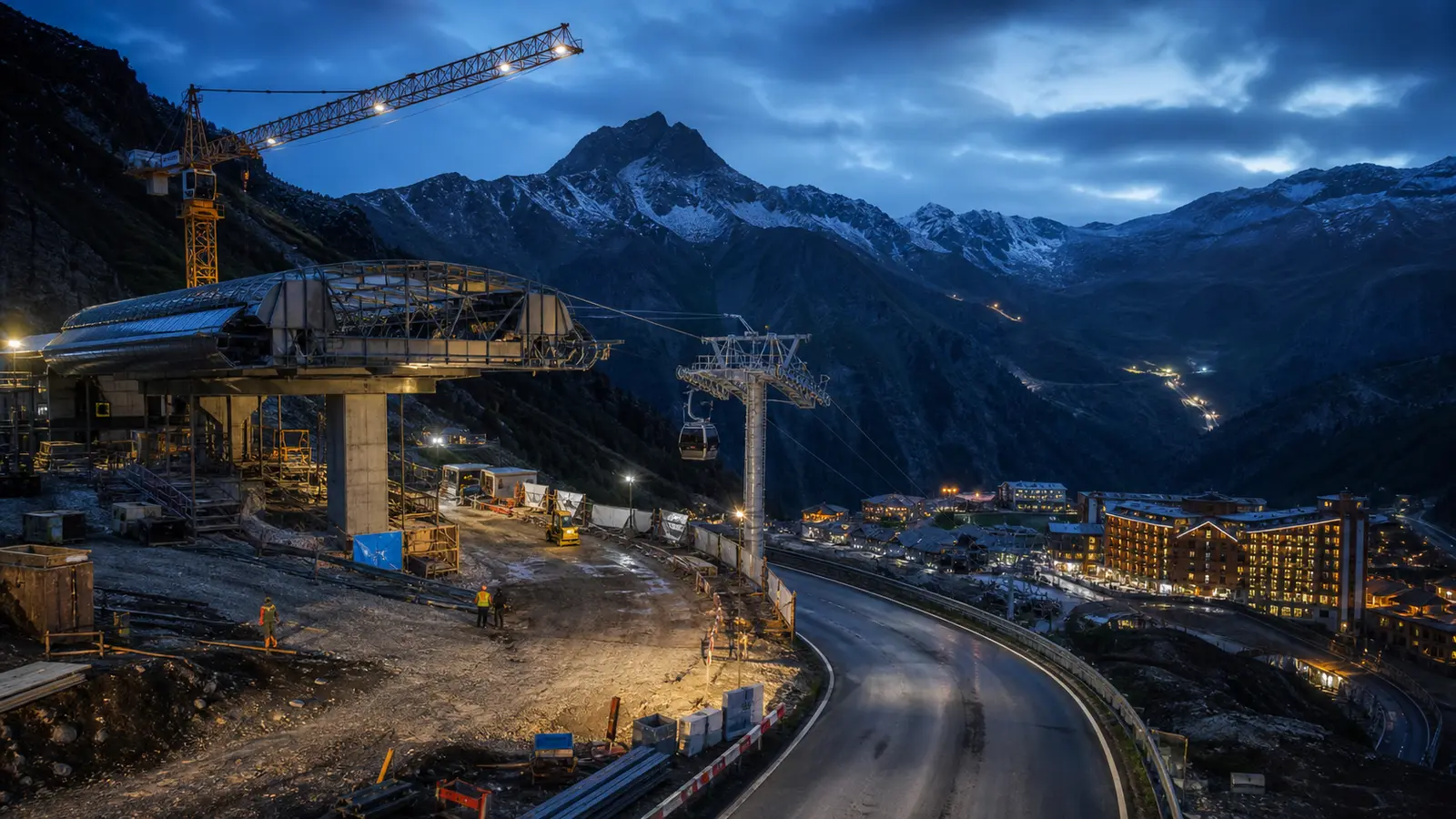
A road, substation or water system often has to be ready before a private facility opens. If government waits for the first guest or production batch, the investor cannot launch. Yet building many years ahead creates an idle asset with maintenance costs and uncertain demand. The objective is not simply to build first, but to synchronize commissioning with credible private milestones.
The planned construction of more than 500 social, engineering and transport facilities through 2027 must therefore be connected to a map of investment dependencies. One road may unlock several hotels and villages. One power upgrade may serve a processing plant, cold storage and local households. Projects with multiple beneficiaries generally deserve priority because their value does not depend on a single commercial decision.
Every public infrastructure item should have trigger conditions. Design can begin after a verified feasibility study. Procurement may begin after land rights and private equity are confirmed. The most expensive construction stage may depend on a bank limit and signed contractor agreement. Triggers do not eliminate risk, but they prevent the public and private schedules from drifting independently.
Maintenance must be part of the investment case from the beginning. Mountain roads, water systems and tourism facilities face weather, relief and seasonal load. A budget that covers construction but not operation merely postpones the shortfall. The responsible operator, tariff or funding source, service standard and emergency reserve should be defined before commissioning.
The workforce constraint cannot wait until construction ends
A completed facility without trained employees is another idle asset. Hotels need supervisors, cooks, engineers, cleaners and multilingual guest-service staff. Agricultural processors need technologists, laboratory specialists and maintenance mechanics. Infrastructure operators require technicians able to respond under difficult terrain and weather. These people cannot all be recruited during the week before opening.
A portfolio schedule should connect construction milestones with education and recruitment. When a project reaches financial close, employers can specify occupations and competency standards. Colleges can adapt programs, while students receive practice at operating businesses. Training should culminate close enough to launch that graduates do not leave while waiting for work.
Large investors often compete for the same limited pool. If every project independently hires from neighboring employers, the result is wage escalation and staff rotation rather than new capability. A regional view reveals shared needs and supports common training centers. Specialized instruction can then be shared among hotels, logistics companies, farms and utilities.
Retention depends on living conditions as much as wages. Transport, housing, schools, healthcare and predictable schedules influence whether a worker remains in a developing location. This explains why social facilities belong on an investment map. They are not separate from commercial policy when the availability of labor determines the productive capacity of a private asset.
Tourism requires active management of seasonality
The 24 selected hotel applications and 3,600 planned rooms expand supply, but supply alone does not extend the season. A room generates revenue only when occupied, while debt service, heating, security and core payroll continue through quiet months. Each new facility should therefore be tested against monthly demand rather than a single annual visitor forecast.
Destinations can distribute demand across products. Winter sport, summer hiking, health programs, business events, cultural routes and food experiences may serve different months and customer groups. The purpose is not to invent attractions without a market. It is to identify authentic reasons for travel that share transport and accommodation while reducing reliance on one weather window.
Price must be coordinated with access. A discounted room does not create demand if flights and transfers are scarce or expensive. Conversely, new transport capacity needs enough activities to justify a longer stay. Portfolio management joins the carrier, local transport provider, hotel, attraction and event calendar into one visitor proposition.
Seasonality also affects suppliers and workers. A hotel that dismisses staff every spring loses trained people. A farmer supplying only a short peak cannot justify equipment. Longer operating periods stabilize contracts and enable local firms to invest. Thus occupancy outside the peak can produce greater regional value than another record weekend during an already congested season.
Agriculture and tourism can reinforce one another
The reported reinvestment of 1.2 billion rubles in viticulture illustrates how a sector-specific measure can connect with a broader portfolio. Vineyards, processing, hospitality, gastronomy and cultural routes can form a chain in which one visitor purchase supports several enterprises. The value is larger when local production reaches hotels and restaurants instead of remaining separate from the tourism cluster.
Such integration requires commercial standards. A hotel needs consistent volume, quality, packaging, documents and delivery times. A small producer may offer an excellent product but lack refrigeration, certification or working capital. Shared distribution, testing facilities and procurement schedules can bridge that gap without turning every farm into a logistics company.
Regional branding should not replace product economics. An origin story helps attract attention, but repeat purchases depend on quality and price. Producers need channels beyond tourists, while hospitality companies need alternatives when a local crop fails. A resilient system combines local preference with measurable standards and backup supply.
The cluster can also spread demand geographically. Visitors who travel from a resort to a farm, workshop or cultural site spend money in smaller communities. The route must be safe, bookable and understandable, with realistic travel times. A collection of points on a promotional map is not yet a product; coordination and service make it one.
A dashboard for the regional portfolio
Officials and investors need a dashboard that shows more than budget execution. It should connect physical readiness, private funding, workforce preparation and prospective demand. Data must use stable definitions, and risk should be flagged before a final deadline is missed.
- Separate announced, contracted, funded and actually invested private capital.
- Display the critical infrastructure path for every major project.
- Measure commissioned capacity and actual utilization after launch.
- Track workforce preparation by occupation and availability date.
- Measure procurement from local small and medium-sized suppliers.
- Compare jobs and tax-base growth with the full amount of support.
- Record seasonal and concentration risks for each cluster.
The dashboard is not primarily a device for punishing laggards. It reallocates attention and resources. If an investor delays equity, a public infrastructure project should not automatically enter its most expensive stage. If a connection is late, the bank and company can adjust a tranche and contractor schedule early. A timely correction costs less than emergency intervention.
Public reporting also improves the quality of new proposals. An entrepreneur can see which locations have spare utility capacity, which occupations are scarce and which clusters already face excess supply. Better information discourages imitation and directs capital toward gaps in the value chain.
Turning forum agreements into operating assets
The Russian government reported that 62 agreements worth more than 172 billion rubles were signed at the forum. It also said that more than 500 billion rubles had already been invested in relevant activities, including over 400 billion from private sources. These figures indicate substantial business participation, but an agreement remains the beginning of delivery rather than its conclusion.
Within thirty days, every material agreement should have an owner, scope, milestones and list of unresolved conditions. Within ninety days, the parties should validate land, engineering capacity, finance and demand assumptions. A project that cannot resolve a fundamental condition should be redesigned or removed before it consumes years of administrative attention.
Quarterly portfolio review should focus on exceptions. Stable projects do not need ceremonial discussion. Managers should examine missed triggers, changed costs, weak contractor capacity and demand risk. Decisions must be recorded: revise the sequence, bring in another participant, narrow the scope or stop. Keeping a nonviable project on a public list is not support; it conceals the opportunity cost.
Closing a project can be a sign of portfolio discipline. Resources released from a weak proposal can complete a road, utility or training program serving several viable investments. The objective is not to preserve every announcement. It is to produce the greatest durable economic capacity from limited public coordination and capital.
The central lesson: capital follows coordination
The North Caucasus figures show that money is entering the system through commercial lending, guarantees, reinvested regional resources and private commitments. The next stage is operational: aligning finance with infrastructure, workforce, demand and maintenance. No single subsidy can perform that coordination.
A successful portfolio treats a hotel, road, vineyard, training program and utility connection as interdependent elements while preserving accountability for each. It distinguishes an announcement from money invested, a completed building from operating capacity, and visitor numbers from local value added. Those distinctions make progress slower to describe but far more useful to manage.
For investors, the practical advantage is lower uncertainty. For government, it is a better return on public infrastructure and guarantees. For residents, it is a higher probability that construction becomes lasting employment, services and a broader tax base. Coordination is therefore not administrative overhead around investment. It is one of the productive assets that makes investment possible.







ADI News
Leave a comment