
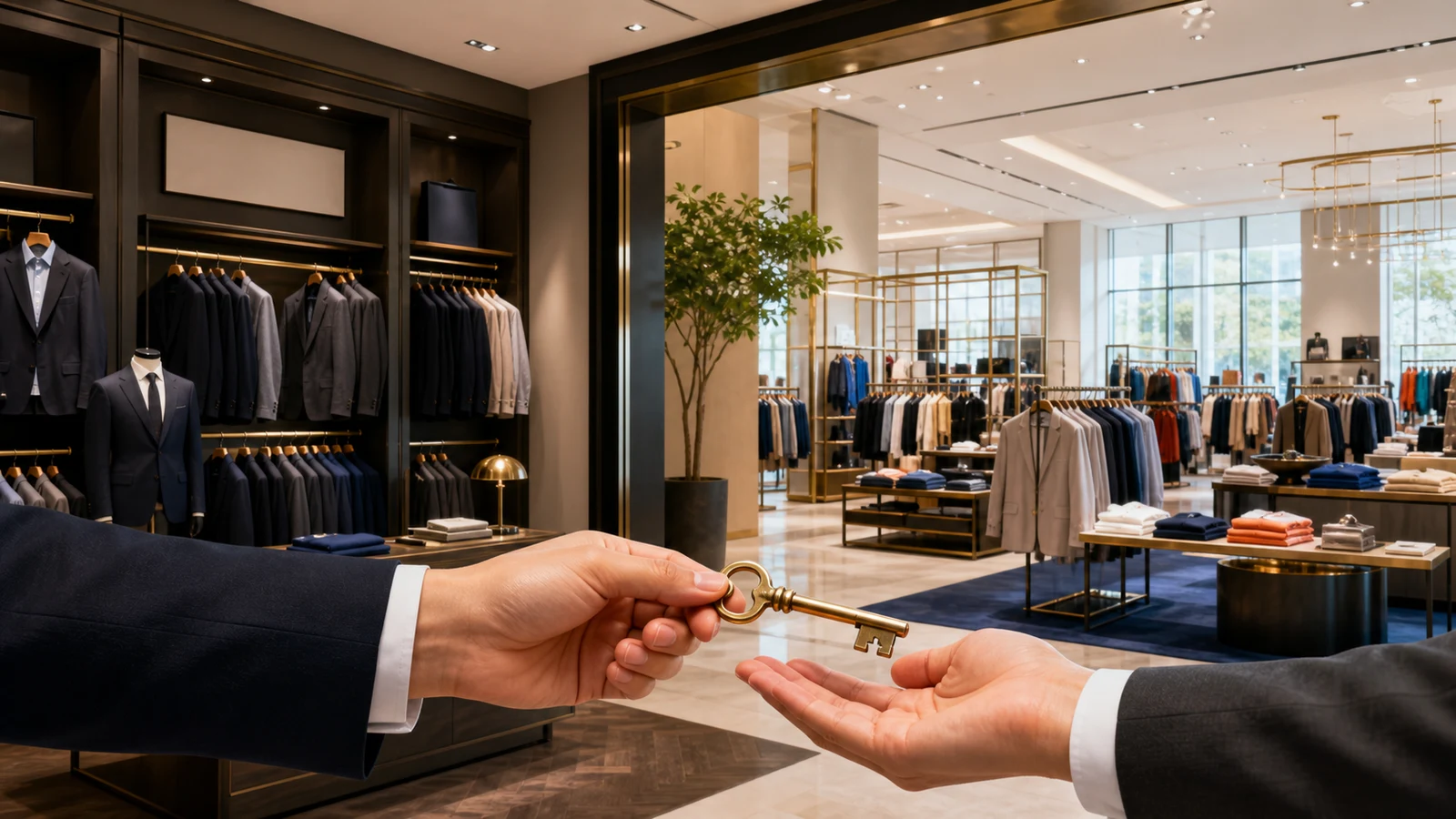
On 24 April 2024, Polina Gritsenko of Kommersant reported that a Russian government subcommission had approved the sale of Hugo Boss's Russian business to department-store operator Stockmann. The business included 19 stores at the end of 2022. Completion was expected in the third quarter of 2024, with preservation of jobs included among the conditions.
The transaction concerned a retail network in Russia that had kept wholesale shipments running while its branded shops were closed from spring 2022. Kommersant cited an expert estimate of no more than RUB 800 million for the deal after a required discount, compared with an estimated market value of RUB 1.8 billion.
What Stockmann was buying
The asset was more than stock and legal entities. It included store leases, fitted retail space, employees, supplier relationships and operational knowledge accumulated in a premium fashion network. These resources can shorten the time needed to reopen locations, but their value depends on whether leases remain attractive and whether a new merchandise concept can generate sufficient traffic.
The brand and the business are separate assets
Hugo Boss said the Russian company would no longer use the brand in its corporate name after the sale. Industry analyst Mikhail Burmistrov told Kommersant that Stockmann could reopen multibrand stores carrying Hugo Boss products where lease agreements and landlord negotiations permitted, but probably could not retain the old brand on the storefront. The buyer therefore acquired an operating platform without automatically acquiring permanent control of the seller's global identity.
- Buyer: Russian department-store operator Stockmann.
- Seller: German fashion company Hugo Boss.
- Network: 19 Russian stores at the end of 2022.
- Estimated price: up to RUB 800 million after discounts.
- Key condition: preservation of jobs.
Why the discount does not guarantee an easy return
A purchase below estimated market value can create a margin of safety, but closed shops continue to generate integration work. Stockmann needed to assess each lease, store condition, inventory position and staffing requirement. Reopening also required a new assortment, fresh marketing and agreement with suppliers whose products would replace or complement the former single-brand offer.
The retail economics differ from a passive property acquisition. A fashion store must turn floor area into sales while paying rent, payroll and working-capital costs. A location that was productive under a globally advertised label may perform differently as a multibrand shop. The buyer's existing customer base and procurement network can help, but they do not remove execution risk.
Jobs preserve useful operating knowledge
The employment condition had a commercial as well as social purpose. Experienced teams understand local customers, premium service standards, stock handling and the physical constraints of each location. Retaining them can accelerate reopening and reduce recruitment costs. At the same time, employees need clear roles and incentives under the new concept.
For landlords, an operating tenant is usually preferable to a dark storefront. For suppliers, the transaction can restore access to established retail locations. These aligned interests improve the chance of reopening, provided the parties agree on rents, assortment and commercial terms.
The business test after closing
The decisive indicators are not the headline discount or number of transferred stores. They are the share of locations reopened, sales per square metre, gross margin, inventory turnover and staff retention. Stockmann also has to prevent the acquired network from simply duplicating its existing stores without adding customers or categories.
The deal showed how a local retailer could acquire physical distribution while a global company exited ownership. Its success would depend on converting leases and teams into a coherent multibrand proposition. If that transition worked, the transaction could return dormant retail capacity to use; if it failed, the apparent purchase discount would be consumed by rent and relaunch costs.















ADI News
Leave a comment