
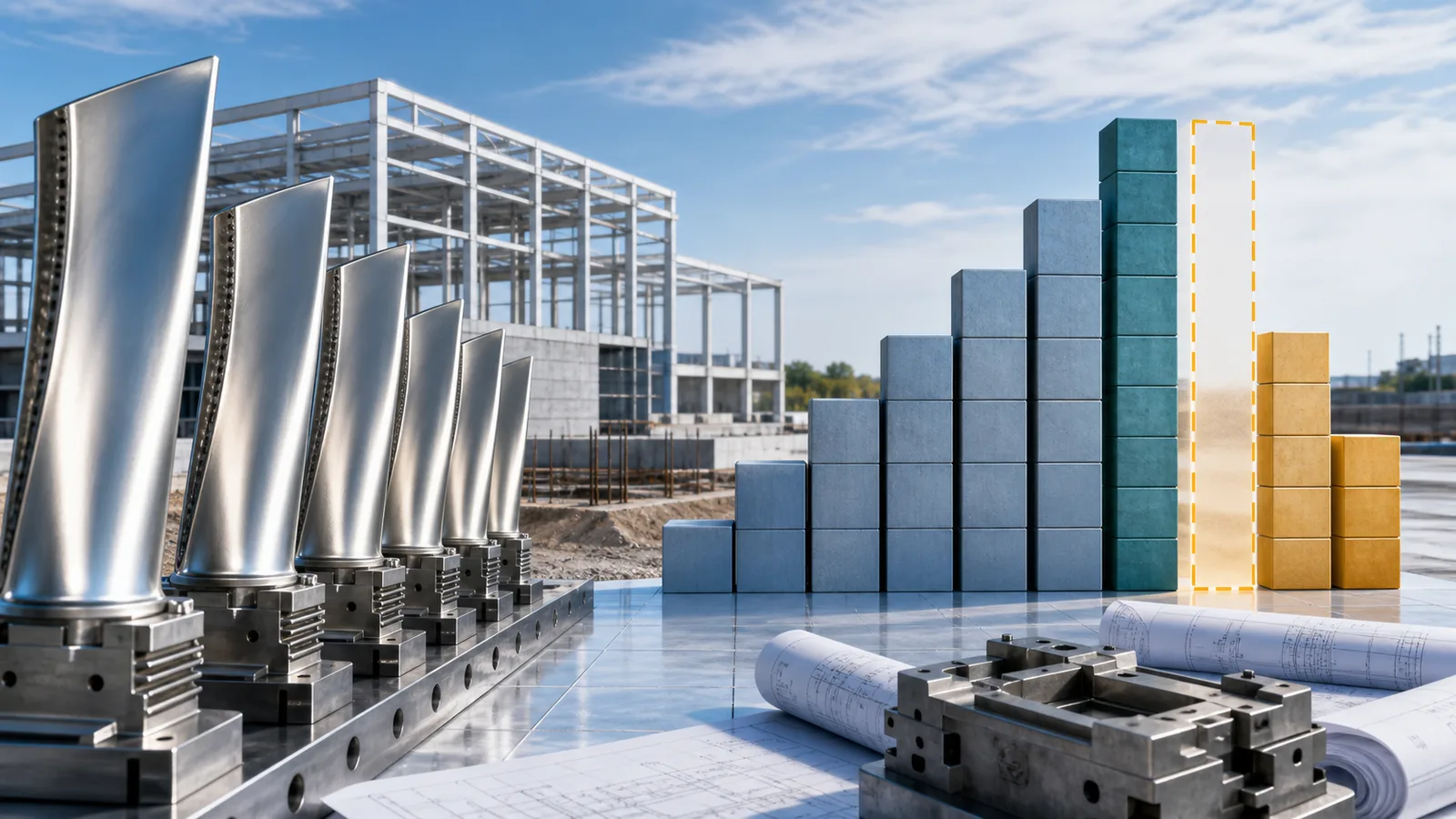
S7 Group's development centre put construction of a planned aircraft-engine turbine-blade factory in Saint Petersburg on indefinite hold. The project had been approved for the Parnas site of the city's special economic zone in February 2024 and was expected to enter service in the second quarter of 2027. Gazeta.Ru reported the pause on March 6, 2025, citing Vedomosti and unidentified sources.
The planned investment was about RUB 7.5 billion. It included a 6,100-square-metre manufacturing complex, a 1,800-square-metre administrative building and 328 jobs. Those figures show that the decision affects more than one construction contract. It delays a specialised production system, a hiring programme and potential demand for suppliers serving aviation manufacturing in Russia.
A bottleneck component loses a planned factory
The proposed plant was intended to make blades for the hot section of gas-turbine aircraft engines. These components operate under extreme heat, centrifugal force and rapidly changing loads. They require specialised alloys, precise aerodynamic geometry, controlled coatings and rigorous inspection. For that reason, a blade factory represents a collection of interdependent capabilities rather than an ordinary metalworking workshop.
The source said that repairing or manufacturing one engine can require 2,000 to 3,000 blades. This does not mean every blade is identical: different stages and engine designs use different shapes, materials and cooling features. The figure nevertheless illustrates the scale of component demand behind each powerplant and why a reliable supply chain matters for both new engines and the maintenance of existing fleets.
Capabilities delayed with the project
- Engineering and process development for hot-section components.
- Precision forming and machining of complex blade geometry.
- Protective coatings, heat treatment and non-destructive inspection.
- A trained workforce able to reproduce quality across long production runs.
An indefinite pause differs from cancellation. The company may preserve design work, permissions or supplier discussions while waiting for financing, demand or technical assumptions to improve. Yet uncertainty has a cost. Construction prices can change, equipment specifications may age, and prospective employees or partners may commit to other projects. Restarting later may therefore require a fresh business case rather than simply resuming from the same point.
Capital discipline versus supply-chain urgency
Aviation investment has unusually long feedback cycles. A factory can consume capital years before its output reaches a certified engine programme. Orders must be large and durable enough to cover facilities, specialised machinery, process qualification and working capital. If expected production schedules shift, delaying construction can protect the investor from an underused asset even when the component remains strategically important.
The opposite risk is a future shortage. Engine programmes cannot substitute a complex hot-section blade at short notice. If demand rises before alternative capacity is qualified, the absence of the planned plant could constrain repair or production schedules. Management must therefore compare the carrying cost of early capacity with the operational cost of late capacity, including the time needed for testing and certification.
Signals that would support a restart
- Firm multi-year orders tied to named engine production or overhaul programmes.
- A revised capital budget and financing plan that reflect current costs.
- Confirmed technology, equipment and qualified-material supply arrangements.
- A new commissioning schedule coordinated with customer certification needs.
The 328 planned jobs also represent specialised human capital. Engineers, metallurgists, machine operators and quality specialists need time to recruit and train. A delayed building can be restarted faster than a dispersed team can be rebuilt. If S7 intends to preserve the option, maintaining a core engineering group and documented process knowledge may be as important as keeping the site approval alive.
The March announcement provides evidence of restraint, not a verdict on the technology. The original project had a defined site, area, budget, workforce and target date; all deadlines were then moved without a replacement schedule. The next meaningful news will be either a formally revised investment plan with customers and milestones or a clear cancellation that releases the site and resources for other uses.















ADI News
Leave a comment