
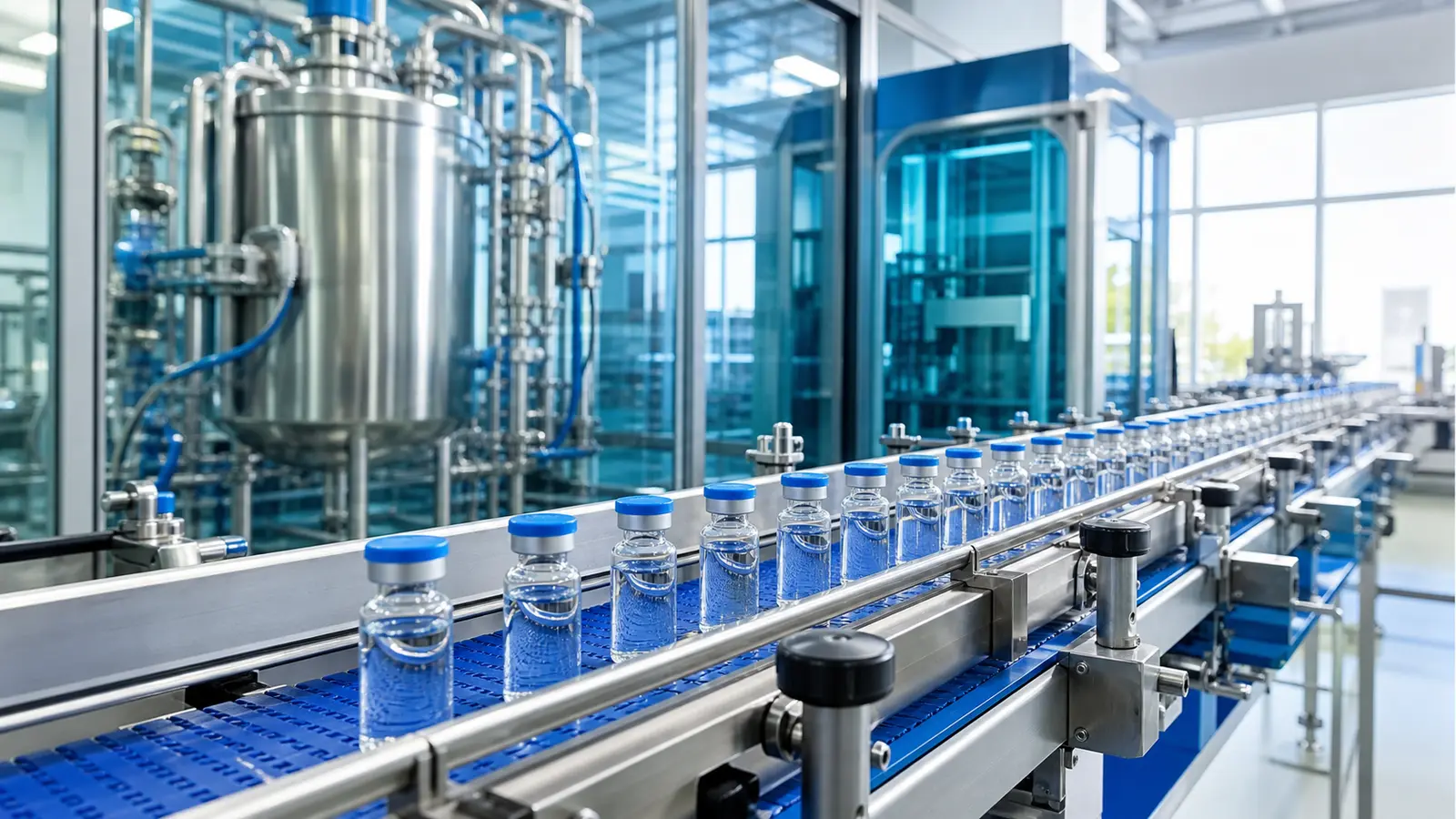
Petrovax Pharm plans to establish Russia's first full-cycle manufacturing operation for a quadrivalent meningococcal vaccine at its plant in the Podolsk urban district of Moscow Region. The project was announced on May 28, 2025, after the company and the regional government signed a cooperation agreement at the Russia and the World: Healthy Longevity Trends forum. Forbes Russia reported that production was expected to begin in 2026.
The business significance lies in the words full cycle. The plan covers more than filling imported vaccine substance into finished containers. It is intended to include local synthesis of the active substance, formulation, sterile filling, quality control and release of finished doses. This would place the critical stages inside one industrial system in Russia, reducing the number of external links in a strategically important pharmaceutical supply chain.
A RUB 3 billion localization project
Petrovax Pharm estimated investment in the project at more than RUB 3 billion. The existing pharmaceutical complex already has experience with biological products and vaccine manufacturing, but a new meningococcal product requires dedicated technology transfer, validation and regulatory work. Capital spending therefore supports more than machinery: it pays for production protocols, analytical methods, staff qualification and evidence that every stage repeatedly meets the required standard.
The company said the site could manufacture more than 3 million doses annually. That scale is large enough to connect industrial planning with a possible public immunization programme, while also creating an option to export finished products to members of the Commonwealth of Independent States. Capacity, however, is not the same as utilization. Actual output will depend on registration, procurement schedules, inclusion in vaccination policy and predictable demand from healthcare systems.
What the full cycle must coordinate
- Technology transfer: production methods must move from the original developer into a repeatable local process.
- Substance synthesis: biological material must be produced and purified under controlled conditions.
- Sterile formulation and filling: the four vaccine components must be combined and packaged without compromising quality.
- Batch testing: identity, purity, safety and consistency must be demonstrated before release.
- Demand planning: production schedules must align with registration and public procurement rather than run ahead of confirmed orders.
Price could widen access to vaccination
The planned vaccine is a quadrivalent conjugate product designed to protect against four meningococcal serogroups. Petrovax Pharm expected its price to be at least 20% below that of an already registered quadrivalent vaccine developed by a Chinese company. If the estimate holds after registration and tenders, the lower unit price could allow healthcare purchasers to cover more people with the same budget.
Price is only one part of access. A domestic full-cycle facility may shorten replenishment routes, provide clearer production planning and make it easier to respond when epidemiological demand changes. It can also create local knowledge about biological substance synthesis and quality control that is useful beyond a single product. At the same time, the project still has to pass clinical, regulatory and commercial milestones before those advantages become measurable.
Milestones that will determine the business result
- Complete technology transfer and validate each manufacturing stage.
- Finish the required clinical and regulatory programme for the local product.
- Receive authorization for commercial production and market supply.
- Coordinate annual capacity with procurement volumes and vaccination policy.
- Demonstrate that the projected price advantage survives full production costs.
Industrial independence requires repeatable quality
The announcement is part of a broader shift in pharmaceutical localization from final packaging toward control of active substances and production know-how. Full-cycle projects demand more capital and time, but they also retain a larger share of technical competence inside the manufacturer. For a vaccine, that competence includes biological process management, sterile operations, laboratory analytics and the ability to investigate variations between batches.
A Petrovax Pharm statement published on May 28 connected the project with plans to make vaccination more affordable and to begin supplying the population, including children, in 2026. That timetable describes an objective rather than a guaranteed outcome. Validation, registration and purchasing decisions remain essential gates.
The project will ultimately be judged less by the signing ceremony than by stable commercial batches. If Petrovax Pharm can combine local substance synthesis, more than 3 million doses of annual capacity and a durable price advantage, the Podolsk facility could reduce supply-chain exposure while broadening access to a high-value preventive product. The central business test is whether the announced full cycle becomes a repeatable, regulated and economically loaded production system.




ADI News
Leave a comment