
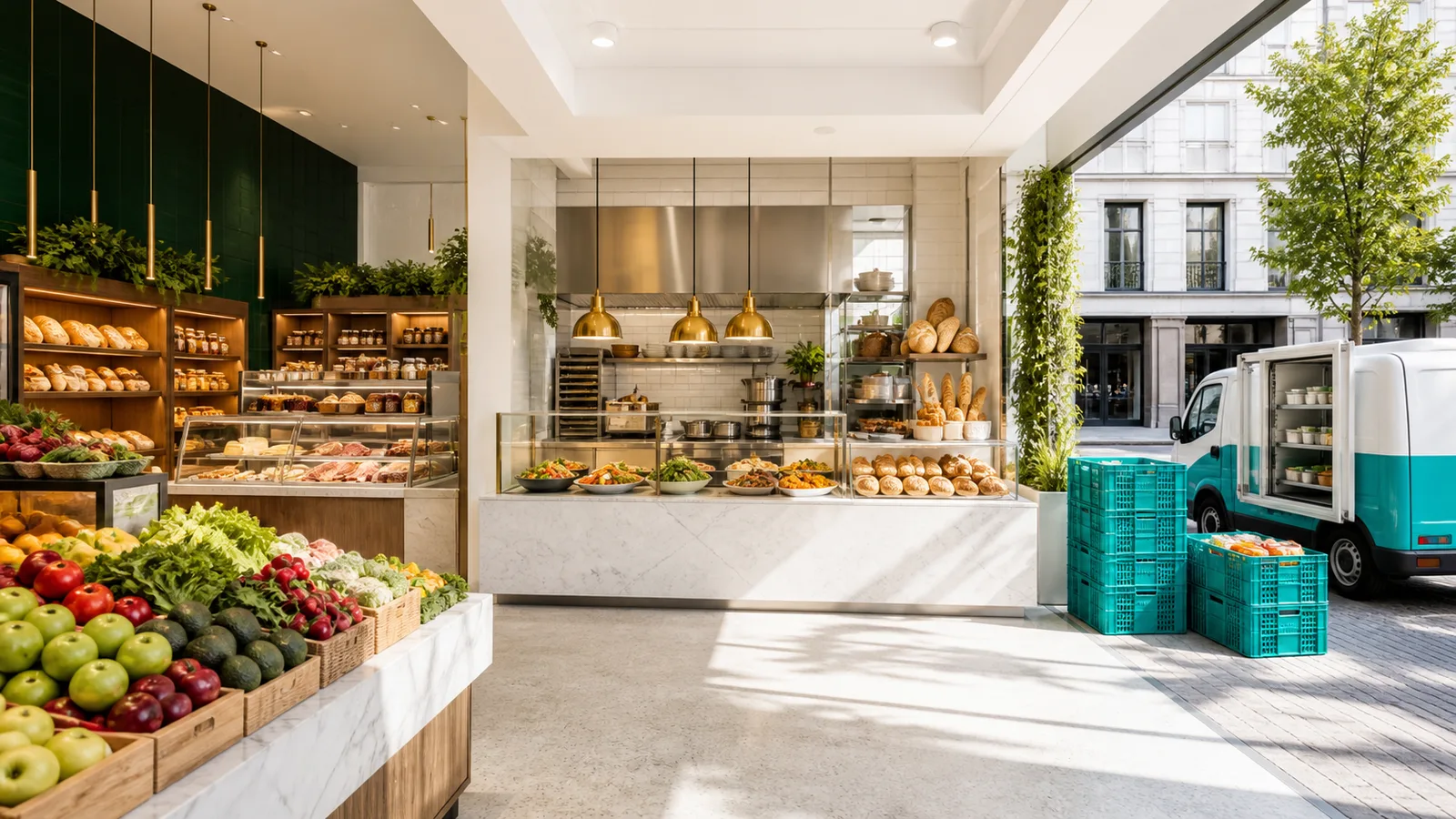
Russian grocery retailer Magnit has completed the acquisition of an 81.55 percent stake in Azbuka Vkusa, the company operating the premium supermarket chain. The buyer said the acquired brand and management team would remain in place while Magnit participates in strategic governance. RBC reported completion of the transaction on May 20, 2025.
The deal was cleared by the Federal Antimonopoly Service on May 5. Azbuka Vkusa operated 171 stores in Moscow, the Moscow Region and Saint Petersburg, alongside online delivery and catering. The transaction also included five culinary, bakery and confectionery production facilities, three distribution centres and 47,000 square metres of delivery-related warehousing.
Control without immediate brand absorption
Keeping the banner and operating team separates ownership from customer identity. Premium grocery shoppers respond to assortment, service, store atmosphere and confidence in prepared food. A rapid conversion to the parent's mass-market format could destroy part of the value Magnit bought. Strategic control with operational continuity gives the new owner time to learn which practices are distinctive and scalable.
Magnit's chief executive said the target contributes expertise in ultra-small formats, ready meals and premium customers. Magnit can provide broader procurement, digital delivery and investment capacity. The opportunity is reciprocal, but so is the risk: central efficiencies can help margins only if they do not flatten the assortment and service that justify premium positioning.
Assets inside the transaction
- 171 stores across three affluent metropolitan markets.
- Five owned culinary, bakery and confectionery facilities.
- Three distribution centres and delivery warehouse infrastructure.
- Online delivery, catering and established prepared-food expertise.
Analysts cited by RBC valued the controlling stake at roughly RUB 35-40 billion. The operating company reported 2024 revenue of RUB 101.2 billion and net profit of RUB 3.6 billion. Those figures imply that the investment case depends on durable earnings and growth rather than only store count.
Prepared food connects stores, production and delivery
Owned kitchens and bakeries give the chain more control over recipes, freshness and product differentiation. They also create complexity: demand must be forecast by location and time of day, short shelf lives raise waste risk, and quality must remain consistent across central production, transport and store finishing.
Magnit's scale could improve purchasing and logistics, while Azbuka Vkusa can offer methods for smaller urban stores and higher-value ready meals. The most credible synergies will be specific: better delivery utilisation, lower waste, shared non-customer-facing systems and selective transfer of successful products. A vague promise to combine scale and premium expertise is not enough.
Integration milestones to monitor
- Retention of the target's management team and key food-production specialists.
- Comparable-store sales and customer frequency after the ownership change.
- Growth of online delivery without deterioration in service or product quality.
- Waste, gross margin and capacity utilisation in the five production facilities.
- Evidence that small-format or ready-meal expertise is transferred into Magnit.
A new stage in grocery-market consolidation
Magnit has used acquisitions to broaden its position in Russia, previously buying Dixy, KazanExpress and the Far Eastern Samberi chain. Azbuka Vkusa adds a different capability: a premium metropolitan customer base rather than only regional coverage or another mass-market network.
The transaction is complete, but integration success will take longer to establish. Preserving the brand reduces immediate disruption; it does not automatically produce synergies. The result will be visible in customer retention, operating margins, online growth and whether each company genuinely learns from the other without weakening its own proposition.










ADI News
Leave a comment