
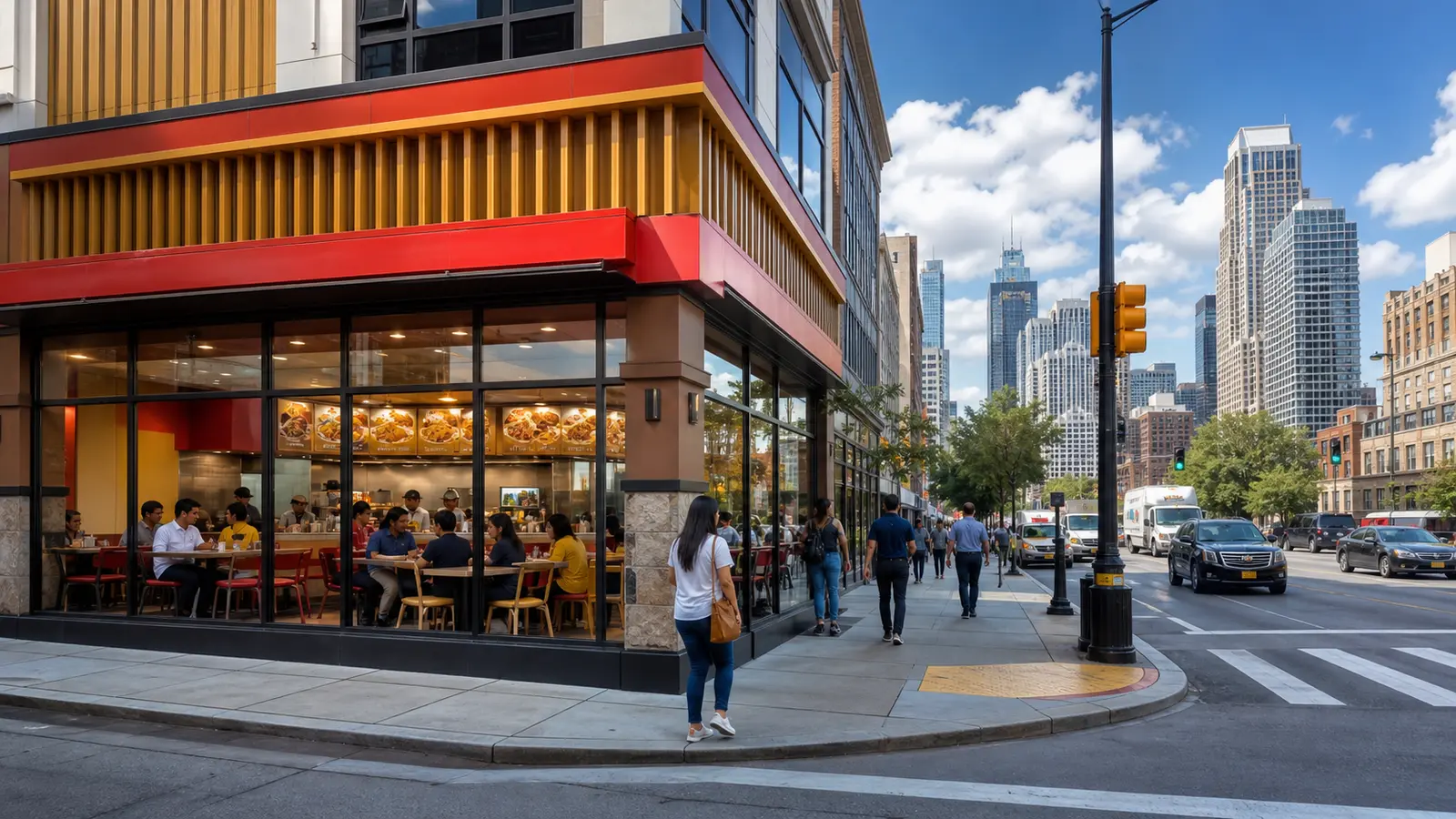
Jollibee Foods Corporation plans to separate its international restaurant operations and pursue a stock-market listing in the United States for the new business. Fortune reported the plan on January 20, 2026, after global chief financial officer Richard Shin discussed the proposal at a media roundtable. The contemplated separation and initial public offering are targeted for late 2027 and remain subject to valuation, regulatory approvals and the group's final decision.
The proposal would give investors a clearer choice between Jollibee's established domestic operation in the Philippines and a faster-growing international portfolio. The group operates in 33 countries and includes brands such as Smashburger and The Coffee Bean & Tea Leaf. Its overseas network recorded a compound annual growth rate of 26.7% over the previous 15 quarters, compared with 15.1% for the group as a whole.
Why Jollibee wants to separate its international business
Jollibee is currently valued as one listed group even though its domestic and international operations have different growth rates, capital needs and risk profiles. A mature home market can generate cash and defend established customer relationships, while an overseas platform must spend on new stores, franchise support, supply chains and local brand development. Combining both stories in one set of accounts can make it harder for investors to identify which activities create returns and which require patient capital.
A separation could make revenue, margins, store economics and investment requirements more transparent. It would also give each management team a more specific performance framework. The domestic company could be assessed on cash generation and market leadership, while the international company could be assessed on unit growth, franchise quality and progress toward profitable scale. That clarity does not automatically raise valuation, but it can reduce the discount investors apply when unrelated businesses are difficult to compare.
Work required before a late-2027 listing
- Define which brands, contracts, employees and intellectual property belong to the international company.
- Separate financial reporting and establish a credible history of stand-alone results.
- Allocate debt, cash and shared service costs without weakening either business.
- Obtain corporate and regulatory approvals and choose an underwriting syndicate.
- Explain how proceeds would be divided between expansion, balance-sheet strength and existing shareholders.
US markets offer depth, liquidity and restaurant expertise
Management sees the United States as a market where investors have extensive experience valuing global consumer and restaurant growth companies. A listing there could expand analyst coverage, trading liquidity and access to institutional capital. These advantages matter to a chain that may need years of investment before newer territories reach the store density required for efficient advertising, procurement and distribution.
Jollibee began its first American franchising programme in March 2025. By early 2026, the brand had more than 100 locations across its North American network. A public international vehicle could use several routes to growth: company-owned openings in strategic cities, franchised expansion where local operators provide capital, and acquisitions that add brands or geographic reach. Each route produces a different balance of control, speed and financial exposure.
Metrics investors will watch
- Comparable-store sales, restaurant margins and the time required for a new location to recover its investment.
- The share of growth funded by franchisees rather than the listed company.
- Supply-chain costs and whether regional scale improves purchasing and distribution.
- Cash conversion after store openings, acquisitions and central operating expenses.
- Progress toward consistent returns across brands and countries rather than growth in outlet count alone.
Fast expansion still carries execution and valuation risk
The 26.7% international growth rate is an important signal, but historical expansion does not guarantee public-market returns. Restaurant companies can add sales quickly while weakening economics if sites are poorly chosen, franchise controls are inconsistent or customer demand depends on costly promotions. Currency movements can also make overseas revenue appear stronger or weaker when results are translated into the reporting currency.
The proposed timetable leaves substantial work before late 2027. Market conditions may change, and a valuation acceptable to the parent company may not be available when the international business is ready. A weak offering could transfer value from existing shareholders, while delaying the transaction could leave management carrying separation costs without receiving the expected capital-market benefit.
For Jollibee, the strategic case rests on making two different businesses easier to understand and finance. The international operation has outgrown the role of a small overseas division, but it must demonstrate that rapid outlet growth can become durable cash flow. If the separation produces clean accounts, disciplined capital allocation and stronger local execution, a US listing could support the next stage of global expansion. If those foundations are incomplete, the new structure would merely expose the same operating challenges in greater detail.



















ADI News
Leave a comment