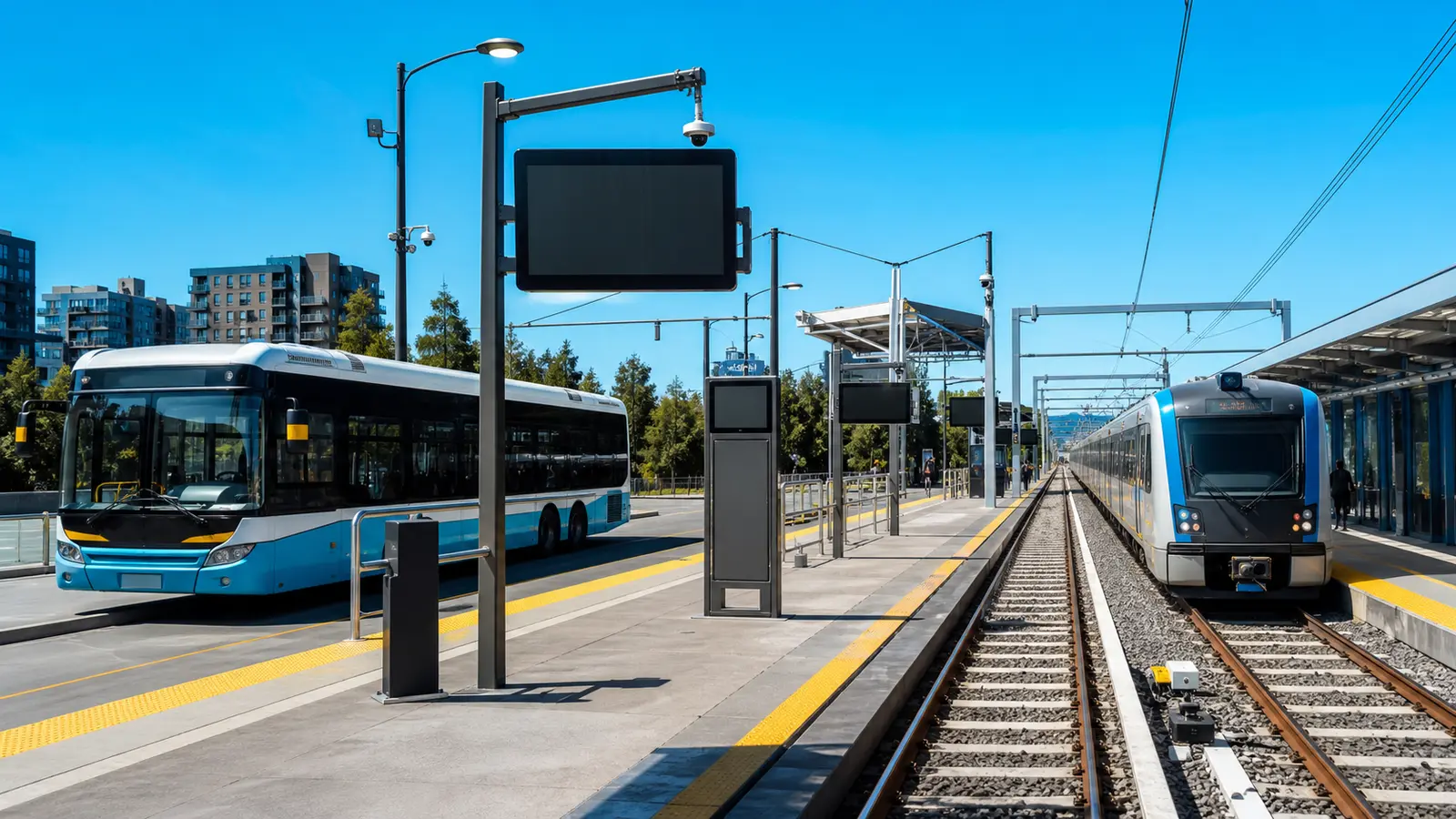
Hitachi Rail has announced an agreement to acquire Clever Devices, a supplier of intelligent transport technology used by bus and public-transit operators. Forbes described the transaction on April 7, 2026. The purchase price was not disclosed. The strategic point is broader than adding another software product: Hitachi Rail wants to coordinate trains, buses and other urban services through one digital operating layer instead of treating every vehicle and infrastructure asset as a separate system.
Clever Devices gives the buyer a stronger position in North American bus operations, while Hitachi Rail already supplies trains, signalling, maintenance technology and digital rail services. Group chief executive Giuseppe Marino described a shift from managing assets to orchestrating whole transport systems. That distinction matters because a passenger journey often crosses organisational boundaries. A delayed train can affect a connecting bus, but separate control rooms may not share sufficiently timely information to adjust departures, passenger messages or maintenance decisions.
The acquisition connects two parts of public transport
Hitachi Rail employs about 24,000 people and operates in more than 50 countries. Its physical portfolio includes rolling stock and signalling, but recent acquisitions have expanded the information available around those assets. It bought Perpetuum in 2021 to strengthen predictive maintenance and acquired Omnicom from Balfour Beatty in 2025 for live track monitoring. Clever Devices adds technology closer to bus fleets, dispatchers and passengers. Together, those capabilities can produce a wider operational picture than any single vehicle or track sensor provides.
The company launched its HMAX digital asset-management platform two years before the announced Clever Devices deal. HMAX applies artificial intelligence and cloud computing to maintenance, capacity and reliability. In practical terms, data from vehicle condition, tracks, schedules and service performance can be examined together. A failing component might then trigger maintenance before it causes a cancellation, while a control centre can compare the intervention with passenger demand and available replacement vehicles.
Capabilities the combined business can connect
- Real-time location and service information from buses, trains and control centres.
- Predictive maintenance signals from rolling stock, track and onboard equipment.
- Dispatch decisions that consider missed connections and changing passenger demand.
- Consistent passenger messages across station displays, mobile services and vehicles.
- Performance evidence for transport authorities purchasing services from several operators.
Integration is more difficult than collecting data
A larger data platform does not automatically create a better network. Railways and bus operators use equipment from different suppliers, follow different safety rules and often work under separate public contracts. Their data may describe time, location and incidents in incompatible formats. Hitachi Rail will therefore have to connect systems without disrupting daily operations, preserve the reliability of safety-critical functions and decide which information can be shared across organisational boundaries.
Ownership is another issue. A transport authority may own passenger and performance records even when a private operator runs the service and a technology supplier processes the information. Contracts need to define access, retention, cybersecurity responsibilities and the right to move data to another supplier. If integration creates dependence on one vendor, the authority could gain short-term convenience but lose negotiating power later. Open interfaces and exportable records are therefore commercially important, not merely technical preferences.
Questions customers should ask before deployment
- Which operational result will be measured: fewer cancellations, faster journeys, lower maintenance cost or better capacity?
- How will older vehicles and signalling systems exchange data with the new platform?
- Who can access passenger, location and maintenance records, and for how long?
- Can an authority replace one module without rebuilding the entire operating system?
- What manual fallback remains available during a cyber incident or cloud-service interruption?
Demand growth makes coordination economically relevant
Public-transport use is expected to double worldwide by 2050, according to the outlook cited in the Forbes report. Much of that additional demand will have to be carried on infrastructure that already exists. Building new tracks, depots and roads is expensive and slow, so operators are looking for capacity gains from better scheduling, earlier maintenance and more accurate passenger information. Digital coordination cannot replace physical investment, but it can help an authority use scarce vehicles, platforms and staff more effectively.
The business case should still be judged with operational evidence. Predictive alerts are valuable only if they identify failures early enough to act and do not overwhelm maintenance teams with false warnings. Connection management helps only when dispatchers have authority and available capacity to hold or redirect a service. Passenger information has value when it is accurate, consistent and delivered before travellers make a decision. These are measurable outcomes, and buyers should connect software fees to improvements rather than to the volume of data collected.
For the public-mobility market in the United States, the proposed acquisition could create a supplier able to span rail infrastructure and bus operations at meaningful scale. Hitachi Rail has expanded its regional footprint with a digital factory in Maryland, while Clever Devices brings established transit relationships. The opportunity is to make separate modes behave like one service from a passenger's perspective. The risk is that commercial integration may prove easier to announce than technical and contractual integration is to deliver.
The transaction therefore deserves attention as a test of the industry's digital strategy. Success would not be demonstrated by a common dashboard alone. It would appear in fewer avoidable failures, more reliable transfers, clearer information and better use of existing capacity. If Hitachi Rail can combine Clever Devices with HMAX and its earlier monitoring acquisitions while keeping interfaces open and systems resilient, it may move from selling individual assets toward operating a genuinely coordinated mobility platform.



















ADI News
Leave a comment