
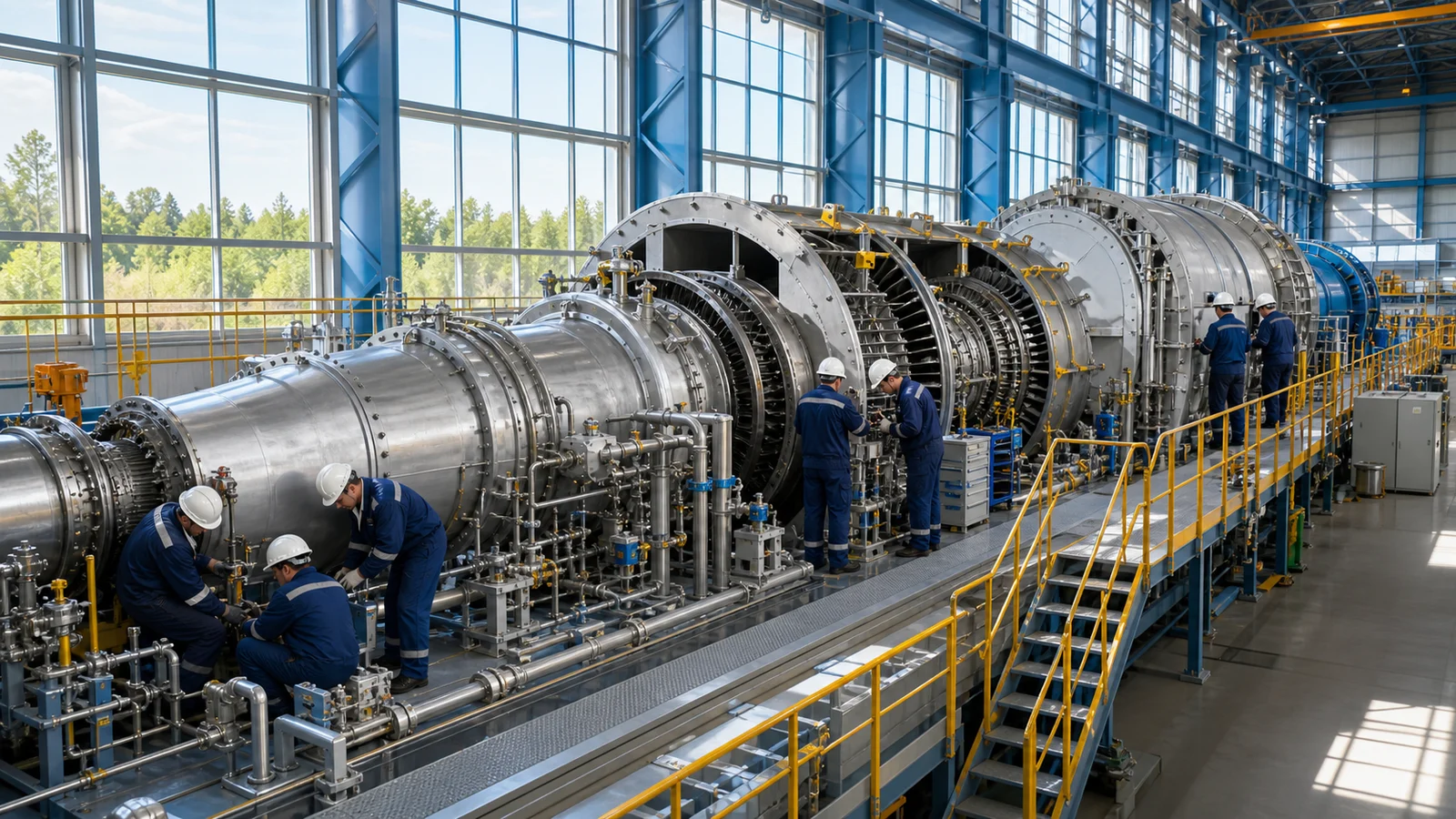
On 6 May 2024, Rostec chief Sergei Chemezov said Russia's first serially produced high-capacity gas turbine, the GTD-110M, was being installed at the Udarnaya thermal power station under construction on the Taman Peninsula. Olga Samofalova reported in Vzglyad that the station was expected to be fully commissioned during the year and the initial production programme called for two turbines annually.
The event addressed a technology gap in the energy industry of Russia. Domestic manufacturers produced small and medium turbines, but equipment above 100 MW had largely come from Siemens and General Electric. An estimate cited by the source put import dependence in this segment at more than 90% in 2022.
What the GTD-110M is designed to do
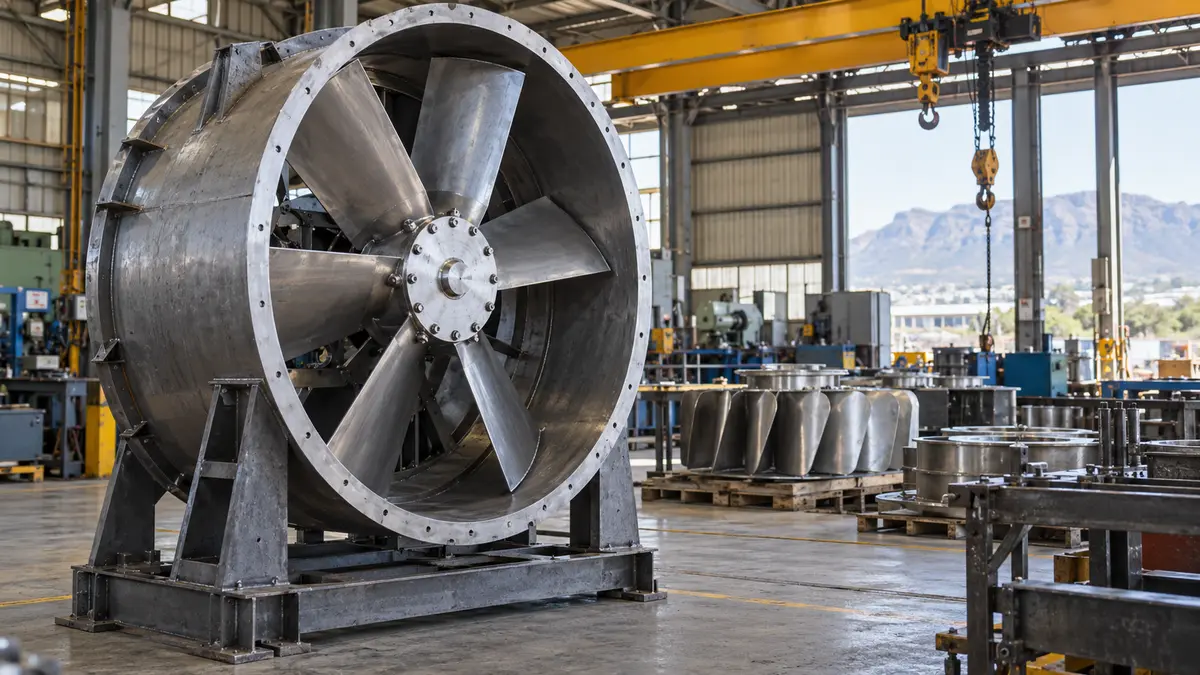
The GTD-110M drives generators in gas-turbine and combined-cycle power units. Inter RAO, the Gas Turbine Technologies engineering centre, Rusnano and UEC-Saturn participated in development, while serial production was located in Rybinsk. Rostec specified shaft output of 116.5 MW and efficiency above 36%.
Four parameters of the serial programme
- The 90130 MW class. The first serial machine had no domestic equivalent in this range.
- 116.5 MW. Its shaft output permits use at major generating facilities.
- Efficiency above 36%. Rostec compared the measure with foreign turbines for similar applications.
- Two units annually. This was the initial serial-production rate announced from 2024.
Why a first serial unit matters more than a prototype
The history of the original GTD-110 included long development and technical failures. The modified machine also required testing and redesign after an experimental unit was damaged in 2017. Installation at a commercial power facility therefore represented a shift from making one machine to repeating the technology with controlled quality.
The customer needs a complete lifecycle rather than a nameplate specification. A power station requires spare parts, repair procedures, diagnostic data and skilled support for decades. Import substitution cannot be measured only by the domestic share of metal; it becomes durable when the manufacturer can maintain availability and a predictable cost per megawatt-hour.
The economics of a domestic turbine
A high-capacity turbine is a capital-intensive product with relatively few buyers. Its factory must load specialized equipment, retain engineers and spread development cost across repeat orders. Two machines a year create an initial production rhythm, but long-term economics depend on the power-station modernization programme and the demonstrated reliability of early units.
Buying foreign equipment had previously shortened construction schedules and transferred some technology risk to the supplier. Domestic production reduces external dependency but returns that risk to the Russian developer and customer. Warranty reserves, transparent failure data and feedback between station and factory are essential; otherwise formal localization can cost more than dependable operation.
The main business conclusion
Installing the GTD-110M at Udarnaya was an industrial milestone, not the end of development. It created a domestic option for new generating capacity and modernization, supported engineering capability and opened a service market. At the same time, the first serial machine still had to prove itself on a real grid, where an outage costs far more than a laboratory delay.
Success should be measured by reliable operating hours, availability, fuel consumption, repair time and the factory's ability to deliver subsequent machines without losing quality. Repeatability is what converts a difficult engineering achievement into a competitive energy business.







ADI News
Leave a comment