
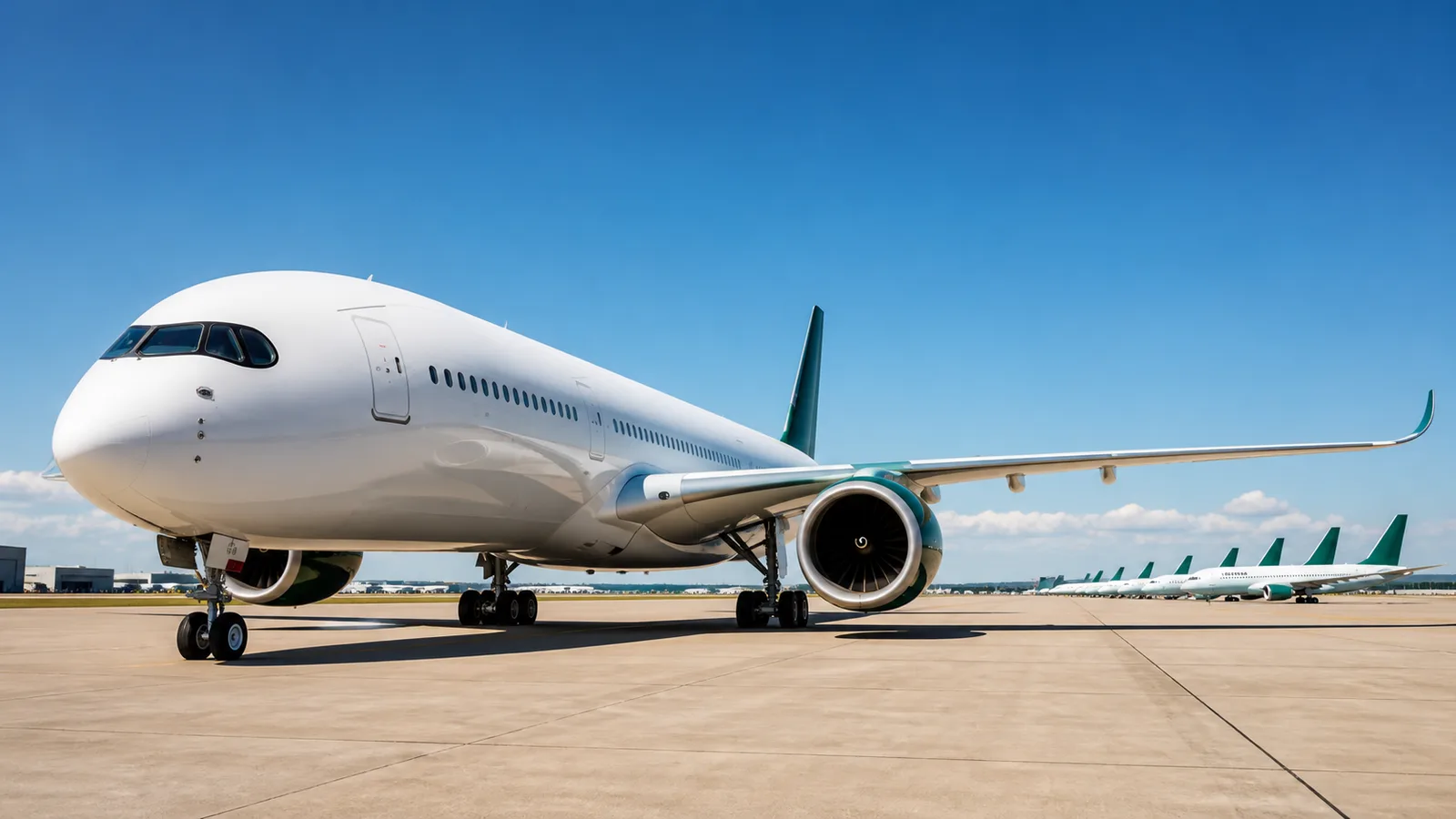
Saudi airline group Saudia ordered ten Airbus A330neo widebody aircraft for its low-cost subsidiary Flyadeal. Interfax reported the agreement on April 23, 2025, citing Reuters and the signing ceremony in Toulouse.
British aviation consultancy Cirium Ascend estimated the order at about $1.2 billion. Flyadeal had not yet assigned the aircraft to specific routes, but chief executive Steven Greenway said the carrier would focus on Southeast Asia, naming Indonesia, Thailand, Malaysia and the Philippines as possible markets. The airline plans to expand its fleet to 100 aircraft by 2030.
A widebody order changes the airline's operating scale
Low-cost carriers are often associated with single-aisle aircraft and short flights. Adding the A330neo gives Flyadeal a different set of choices. A widebody can carry more passengers and baggage over longer distances, allowing the airline to connect Saudi Arabia with large Asian markets without relying on a narrowbody's range or capacity. That opportunity also brings more complex scheduling, crew, maintenance and airport requirements.
The ten-aircraft commitment is large enough to establish a coherent subfleet. Common aircraft reduce the need to split training, spare parts and technical procedures across many types. At the same time, a widebody must operate with high seat occupancy to spread its higher trip cost. Route selection therefore matters as much as the purchase price: the airline needs dense passenger flows, reliable seasonal demand and airports able to turn the aircraft efficiently.
Operational preparations before delivery
- Train cockpit, cabin and maintenance teams for the new aircraft type.
- Secure long-haul airport slots and ground-handling capacity.
- Build sales and distribution channels in target Southeast Asian markets.
- Plan spare engines, components and scheduled maintenance around fleet use.
Southeast Asia offers scale and competitive pressure
Indonesia, Thailand, Malaysia and the Philippines contain large populations, major tourism markets and substantial demand for travel to the Gulf. The opportunity includes leisure traffic, visiting friends and relatives, business travel and onward connections. Saudi Arabia is also investing in tourism and aviation as part of a broader effort to diversify its economy, so additional international capacity can support both outbound and inbound demand.
Those markets are not empty. Gulf network airlines, Asian full-service carriers and regional low-cost operators already compete on price, schedule and connections. Flyadeal must decide whether to offer point-to-point service, feed Saudia's wider network or combine both models. A low fare alone may not fill a large aircraft throughout the year; frequency, baggage policy and dependable connections influence customer choice on longer trips.
Commercial measures for the new fleet
- Passenger load factor and revenue per available seat on each new route.
- Aircraft utilisation measured by daily flying hours and turnaround time.
- Ancillary revenue from baggage, seat selection and onboard services.
- Seasonal variation and the cost of redeploying capacity between markets.
The order supports a fleet of 100 aircraft by 2030
Flyadeal's 2030 target provides strategic context for the ten A330neo aircraft. Growth to 100 planes requires more than deliveries. The carrier needs pilots, cabin staff, engineers, financing, airport access and a route pipeline capable of absorbing new capacity. Widebodies can accelerate seat growth, but they also concentrate risk: one poorly performing long-haul service ties up more capital than a short narrowbody route.
The estimated $1.2 billion value is a consultancy figure rather than a disclosed final contract price. Aircraft transactions commonly include confidential discounts, support packages and financing arrangements. Investors and competitors will therefore learn more from delivery timing, fleet deployment and operating results than from the headline estimate.
For the aviation sector of Saudi Arabia, the agreement signals that low-cost expansion is moving beyond regional narrowbody operations. The order can open direct links with populous Asian markets and support the kingdom's aviation ambitions. Its commercial value will depend on disciplined route selection, high aircraft use and Flyadeal's ability to preserve low-cost operations while managing widebody complexity.


















ADI News
Leave a comment