

A fast-growing economy attracts attention, but a high growth rate does not make a market simple. An international company must understand which part of expansion creates purchasing power, who pays for infrastructure, how permits work and why local participation affects not only reputation but also the ability to operate. Tanzania displays all of these tensions with unusual clarity.
Expert published Danila Sokolov's feature on August 12, 2026, assembling evidence on investment, population, tourism, trade, infrastructure goals and the business environment. The result is not a promotional postcard. It is a complex portrait of an economy where large opportunities coexist with poverty, informal employment and regulatory constraints.
For companies considering work in Tanzania, the central lesson is to enter in stages. A business should begin with evidence about demand, a local partner, logistics and community impact rather than with a large irreversible asset. The market may reward early participation, but it punishes the assumption that strong national statistics automatically remove operating risk.
Economic growth is not the same as market maturity
Tanzania's economy grew by 5.9% in 2025, and forecasts through 2030 point to annual expansion of roughly 6-7%. That is a significant pace for a large country. Yet the population doubled over 25 years and reached about 70.5 million. When the number of residents rises by almost 3% a year, part of aggregate growth merely serves additional consumers and workers.
Per-capita improvement is therefore much more modest. A company that evaluates the market through gross domestic product alone can overstate the wallet it can reach. It must examine income distribution, the regularity of earnings, delivery cost and the share of spending that a household can direct toward a particular product.
A reliable market estimate is built from the bottom. It starts with a city, a sales channel and a customer occasion. A consumer in Dar es Salaam, a tourism operator in Zanzibar, a farming cooperative and a public infrastructure buyer belong to one economy, but they have different purchasing power, decision times and standards of trust.
Demography creates scale and pressure at the same time
A young and expanding population generates future demand, enlarges the labor pool and accelerates urbanization. At the same time, more people enter the labor market each year than the formal sector can absorb. The source notes a high employment rate among working-age residents, but about 91% of employment remains informal.
For employers, this creates a dual reality. People may be available for basic operations, while building a stable team with verified skills, formal contracts and repeatable standards is harder. Formal wages also fail to capture the full cost. Training, transport, retention, safety and management time belong in the operating model.
Product strategy must account for irregular income. A customer may earn money unpredictably, buy in small quantities and trust a familiar local seller more than national advertising. Small packs, flexible payment, service through a known intermediary and accessible spare parts can matter more than a low unit price on a large contract.
Agriculture remains the social center of the economy
About 63% of residents work in agriculture even though the sector produces roughly 26% of economic output. The gap signals low average productivity and a very large reserve for improvement. Suppliers of machinery, seeds, fertilizer, storage, processing and financial services can see a potentially substantial market.
Technology must not run ahead of farm economics. A producer does not need the most powerful machine; the producer needs a solution that pays back at the relevant land area, yield, water access and selling price. Equipment without repair, consumables and training can quickly become an expensive stationary object.
A successful supplier connects its product with the production chain. It understands who gathers the crop, where quality is lost, who provides working capital, how goods reach a processor and when the farmer is paid. This work is slower than a one-time shipment, but it creates repeat demand and lowers credit risk.
The investment record needs careful interpretation
Since 2021, Tanzania has ranked first among the world's 100 largest countries by the share of fixed investment. The Expert feature cites a level around 42% of gross domestic product, about one and a half times the global average. Foreign investment attracted in 2025 reached USD 12 billion, compared with USD 3 billion in 2021.
These numbers confirm intense construction of a future economy, but they do not promise equal returns across projects. A high investment share can reflect expensive infrastructure, public programs and a few major assets. A private participant must identify precisely where cash flow will emerge and who carries delay risk.
Every proposal should be divided into the physical asset, the ultimate payer and the return mechanism. A port earns tariffs, a hotel earns occupancy, a network earns subscriptions, and a factory earns product sales. If repayment is described only as general economic growth, the business case is not finished.
The national program establishes a long horizon
Vision 2050 projects a population above 118 million, an economy of about USD 1 trillion and average income per person near USD 7,000. Reaching those objectives may require about USD 3.6 trillion of investment over the period, or roughly 35% of gross domestic product every year, according to an estimate cited by the source.
Foreign investment is expected to meet about 57% of the requirement, with the state financing 22% and private companies 21%. In the nearer term, however, the public budget is expected to lead. Government spending for the 2026/2027 fiscal year increased around 10% to USD 24 billion.
A supplier must translate the national goal into a procurement sequence. A long strategy shows direction, but it does not replace an approved budget, specification, site, permit and accountable customer. Between a political priority and a commercial contract lies a chain of evidence.
Infrastructure opens several markets at once
Priorities include railways, hydroelectric plants, pipelines, broadband and ports. Plans under discussion include a deepwater port at Bagamoyo near Dar es Salaam and the Mangapwani port in Zanzibar. Such assets create demand far beyond the central construction package.
A railway needs terminals, warehouses, maintenance, security, freight management and communications. A port supports brokers, transport companies, cold chains, packaging and industrial zones. An energy project needs equipment, technical control and trained operators. A specialized smaller company can therefore enter the ecosystem without becoming the general contractor.
Dependence on one megaproject remains dangerous. Schedules can move, funding can change, and purchases can be bundled into contracts too large for a new supplier. A resilient strategy combines participation in a major program with a service already required by operating enterprises.
Tourism generates foreign currency but needs product renewal
A record 2.3 million foreign tourists visited in 2025, and revenue from them increased about 13% to USD 4.4 billion. Including connected sectors, tourism accounts for roughly 17% of economic output, one quarter of foreign-currency receipts and about 11% of employment.
The ambitions are much larger. By 2050, authorities aim to receive 10 million international visitors and raise tourism's contribution to 30% of the economy. The natural base is powerful: Kilimanjaro, Serengeti, Zanzibar, 22 national parks and extensive protected land create recognition that competitors cannot manufacture quickly.
The constraint lies in service and infrastructure. A visitor needs a reliable road, predictable transfer, secure booking, connectivity, insurance, a good room and trained personnel. The opportunity is therefore broader than another hotel. It includes training, software, energy, water, food supply, waste management and equipment for hospitality businesses.
Trade reveals the practical structure of demand
Tanzanian goods exports rose to roughly USD 9.7 billion in 2025, while imports were about USD 14.2 billion. The country exports gold, coffee, tea, cashew nuts, cotton and other agricultural or raw materials. Machinery, transport equipment, fuel, grain and consumer goods are important on the import side.
The goods deficit confirms persistent import demand but also creates currency exposure. An importer cannot model cost only in the supplier's currency. Exchange rates, port charges, customs, inland transport, inventory time and financing before the final sale all belong in landed cost.
Services present a stronger balance because of tourism and transport. That suggests a path to diversification: a company can add installation, maintenance, training, management or a digital service to a physical product. Services retain customer relationships and reduce dependence on a single shipment.
Links with Russia are moving from intent to routes
Openly reported trade with Russia reached about USD 280 million in 2025. Tanzanian imports from the country were approximately USD 253 million, driven mainly by grain and fertilizer, while goods moving in the other direction were around USD 30 million.
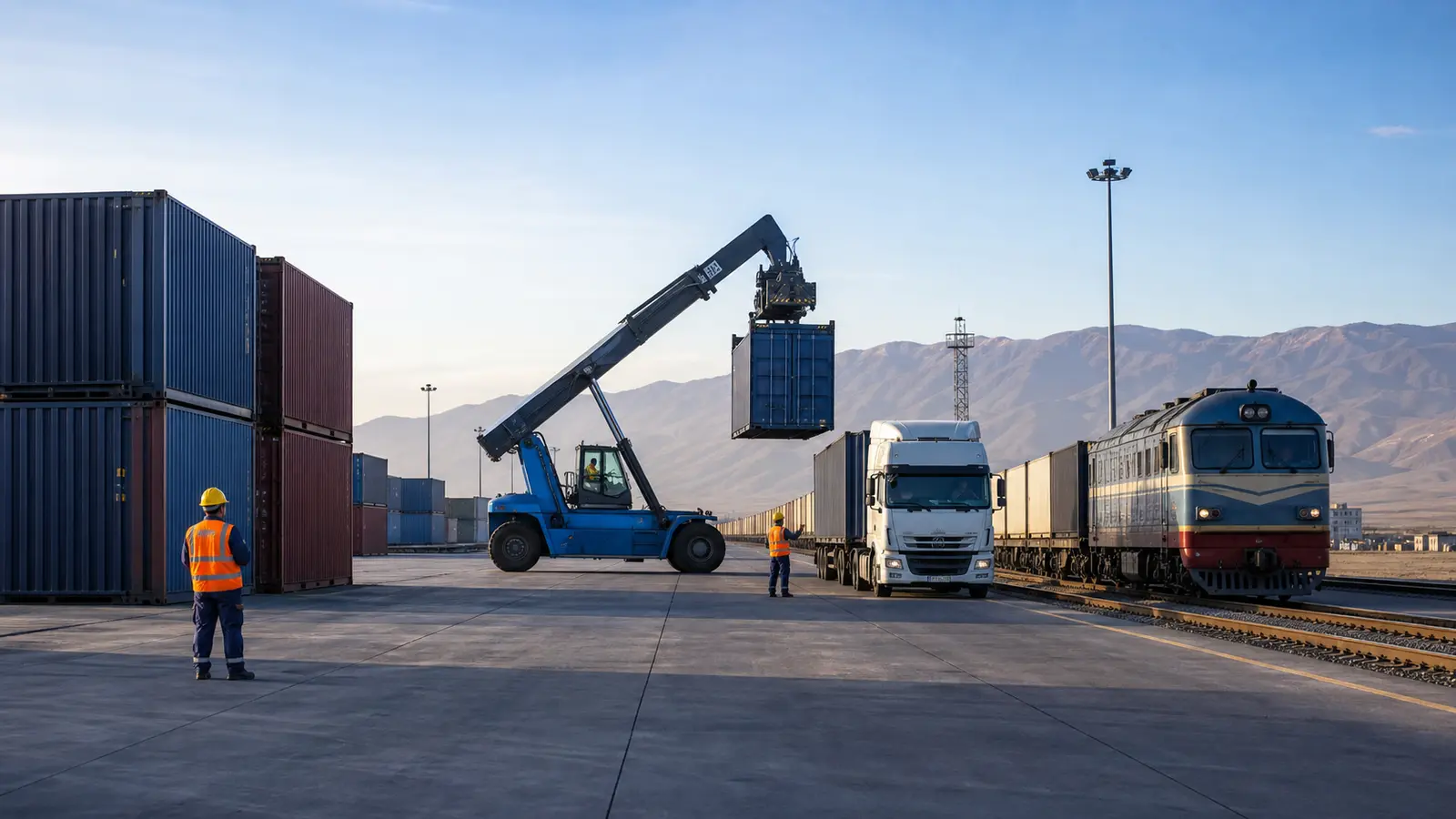
In May 2026, FESCO delivered containers from Novorossiysk to Dar es Salaam for the first time. A direct route matters as more than one sailing. It allows businesses to measure transit time, cost, documents, container return and local delivery reliability through an actual operation.
A trade mission is expected to open in 2027, while projects in energy, pharmaceuticals, fertilizer and digital solutions are being discussed. Institutional support does not replace commercial validation. An exporter still needs a buyer, service, inventory, reliable payment and a partner who can solve problems after the cargo arrives.
Localization is becoming a condition of durable access
Authorities want to attract foreign capital while increasing the share of value created by citizens. This combination is typical of a rapidly developing market. The country welcomes technology, finance and production, but it does not want to remain only a buyer of finished imports.
An offer that includes local assembly, training, repair and some local purchasing is therefore stronger than a simple shipment. Localization does not have to begin with a large factory. The first level can be a local service team and spare-parts stock; the second can add assembly or packaging; the third can transfer processes and develop suppliers.
Each level needs an economic foundation. Artificial localization designed only to reach a formal percentage raises cost and can weaken quality. Useful localization reduces service time, limits currency exposure, creates skills and adapts the product to actual local conditions.
Regulation combines acceleration with local protection
A one-stop investment service was established in 2025, and the feature reports that a new company can be registered online within a day. That is an important sign of administrative simplification. At the same time, some activities were restricted for foreigners and licensing expanded.
The rules affect selected areas of retail, tour guiding, extraction, real-estate agency and financial technology. A foreign investor must not treat company registration as permission for every operation. It needs a separate matrix covering the legal entity, license, tax, employment, sector approval, data rules and local participation.
Regulatory review belongs before a long lease and a large hiring commitment. A company should obtain a written opinion from local counsel, confirm the position with the relevant authority and include exit conditions in its agreements. A broker's verbal assurance is not a substitute for an applicable rule.
Land and community consent require their own workstream
Foreign investors cannot own land outright, although long-term leasing is available. This changes the structure of a hotel, industrial site, farm or warehouse transaction. The investor must verify title, designated use, road and water access, lease duration, renewal rights and compensation for improvements.
Legal rights do not guarantee community acceptance. The source describes Agro EcoEnergy's sugar project, which met strong resistance from local farmers who feared losing homes and grazing land without fair compensation. Authorities eventually stopped the project and terminated the lease agreement.
Social engagement begins before the announcement. The company maps land users, livelihoods, livestock routes, water and culturally important places. Compensation must be understandable, accessible and timely. Consultation is not a communications exercise; it can and should change the site, scale or technology.
Human capital determines the speed of transformation
Heavy investment in concrete and machinery cannot remove a skills shortage by itself. The Expert article emphasizes the need for investment in education, health, nutrition, digital literacy and productive employment. For a company, this is not a separate social theme. It is a condition for operating the asset.
A new production line needs operators, technicians, supervisors and shift leaders. A hotel requires service and language preparation. A digital service needs connectivity, trust and user ability. If training begins after commissioning, the project loses revenue during its most expensive period.
Preparation should connect directly to a real role. A participant performs the operation on equipment, proves safety competence and sees a development path. Partnership with a college or university is useful when the curriculum changes around the actual process instead of ending with a general memorandum.

A local partner must add capability, not just an address
Foreign companies often seek a partner as a formal entry requirement. That approach creates an intermediary but not necessarily an operation. A strong partner has verifiable sales, technical personnel, permits, financial discipline and the ability to support a customer after the transaction.
Due diligence should cover owners, litigation, tax standing, banking details, active contracts, warehouse, employees and customer references. Conflicts of interest deserve particular attention. An agent representing many competitors may promise reach but devote little resource to a new product.
A pilot agreement is safer than immediate exclusivity. It defines territory, sales objectives, service standards, reporting, brand use and termination rights. Exclusivity follows demonstrated performance rather than being exchanged for a promise.
Technology projects need everyday reliability
A digital special zone is developing in Zanzibar, while high-technology companies are discussing a platform for promoting solutions. Opportunities exist in communications, payments, public administration, security, tourism and industry. Yet technology functions only when electricity, connectivity, a device and support are available.
Only about one third of residents have internet access, and coverage is uneven. An application that assumes constant broadband and an expensive phone may exclude most of its audience. It needs a lightweight mode, resilience during interruption, easy recovery and understandable assistance.
A supplier should measure regular use and beneficial outcomes rather than installations. For a business, outcomes include paid transactions, shorter task time, lower losses or new customers. A technical launch without user adoption is not a completed implementation.
Industrial cooperation begins with a service base
Gazprom has shown interest in energy projects, Rosatom participates in the Mantra uranium project, and fertilizer, medicines and vaccines are also under discussion. These are capital-intensive fields with long timelines, complex regulation and a high cost of downtime.
A supplier's first competitive advantage is often not the machine itself but an engineer, parts and a clear response time. A remote asset cannot wait for an international shipment of every small component. The service base should exist before a large installed fleet.
Technical documentation, training and diagnostics must be transferred contractually while control of critical operations remains clear. The goal is not to make the customer dependent on a foreign specialist. It is to build a joint system in which the local team handles frequent tasks and the manufacturer supports difficult cases.
Unusual startups show the cost of community impact
Chanzi uses black soldier fly larvae to process food waste into feed protein and fertilizer. The model connects waste, agriculture and environmental value. Residents nevertheless complained about a strong odor, and the regulator required corrective action and recommended relocation.
The example matters to any innovative project. Technical benefit does not cancel local harm. An environmental model must account for smell, water, traffic, noise, pests and neighboring uses. Tonnes processed are an incomplete metric if the surrounding area loses quality of life.
A different example involves Rapid Bio and LifeTX Africa localizing rapid tests for infectious diseases. Local production shortens the path between a product and a real health need. Durability still depends on quality, registration, medical training and a functioning procurement mechanism.
A pilot should test the complete transaction chain
A first project often tests customer interest alone. That is insufficient in Tanzania. The pilot should pass through payment, international freight, customs, inland delivery, installation, training, use, service and repeat ordering. Only the complete cycle reveals actual economics.
The scale must be small enough to contain risk and large enough to operate under ordinary conditions. A demonstration continuously supported by headquarters does not prove that the local model can function independently.
Criteria are established before launch: delivery time, landed cost, staff readiness, successful operations, user adoption, payment collection and repeat need. At completion, the company either scales a validated model or repairs a specific break in the chain.
A practical Tanzania market-entry sequence
- Select one customer segment, city and problem instead of treating the whole economy as one market.
- Validate purchasing power, the decision channel and the ultimate source of the buyer's money.
- Build a matrix of registration, licenses, taxes, land, labor, data and sector approvals.
- Verify the local partner's ownership, finance, customers, warehouse, people and service capability.
- Calculate complete landed cost with currency, port, customs, inventory and inland logistics.
- Define a useful level of localization, training and spare parts before the first large order.
- Run a contained pilot through the entire cycle from contract to repeat payment and support.
- Scale only after proving demand, operational reliability and community acceptance.
Risk should be separated into manageable layers
Country risk is too broad to guide a decision. It should be separated into currency, customer, permits, land, logistics, personnel, supplier, community and repatriation of funds. Each layer has a different response: an advance, insurance, inventory, an alternative route, a contract condition or a smaller stage.
Not every risk can be removed, but irreversible commitments can be limited. A lease precedes a land-intensive build, a service point precedes a factory, and a pilot precedes national distribution. This sequence does not show weak confidence. It creates the right to increase the commitment after learning.
The board needs a stopping threshold as well as an upside forecast. If the license is not obtained, the partner cannot collect payment or the customer does not reorder, the next tranche should not be released. Discipline protects both capital and negotiating position.
The opportunity lies in connecting growth with execution
Tanzania offers a rare combination: a large young population, sustained economic expansion, heavy investment, global natural recognition and an ambitious infrastructure program. That creates room for transport, energy, manufacturing, agricultural technology, tourism, healthcare and digital services.
The weaknesses are equally real: low incomes, informal employment, skills shortages, infrastructure gaps, currency dependence and changing rules for foreign participants. They do not eliminate the market; they define the method of entry. A solution must be affordable, repairable, locally supported and understandable to regulators and communities.
An early mover's advantage does not come from announcing first. It appears when a company completes the learning cycle faster than competitors: finding a paying customer, building the partnership, delivering, supporting and repeating the transaction. In a growing market, that capability is more valuable than the most impressive presentation about the future.


















ADI News
Leave a comment