
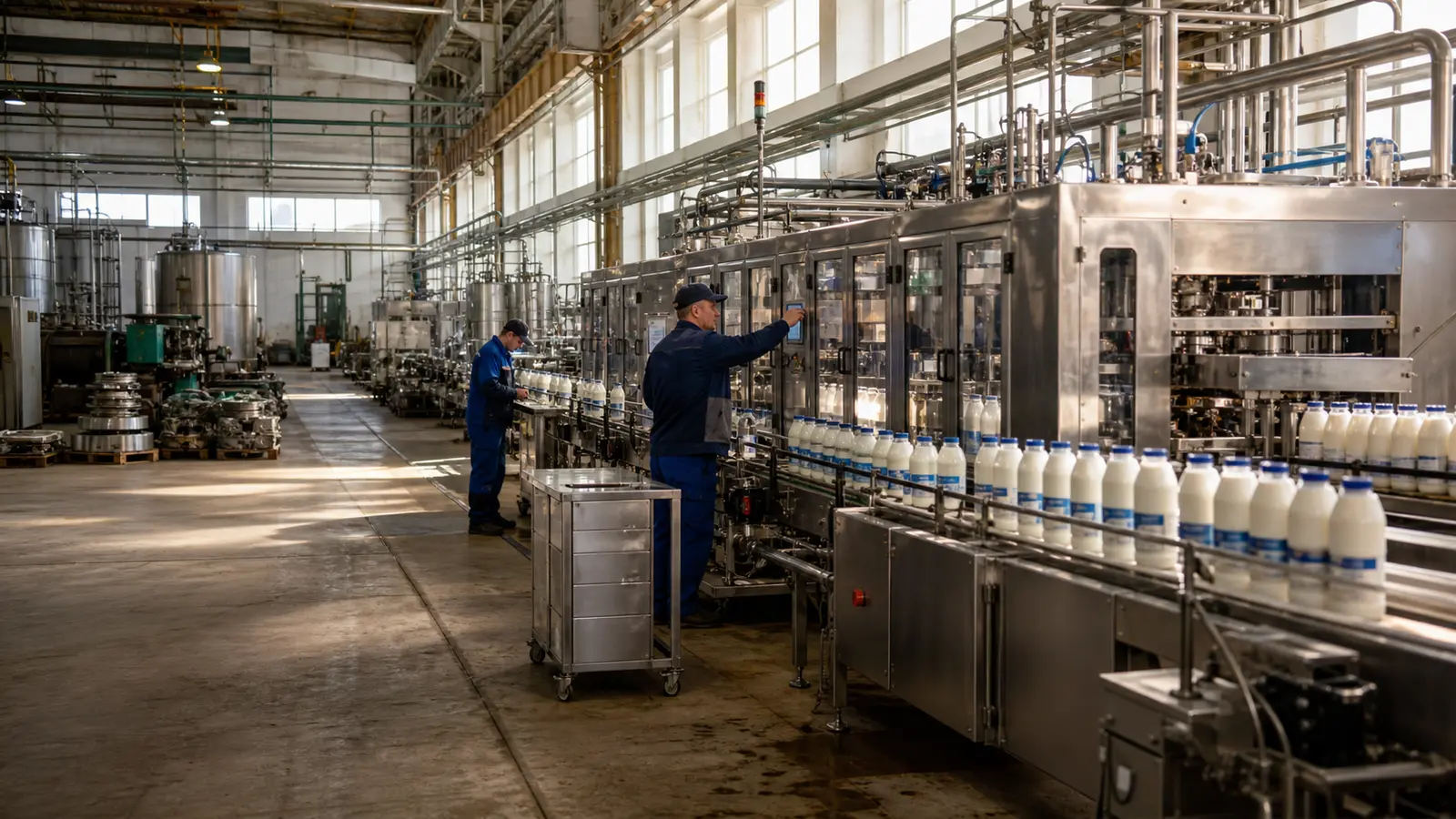
A change of ownership does not automatically restart a factory, restaurant chain or logistics network. The legal transfer may happen on one date, but the operating transfer takes much longer. Equipment must be assessed, suppliers requalified, software supported, managers given authority and capital allocated against a credible plan. When the previous owner has paused investment, the new owner inherits both a functioning business and a growing backlog of decisions.
Gazeta.Ru reported on April 20, 2026 that a distinct group of productive assets had emerged after foreign companies changed their presence in Russia. Many remained operational, yet investment slowed sharply during the transition. The source described how new owners in food service, packaging, automobiles, dairy and retail logistics moved from stabilization toward renewed capital spending.
The important business question is not whether spending has returned in headline terms. It is whether capital is rebuilding competitiveness. A replacement machine can preserve output without changing economics; a coordinated program can improve yield, launch products, localize critical inputs and open regional demand. The difference lies in sequencing, governance and the ability to turn ownership into operating capability.
Why ownership transfer creates an investment pause
Investment is easiest when strategy, financing, technical standards and decision rights are stable. An ownership transition disrupts all four. The seller may avoid long-payback projects while preparing an exit. The buyer may lack complete information about equipment condition, contracts or deferred maintenance. Banks see uncertainty in collateral and cash flow. Managers wait for a new mandate rather than committing to irreversible expenditure.
Gazeta.Ru cited research indicating that about 67% of foreign companies reduced investment parameters during the earlier transition period. That does not mean every asset stopped producing. Many businesses continued serving customers, but operated in a maintenance mode: urgent repairs were approved, while modernization, capacity expansion and new-product programs were postponed. The hidden cost accumulated even when reported revenue remained resilient.
A pause can be rational for several months because a new owner needs a baseline. It becomes dangerous when temporary caution turns into a default strategy. Machines age, suppliers lose confidence, skilled employees leave and competitors improve. Restarting investment therefore begins with a deadline for uncertainty: management must identify what it knows, what it needs to test and when each capital decision will be made.
The asset is more than the purchase price
Acquirers often focus on the transaction value, debt package and legal perimeter. The true economic asset is broader. It includes customer habits, recipes, process knowledge, maintenance history, software configurations, permits, local supplier relationships, trained shifts and the credibility of promised delivery. Some of these resources do not appear as separate lines on a balance sheet, yet their loss can destroy the value of physical plant.
New owners should therefore build an operational value map immediately after closing. It should distinguish capacity that is genuinely available from capacity that exists only on paper. A line rated for a certain output may be constrained by one imported control, an unreliable utility connection or a quality laboratory with insufficient throughput. Capital is productive only when it removes the actual bottleneck.
The same map should record deferred obligations. Roof repairs, cybersecurity updates, environmental equipment, spare-part inventories and staff certification compete with visible expansion projects. Treating them as unrelated overhead creates false economics. A new workshop cannot deliver its forecast if the old power system or warehouse software is the limiting factor.
From expensive acquisition debt to productive capital
The source noted that many assets were acquired with costly borrowed money. That creates a difficult capital-allocation problem. Debt service rewards immediate cash preservation, while a neglected production base needs spending before it can grow. Cutting every investment may improve one quarter and weaken the ability to repay over several years. Spending without gates can create the opposite failure.
A credible plan separates capital into three portfolios. The first protects safety, legal compliance and business continuity. The second raises efficiency through yield, energy, maintenance and labor improvements. The third creates growth through capacity, products, locations or channels. Each portfolio needs its own hurdle rate because a mandatory safety project should not compete with a speculative expansion on the same simplistic return metric.
Funding should follow verified milestones. Engineering completion, equipment acceptance, installation, commissioning and stable commercial output are different states. Releasing all capital against the initial budget weakens discipline. Holding every payment until final output can starve suppliers. Stage gates align cash with evidence and expose delay before the entire program is committed.
Restaurants show how a brand becomes an operating system
The transition from McDonald's to Vkusno i Tochka first required continuity: menus, kitchens, food safety, staffing, suppliers and customer service had to work under a new identity. Once the operating model stabilized, the company could direct capital toward restaurant modernization, digital services and logistics. Gazeta.Ru noted plans announced in 2023 for 50 new restaurants and a 2024 development agreement involving RUB 1.2 billion.
This case demonstrates why rebranding alone is not renewal. A sign can be changed quickly, but restaurant economics depend on throughput by hour, order accuracy, food waste, delivery mix, energy use and location-level demand. Modernization should be evaluated by those measures. A digital kiosk that merely shifts orders from the counter may not create value; one that raises peak throughput and improves kitchen sequencing can.
Network businesses also need portfolio discipline. Some locations justify a full redesign, others a targeted equipment upgrade, and weak sites may require relocation or closure. Applying one template to every restaurant wastes capital. The owner needs a repeatable diagnostic that preserves brand consistency while recognizing local unit economics.
Packaging localization is a capability test
Tetra Pak assets stopped investment in 2022 and later operated as Packaging Systems after localization and ownership change, according to the source. Packaging is a useful example because customers do not buy machinery alone. They depend on material specifications, filling-line compatibility, food safety, spare parts, technical service and predictable supply over many years.
A localized packaging platform must decide which capabilities are strategic. Printing or converting material domestically may be visible, but specialized coatings, controls, seals, software and service expertise can remain bottlenecks. The correct localization metric is not the number of substituted items. It is the percentage of customer output that can continue through a realistic disruption without compromising quality.
Investment should connect equipment with qualification. A new material needs trials at customer plants, shelf-life evidence and stable manufacturing yield. A domestic component needs service documentation and inventory. The program succeeds when customers can plan production with confidence, not when a prototype is displayed.
Automotive plants require an ecosystem restart
AGR acquired former Volkswagen and General Motors plants and accepted RUB 87.7 billion of investment obligations under special investment contracts, the source reported. Automobile assembly illustrates the scale of coordination required after a transition. A factory can contain modern presses, paint shops and conveyors yet remain idle if vehicle platforms, component supply, certification and dealer demand are not aligned.
Localization of electronics, transmissions and engines can deepen industrial value, but sequence matters. Launching several complex subsystems simultaneously increases integration risk. Management should define platform volumes, select components by import vulnerability and economic scale, and create test capacity before promising a localization percentage. A low-volume proprietary part may remain expensive even when technically domestic.
The plant's restart scorecard should include supplier production readiness, first-pass yield, defects per vehicle, changeover time, warranty claims and cash tied in unfinished inventory. Units assembled for storage are not proof of a healthy cycle. Stable retail demand and after-sales support must pull production through the system.
Dairy investment links factories to local economies
Logika Moloka, formerly Danone Russia, offers a regional manufacturing case. Chairman Ruslan Alisultanov said the acquired business had effectively lacked investment programs after 2022. By the end of 2024, the company reported production growth above 20%, while development funding increased from RUB 2 billion to RUB 7 billion. The source also described a plan to invest about RUB 100 billion through 2030.
Dairy capital has a network effect. Modern filling, water treatment, refrigeration and quality systems improve factory performance, but they also influence demand for raw milk, packaging, transport and technical services. A reliable plant gives farms a reason to invest in herd productivity and cooling. An unreliable buyer transfers volatility into the surrounding agricultural economy.
The investment thesis should therefore measure more than finished liters. It should track raw-material quality, supplier retention, energy and water per unit, line yield, changeover losses, shelf life and delivery reliability. Regional value appears when operational improvement creates predictable demand and better jobs rather than only a larger installed machine base.
Regional projects need one portfolio view
Gazeta.Ru described several dairy modernization programs: about RUB 2 billion for a Krasnoyarsk plant, more than RUB 3.7 billion through 2029 in Shadrinsk, and up to RUB 1 billion for production-line renewal in Tikhoretsk. It also pointed to the importance of plants in cities such as Labinsk and Yalutorovsk. Each site has different utilities, suppliers, logistics and demand.
A central portfolio office should not force identical projects, but it should compare them using common definitions. Management needs to see cost per added unit, reliability improvement, energy savings, launch risk and regional supply effects. A site with little volume growth may deserve priority if it removes a severe continuity risk. Another may create more value through a modest debottleneck than through a new building.
Portfolio sequencing can also protect scarce engineering teams. If every plant replaces water treatment or automation at once, the owner competes with itself for integrators and commissioning specialists. Staggered waves allow lessons from one site to improve the next and keep backup capacity available during shutdowns.
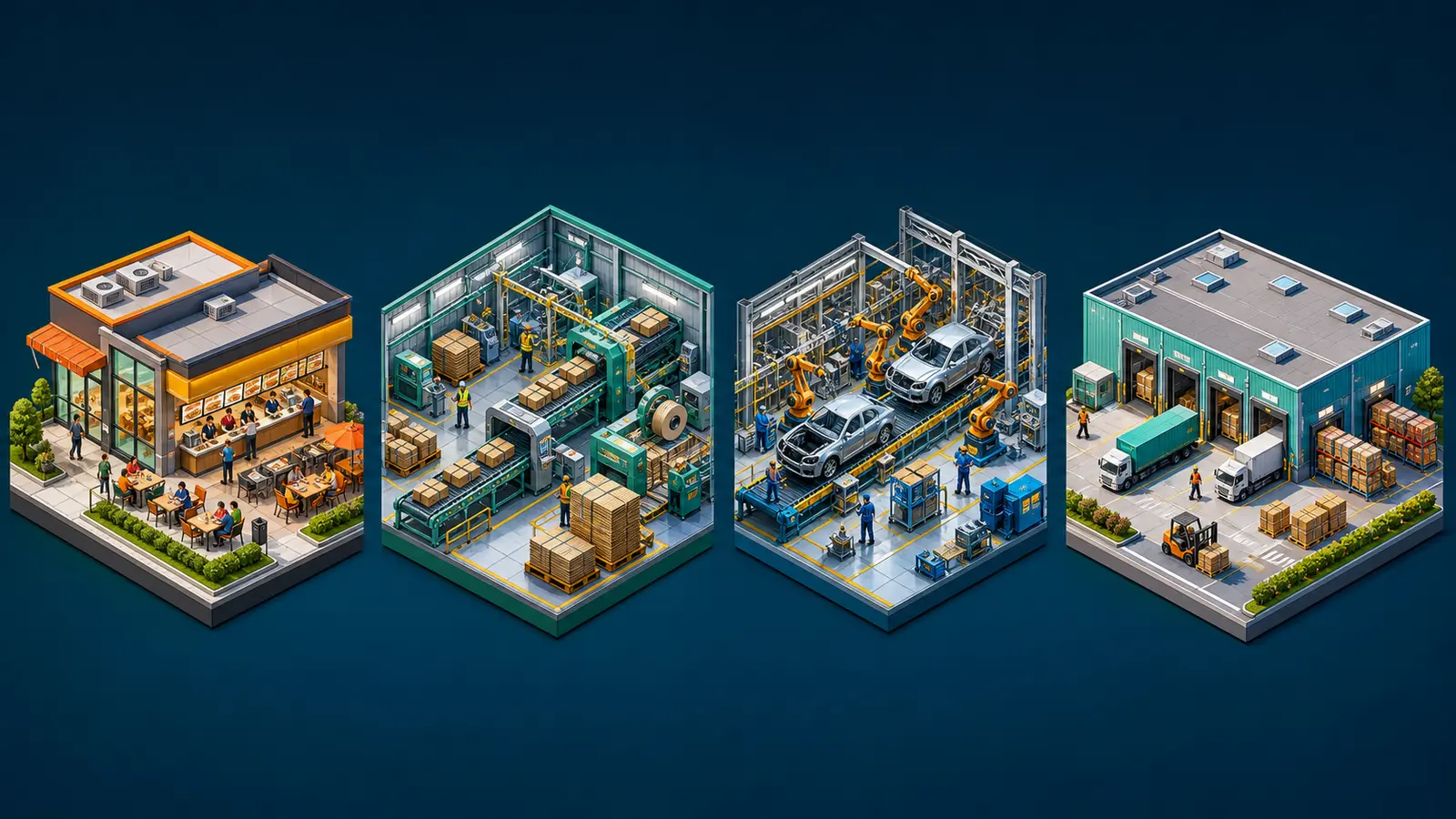
Logistics capital determines whether growth reaches customers
Lemana PRO, the successor to Leroy Merlin in the local market, announced a RUB 2 billion class-A warehouse in Novosibirsk Region. The source described the facility as strategically important for logistics in Siberia and the Far East. The case shows why commercial renewal often depends on infrastructure that customers rarely see.
A warehouse investment should start with network economics. Location, assortment, supplier lead time, store replenishment, e-commerce promises and transport capacity determine value. A technically advanced building can still add cost if inventory is duplicated or if routing does not change. The business case should measure total delivered cost and service, not rent or automation in isolation.
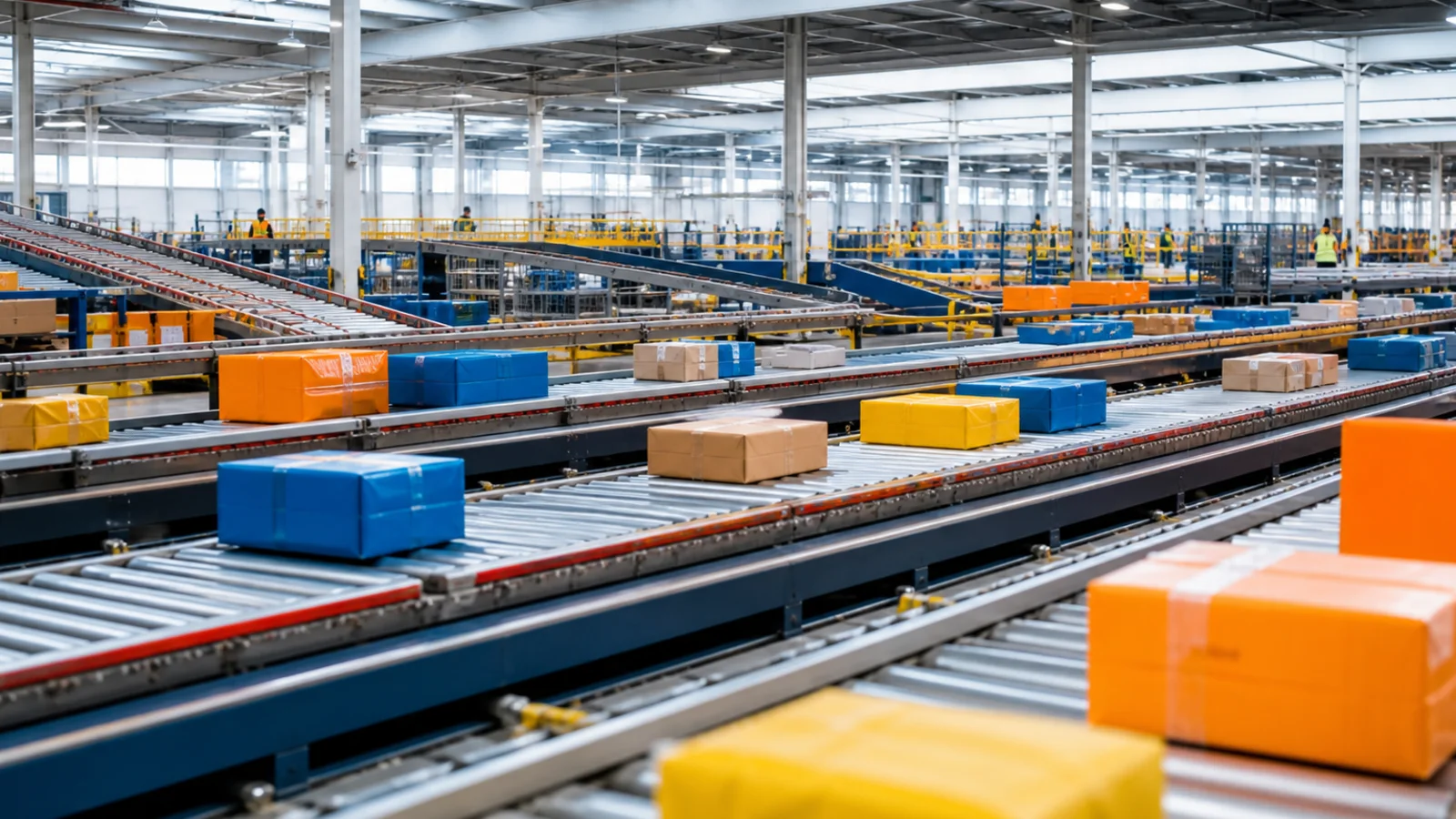
Commissioning also needs operational rehearsal. Warehouse-management systems, conveyors, loading docks, transport schedules and store ordering must work together under peak volume. Gradual migration, parallel inventory checks and defined fallback procedures reduce the risk that a new hub disrupts the network it was built to improve.
Digital systems are part of the productive asset
Ownership transitions expose software dependencies. Production planning, maintenance, quality, customer loyalty, warehouse control and finance may rely on licenses or support arrangements linked to the former group. Replacing software too quickly can interrupt operations; postponing the decision can leave an unacceptable continuity risk.
The digital roadmap should classify systems by operational criticality and replacement difficulty. Data extraction, interface documentation and access rights come before a large migration. Owners should preserve an auditable baseline, then replace the most fragile dependencies in controlled waves. Every change needs a rollback path and a business owner, not only an information-technology owner.
Modernization becomes more valuable when equipment and data are designed together. Sensors can reveal downtime and energy losses, but only if definitions are consistent and teams act on the signal. A dashboard without maintenance authority adds reporting, not productivity. Digital capital earns a return through changed operating decisions.
Supplier renewal should reduce single points of failure
A new owner may inherit contracts that cannot continue on old terms. Components, ingredients, consumables and services must be mapped by criticality, lead time and qualification difficulty. The highest priority is not always the most expensive item. A low-cost seal, controller or food additive can stop an entire line when no approved alternative exists.
Supplier development combines commercial and technical work. Long-term volume can justify tooling, while joint testing reduces qualification risk. Contracts should specify quality, traceability, change notification and access to technical data. Price remains important, but the cheapest nominal quote may create costly downtime or inventory.
Diversification does not mean giving every purchase to two vendors. Some volumes are too small. Alternatives may include redesign, strategic stock, shared tooling or a serviceable standard component. The aim is a recovery option for every critical dependency and a clear owner for maintaining that option.
Workforce continuity turns machinery into output
Physical assets do not carry all knowledge required to run them. Operators know unstable settings, technicians understand recurring faults, quality teams recognize early deviations and commercial staff know which promises customers value. Ownership uncertainty can push these people to leave precisely when their knowledge is most needed.
Retention should focus on roles and capabilities rather than titles alone. Management needs a map of single-person dependencies, certification gaps and succession. Critical procedures should be documented through actual work, not generic manuals. Cross-training reduces fragility while giving employees a visible future in the renewed business.
Capital projects also change jobs. Automation may reduce repetitive tasks but increase the need for diagnostics, planning and maintenance. Training should precede commissioning so teams can challenge vendors, accept equipment and stabilize performance. Treating instruction as the final line of a procurement contract delays the return on the entire investment.
A stage-gate model for restarting investment
Evidence required before the next commitment
- Establish the baseline: verify equipment condition, capacity, demand, deferred maintenance, software dependencies and critical skills.
- Protect continuity: fund safety, compliance, utilities, cybersecurity, spares and supplier actions that prevent a shutdown.
- Define the bottleneck: show which constraint limits profitable output and what evidence supports the diagnosis.
- Design the operating change: connect equipment, process, people, data, service and customer requirements in one business case.
- Pilot where uncertainty is high: validate yield, quality, demand and integration before committing the full network.
- Release capital by milestone: link payments to engineering, acceptance, commissioning and stable commercial performance.
- Capture the learning: compare forecast and actual results, assign corrective actions and update the next project.
This model prevents two common errors: preserving cash until the asset loses competitiveness, and spending quickly to demonstrate activity without proving value. It also gives lenders and boards a language for distinguishing an unavoidable delay from weak execution.
Metrics must connect spending with competitiveness
Capital expenditure is an input. The board needs measures of operating output and economic resilience. Relevant indicators include first-pass yield, unplanned downtime, energy and water intensity, supplier concentration, product-launch time, inventory days, service level, customer retention and maintenance backlog. Each project should identify the few measures it is intended to change.
Baseline integrity matters. If definitions change after investment, management can manufacture improvement. Data owners, measurement frequency and adjustment rules should be agreed before approval. Benefits should be reviewed after commissioning, when optimism has given way to operating evidence.
Financial reporting should separate temporary launch costs from structural weakness without hiding either. A ramp-up may require scrap, overtime or parallel systems. Those costs are acceptable only when the learning curve improves. Repeated exceptions signal that the project has not reached stable capability.
Governance after an ownership transition
New owners need speed, but concentration of every decision at the top can freeze the organization. Decision rights should specify which site managers can approve, which portfolio choices require the board and which technical standards are mandatory everywhere. Clear thresholds reduce both uncontrolled spending and executive bottlenecks.
Project sponsors must remain accountable after equipment arrives. Procurement can buy a line, engineering can install it and operations can run it, yet no function may own the economic outcome. One sponsor should be responsible for the integrated business case, with operations accepting the asset against measurable readiness criteria.
Independent challenge is valuable for large commitments. Reviews should test demand, integration, supplier capacity, schedule and downside cases. Their purpose is not to slow every project. It is to expose assumptions while alternatives remain affordable.
Stress-testing the renewed investment cycle
Plans should assume that some favorable assumptions fail together. Demand may soften while interest costs remain high; a supplier may delay while an old line becomes less reliable; a software migration may coincide with seasonal volume. Testing one variable at a time understates the cash and service pressure created by combinations.
Management can define trigger points in advance. If demand falls below a threshold, the next capacity stage pauses while efficiency work continues. If qualification slips, inventory protection rises temporarily. If commissioning misses quality targets, commercial launch remains limited. Predefined responses make discipline faster during stress.
Optionality is worth paying for when uncertainty is material. Modular equipment, expandable utilities, standard interfaces and phased construction may cost more per initial unit but reduce the risk of a stranded full-scale project. The value should be explicit in the investment case rather than treated as an engineering preference.
What a successful restart looks like
The cases described by Gazeta.Ru show a movement from ownership stabilization toward development. Restaurants resumed network investment; a packaging platform returned to production modernization; automotive plants received localization commitments; dairy factories expanded regional programs; and a retail network planned new logistics infrastructure. The sectors differ, but the management pattern is consistent.
Success is not the announcement of a large number. It is an asset that produces reliably, supports products customers want, develops suppliers and generates cash after financing and maintenance. It is also a portfolio that can stop a weak project, accelerate a proven one and transfer learning between sites without erasing local differences.
The durable competitive advantage created after an ownership change is institutional. It consists of better asset knowledge, clearer investment gates, more resilient suppliers, capable teams and honest measurement. When those elements are present, capital spending becomes a repeatable operating discipline rather than a temporary campaign to compensate for years of pause.




ADI News
Leave a comment