
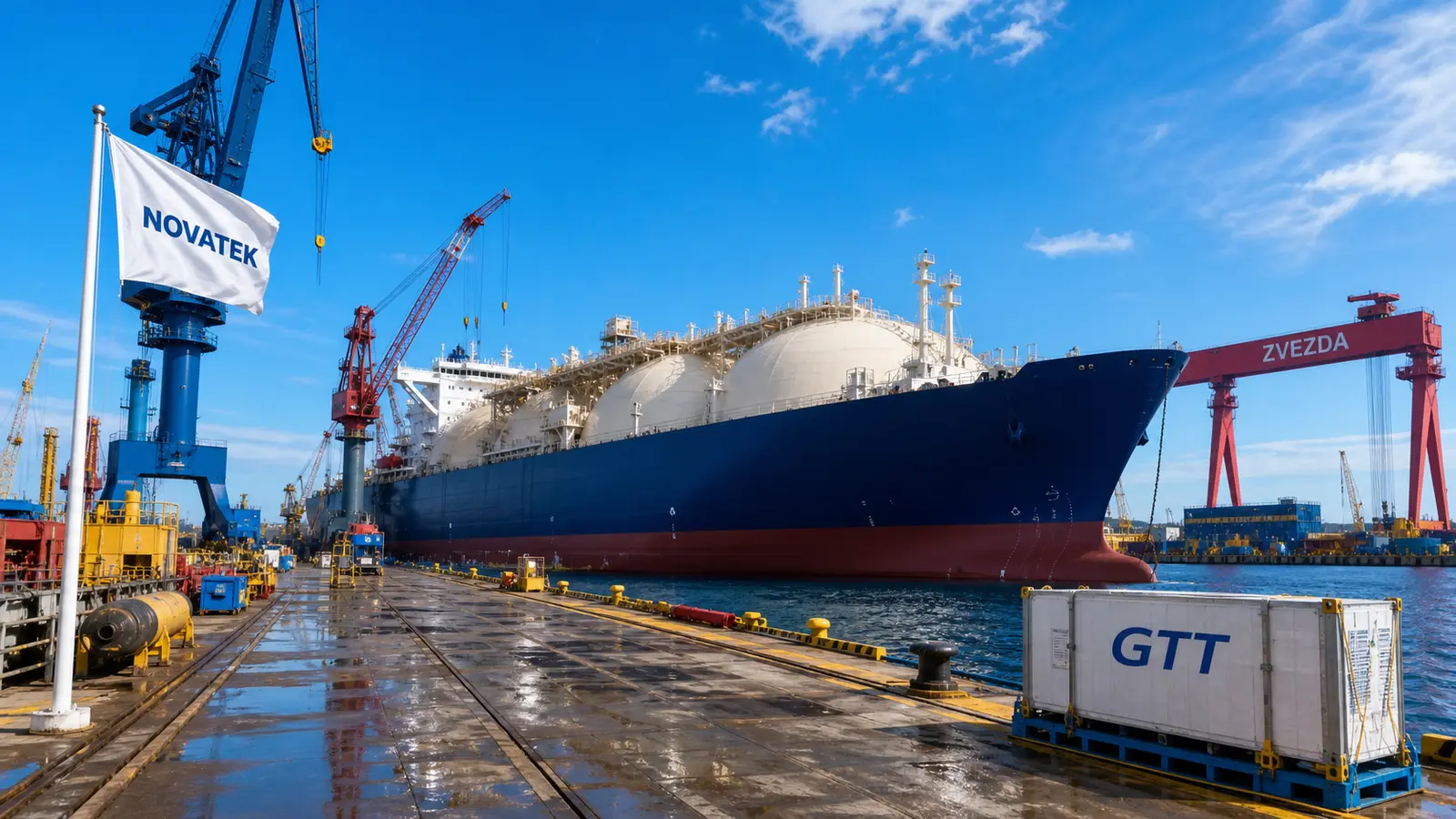
An ice-class liquefied natural gas carrier is more than a ship. It is a floating combination of cryogenic engineering, heavy shipbuilding, propulsion, navigation, insurance, port services and long-term energy contracts. For Russia's Arctic projects, that combination determines whether a multibillion-ruble plant can sell throughout the year or must wait for a short navigation season. The business challenge is therefore not simply to launch a domestically designed vessel. It is to create an industrial system capable of repeating, operating and financing a specialized fleet.
Vzglyad reported on July 7, 2026 that Prime Minister Mikhail Mishustin had announced the design of a fully Russian LNG carrier intended to support strategic Northern Sea Route traffic. The target is the Arc7 class, built to transport chilled gas and move independently through severe ice. The source described domestic progress as technically difficult but achievable, while identifying membranes and low-speed marine engines among the decisive gaps.
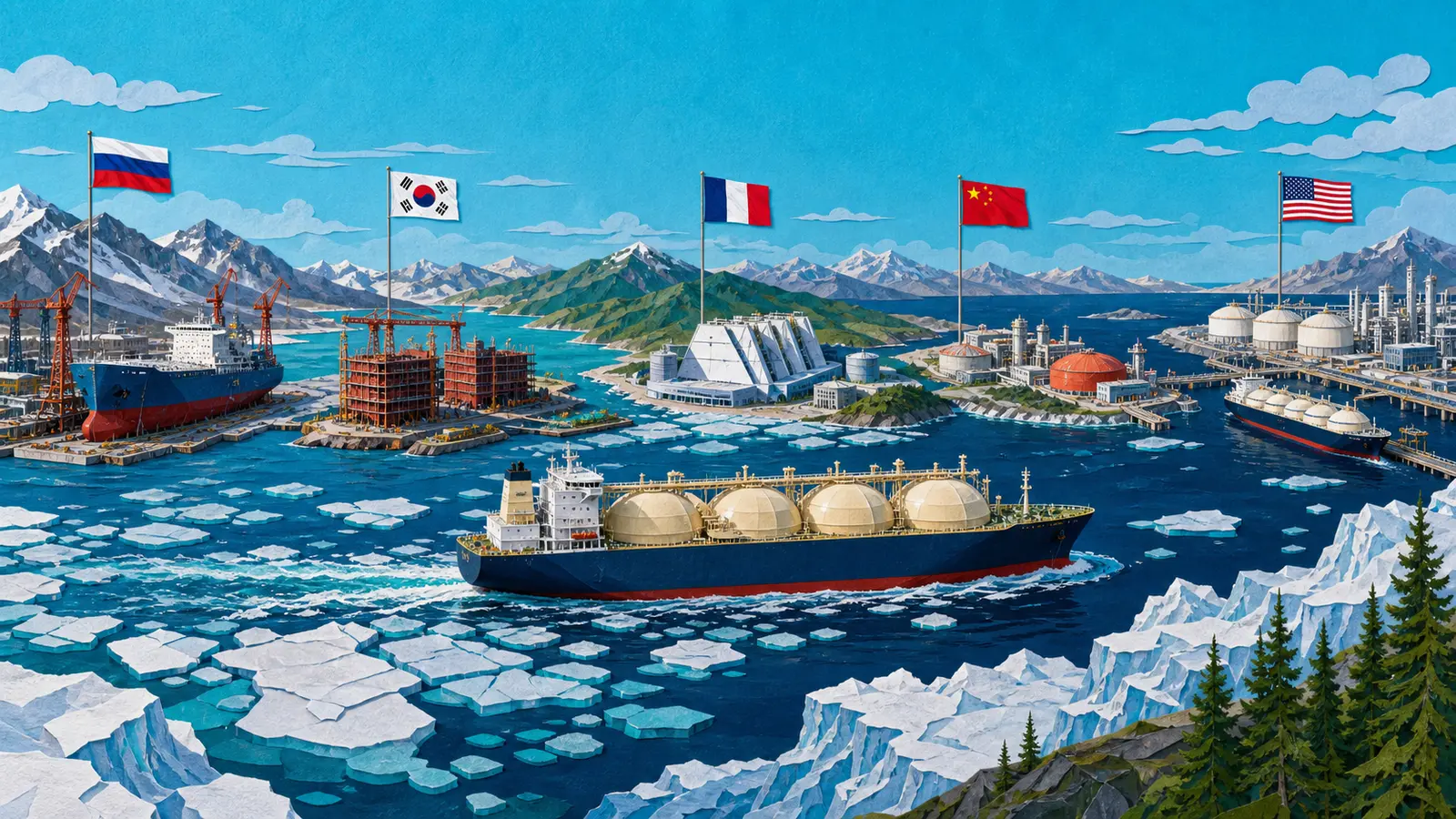
The program sits inside an international history. Projects in Russia initially relied on shipbuilding packages from South Korea and membrane technology associated with France. Future cargo demand increasingly depends on terminals in China, while competition with the United States shapes the commercial and sanctions environment. A credible strategy must connect all five dimensions without assuming that any former supplier, buyer or rival will behave predictably.
Why Arc7 is a business system, not a single product
A conventional LNG carrier already has to keep natural gas near minus 162 degrees Celsius, manage boil-off, protect cargo containment and meet demanding safety rules. Arc7 adds a hull, propulsion and control system able to work in ice that would stop ordinary vessels. Weight, power consumption, cargo capacity and ice performance interact. Improving one parameter can raise cost or reduce performance elsewhere.
The asset also has little value in isolation. A ship needs a compatible loading terminal, ice information, rescue capability, trained crews, spare parts and a destination able to receive the cargo. The carrier's schedule must align with production trains and sales contracts. If any link fails, an expensive vessel can wait while an expensive plant reduces output.
That is why localization cannot be measured only by the percentage of domestic components. The strategic test is whether the national industrial base can design, certify, manufacture, integrate, maintain and improve the vessel throughout its life. A locally fabricated hull with an irreplaceable imported subsystem is not fully autonomous. Conversely, importing a noncritical commodity part may be reasonable when several reliable suppliers exist.
The three constraints behind the headline
The source framed the challenge as three parallel tasks: find durable buyers for sanctioned LNG, master large-scale LNG plant construction, and secure a fleet of specialized carriers. They are financially interdependent. Ships cannot be financed comfortably without cargo; a plant cannot achieve utilization without ships; and customers hesitate to sign if delivery is uncertain.
Management therefore needs one portfolio model rather than three separate project plans. It should map production by month, vessel availability, ice speed, terminal slots, maintenance windows, customer nominations and payment routes. The model must show which constraint binds in each season. Adding a ship when terminal access is the bottleneck may not increase delivered volume.
The same logic affects sequencing. A prototype vessel can validate technology before the third production train is complete. A receiving arrangement can be contracted before every ship is delivered. But commitments should contain gates so capital is not locked into one leg while another remains speculative. Integrated milestones reduce the risk of three individually impressive assets that do not form a working chain.
Cryogenic membranes: a thin layer with enormous consequences
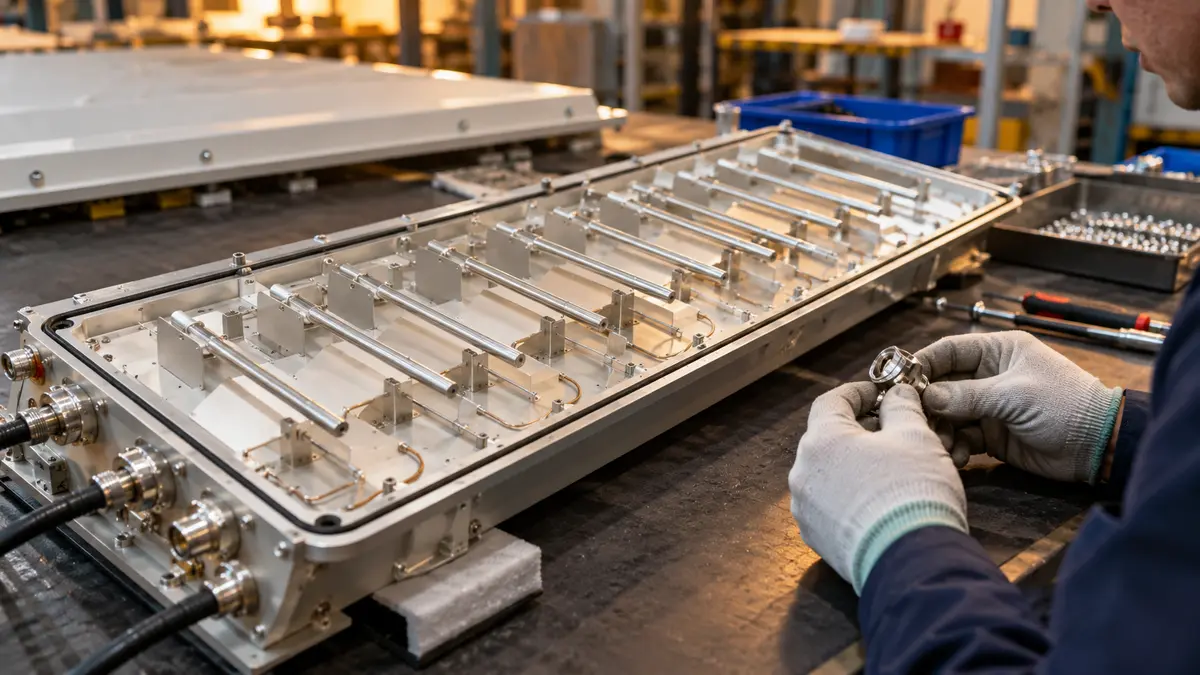
Membrane containment systems create a barrier between extremely cold LNG and the ship's structure. They must tolerate thermal contraction, repeated loading cycles, vibration and hull movement while remaining tight. Insulation controls heat ingress and boil-off. Installation precision matters because a small defect can create safety and availability problems far larger than the component itself.
Vzglyad noted that cooperation with Gaztransport & Technigaz, commonly known as GTT, had ended and that a Russian membrane system had achieved accreditation. Accreditation is an essential threshold, not the end of industrialization. The next questions concern repeatable manufacturing yield, installation time, inspection methods, repair procedures and performance across many voyages.
A domestic membrane program should be managed through traceability. Materials, welds, bonding, panels and inspection results need digital records tied to a specific location in a specific hull. Early ships should receive additional sensors and planned inspections. Lessons must return to design and production quickly rather than remain in separate contractor reports.
Marine engines and propulsion determine economic performance
Low-speed engines and propulsion equipment are another critical gap. An Arc7 carrier needs dependable power in open water and ice, but excess installed power increases capital cost, fuel consumption and maintenance. Propeller configuration, electric systems, ice loads and hull form have to be optimized together. The vessel must also retain safe redundancy after a component failure.
Domestic production is only part of engine independence. Operators need controls, bearings, fuel systems, condition monitoring, service tools and trained technicians for decades. A design that can be assembled but not overhauled locally shifts the dependency into the operating phase. Spare-part production and repair capacity should therefore begin before fleet delivery accelerates.
Efficiency affects market competitiveness. A carrier that burns more fuel or carries less cargo imposes a cost on every delivered unit of LNG. Engineering choices should be evaluated through lifetime delivered cost, not only the price of the first vessel. Reliability, ice speed and maintenance days can outweigh a cheaper construction contract.
What the Zvezda learning curve must accomplish
The Zvezda shipyard was still developing when the first Arctic LNG fleet decisions were made. South Korean yards supplied shipbuilding packages and expertise under a model intended to increase Russian localization with each hull. Sanctions interrupted that sequence. According to the source, kits reportedly arrived for only five vessels and French membrane supplies for three.
This history makes the production learning curve especially valuable. The first domestically integrated ships will take longer and expose interface problems. Management should protect time for root-cause work instead of hiding every variance with overtime. Repeated blocks, standardized work instructions and stable supplier interfaces are how one expensive prototype becomes a series.
Useful shipyard indicators include engineering changes after design freeze, block rework, installation hours per membrane area, cable and pipe completion before launch, commissioning defects and supplier on-time delivery. A headline percentage complete can conceal unfinished systems. Milestone payments should depend on verified system readiness, not only visible steel.
From Alexey Kosygin to a repeatable fleet
The first carrier in the reported series, Alexey Kosygin, was delivered to Arctic LNG 2 at the end of 2025. Konstantin Posyet followed, and a third vessel was expected by the end of 2026. Mishustin said two had been built and three more serial domestic LNG carriers were planned for commissioning over the next several years.
Each ship should function as a learning platform. Data from ice resistance, power use, boil-off, cargo operations, equipment alarms and maintenance can be compared with the design model. Deviations should have owners and deadlines. A fleet data standard enables engineers to see whether a fault is isolated or systematic.
Series production also needs configuration discipline. Continual improvement is useful, but uncontrolled changes can leave every ship with different spares and procedures. Modifications should enter defined blocks, with documentation and training updated together. The goal is not to freeze a weak design; it is to improve without destroying fleet commonality.
Fleet capacity must match production and ice seasonality
NOVATEK originally ordered 21 Arc7 carriers for three Arctic LNG 2 trains: six from a South Korean yard and 15 associated with Zvezda. Two production trains with stated capacity of 13.2 million tonnes per year had been launched when the source was published. The timing of a third train remained uncertain.
Required fleet size depends on round-trip duration, loading and unloading time, maintenance, ice conditions and utilization. A simple annual cargo division is insufficient. Winter voyages take longer, disruptions cluster, and a missed terminal window can propagate through the schedule. Planners need a discrete vessel model with realistic buffers.
Too few carriers strand production; too many create idle capital and fixed costs. Flexibility may come from transshipment, seasonal use of conventional carriers in easier waters, chartering where legally and technically possible, or phased ship delivery. The optimal fleet is one that supports reliable contracted volume under stress, not the maximum number announced.
The customer side is as important as the shipyard
A technically successful carrier does not create revenue unless a buyer can receive and pay for its cargo. The source said initial deliveries from the first two Arctic LNG 2 trains became possible after a Chinese terminal was designated for reception. That arrangement illustrates the importance of compatible terminals, commercial acceptance and protected payment procedures.
Customer concentration, however, can move bargaining power away from the producer. A portfolio strategy should seek several buyers, contract lengths and pricing structures where feasible. It must also recognize that sanctions, shipping rules and financing can affect an intermediary even when the end customer wants the gas.
Commercial teams should coordinate with fleet planners. Contract flexibility over destination and timing has operational value, while strict delivery obligations require more spare capacity. The cost of that flexibility belongs in price negotiations. A cheap contract that creates expensive logistical rigidity may be less profitable than a lower headline volume with workable nominations.
Competing with American LNG means competing on delivered reliability
The source linked persistent restrictions to American leadership in global LNG exports. Industrial strategy should not depend on predicting when political pressure will disappear. It should focus on the variables a producer can influence: plant uptime, fleet availability, shipping cost, contract credibility and the ability to serve markets through disruption.
American cargoes often benefit from flexible destination clauses and a broad conventional shipping market. Russian Arctic projects have a shorter northern route to parts of Asia but require specialized ice-class tonnage for much of the year. The competitive comparison changes by season, destination, freight rate and terminal access.
Delivered cost should include production, liquefaction, financing, vessel capital, fuel, boil-off, ice support, insurance, transshipment and expected delay. It should also include a risk premium for payment and regulatory uncertainty. A transparent cost bridge helps management see whether an engineering improvement, a faster voyage or a contract change creates the greatest value.
Finance the chain, not isolated assets
Arc7 vessels require large upfront capital and long payback periods. Traditional project finance works best when lenders can see stable cargo, predictable cash and enforceable contracts. Uncertainty around buyers, sanctions or technology increases required returns and may shorten available maturities precisely when the asset needs longer funding.
A financing structure can combine sponsor equity, shipyard milestones, long-term charter revenue, export or state support, insurance and reserve accounts. Public support may be justified by spillovers into engines, materials and shipbuilding, but it should remain tied to measurable capability and delivery. Funding cost overruns without diagnosis weakens incentives.
Currency and interest exposure require explicit treatment. Revenues may reference global gas prices while construction and operating costs arise in several currencies. Stress tests should combine weaker LNG prices, longer voyages, delayed ship delivery and higher rates. Testing one risk at a time underestimates the way problems arrive together.
Supplier strategy: localize bottlenecks before commodities
A rational localization plan starts with components that can stop the vessel and have few alternative sources. Cryogenic containment, propulsion controls, specialized steel, pumps, compressors, bearings and certification tools deserve different treatment from widely available consumables. Management should score each item by technical criticality, supplier concentration, replacement time and lifecycle support.
For the highest-risk items, the answer may include domestic development, a qualified second source, strategic inventory and redesign for interchangeability. Stockpiling alone only postpones a problem if a component cannot be reproduced. Domestic production alone is also insufficient if the producer depends on one imported machine or material.
Supplier contracts should reward verified quality and knowledge transfer, not just nominal localization. Shared test facilities and long purchase commitments can justify investment. At the same time, shipyards need exit provisions and access to technical data if a supplier repeatedly fails. Resilience comes from options, not from substituting one monopoly for another.
Certification and safety cannot be compressed
LNG combines cryogenic hazards, flammable gas and harsh navigation. Classification societies, regulators, operators and terminal owners need evidence that systems work in normal and abnormal conditions. A rushed certificate can damage the credibility of the entire program if early service reveals avoidable failures.
Testing should progress from materials and components to integrated systems, harbor trials, open-water trials and controlled ice performance. Emergency shutdown, gas detection, ventilation, power loss, collision damage and evacuation procedures require validation. Digital simulations help prioritize cases but do not replace physical evidence.
Safety culture is also commercial infrastructure. Insurers, financiers, crews and customers price confidence. Transparent incident reporting and corrective action can protect trust better than minimizing problems. The aim is not to claim that a new platform has no defects; it is to demonstrate that defects are found, understood and prevented from recurring.
Workforce and service capacity determine scale
Specialized ships need naval architects, welding specialists, cryogenic installers, automation engineers, commissioning teams and Arctic crews. A short project can hire scarce experts temporarily, but a fleet program needs a pipeline. Universities, technical colleges, suppliers and the shipyard should align curricula with real production tasks.
Training should use the same configuration data and procedures deployed on vessels. Simulators can prepare crews for ice maneuvering, propulsion faults and cargo emergencies. Maintenance technicians need access to test rigs and representative components before ships enter service. Certification of people should be renewed through demonstrated practice.
Retention matters because tacit knowledge accumulates across hulls. Stable teams learn how designs translate into steel, cables and insulation. Productivity can collapse when each vessel starts with a new contractor chain. Long-term workforce planning therefore belongs in the capital model, not in a separate human-resources appendix.
A management scorecard for the Arc7 program
Evidence that industrial independence is becoming real
- Design maturity: critical interfaces are frozen before construction and late engineering changes decline from hull to hull.
- Domestic bottlenecks: membranes, propulsion and control systems pass repeatable production and service tests rather than one demonstrations.
- Shipyard learning: rework, commissioning defects and labor hours fall while verified system completion improves.
- Fleet availability: vessels achieve planned ice speed, cargo capacity, boil-off performance and maintenance days.
- Commercial coverage: contracted demand, terminal access and payment routes support the production schedule under stress.
- Lifecycle readiness: spares, repair centers, training and technical data are available before warranties expire.
- Financial resilience: the integrated chain can withstand delayed delivery, lower prices, longer voyages and higher financing costs.
This scorecard prevents a ceremonial launch from becoming the sole definition of success. A ship can leave the dock while the industrial system remains fragile. Conversely, early cost and schedule pressure may be acceptable when it creates verified capability that improves every later hull.
What success would mean for the wider industrial base
Mastering Arc7 technology can create benefits beyond LNG. Ice-strengthened hulls, high-power propulsion, cryogenic pumps, controls, sensors, specialized steel and complex project integration have uses in other ships and energy facilities. Suppliers can spread fixed research costs across adjacent markets if standards and intellectual property are managed well.
The program can also deepen domestic demand for machine tools, testing equipment and engineering software. Those capabilities are less visible than a launched carrier but often determine whether the next platform can be designed faster. Procurement should avoid locking improvements inside one contractor when broader qualification is safe.
Spillovers are not automatic. A bespoke component with no transferable design may remain permanently expensive. Industrial policy should identify which modules can become families of products, encourage common interfaces and measure external sales. The best strategic project creates an ecosystem rather than an isolated monument.
A realistic path from prototype to Arctic fleet
Russia's Arc7 ambition has a clear strategic logic: Arctic LNG plants require ships that the global market does not produce in large numbers, and external technology access can be interrupted. Yet urgency does not remove engineering sequence. Membranes must survive cycles, engines must be serviceable, yards must learn, crews must train and customers must receive cargo.
The strongest plan treats these as one operating chain with staged commitments. It learns aggressively from Alexey Kosygin, Konstantin Posyet and the next hulls; protects safety and configuration discipline; localizes true bottlenecks; and finances capacity against realistic demand. It also retains buffers for ice, maintenance and political disruption instead of assuming perfect utilization.
A fully Russian carrier will be an important milestone, but industrial independence begins after the launch. It is proven when the next vessel can be built with fewer defects, when a failed component can be repaired domestically, when the fleet keeps plants moving through winter, and when customers pay for reliably delivered gas. That repeatabilitynot the nationality of a single hullis the durable competitive asset.


















ADI News
Leave a comment