
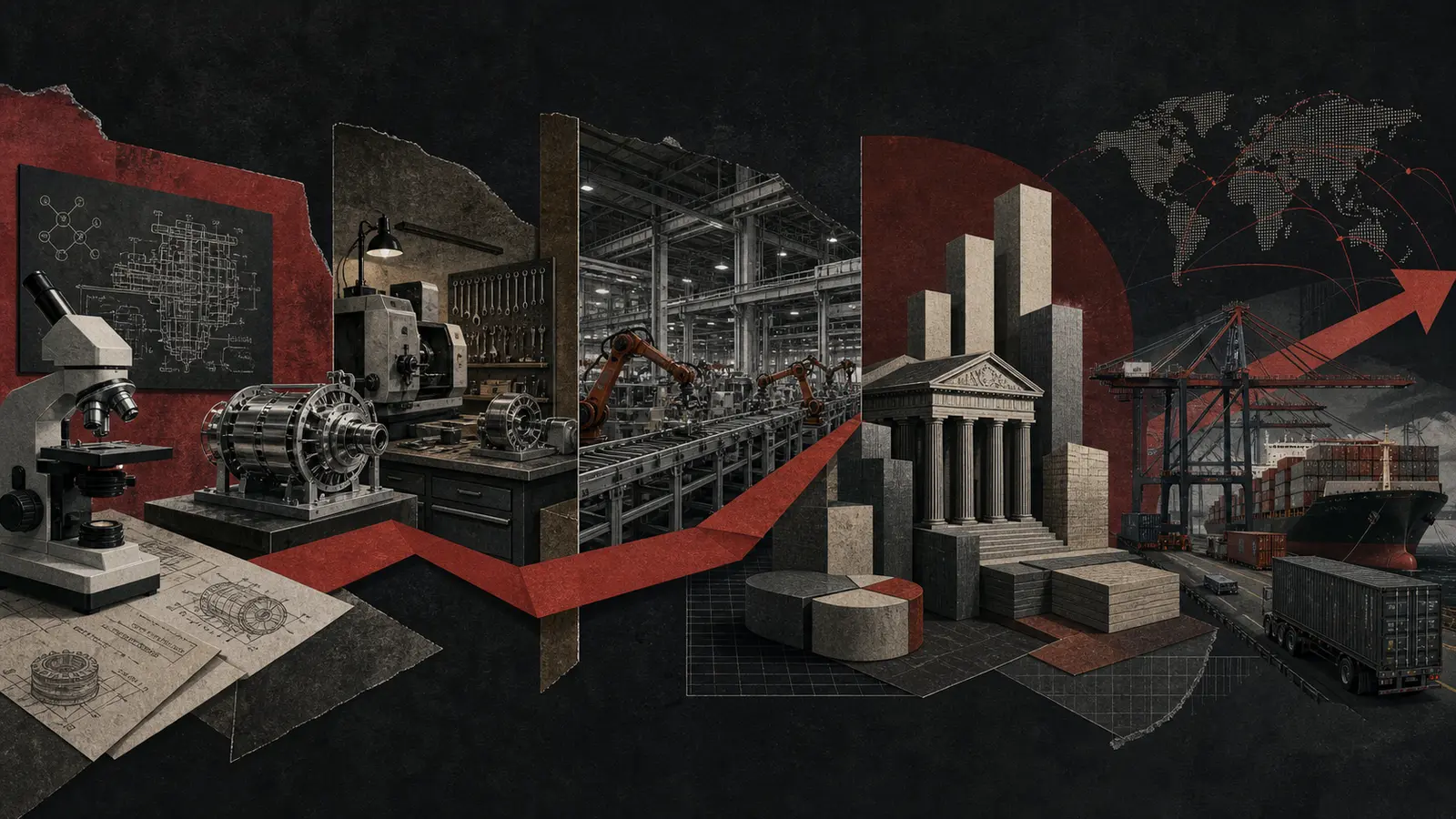
Innovation was one of the most frequently used words on the 2025 business agenda, but company leaders faced a more practical question: how does a new idea become a repeatable product, durable revenue and an export contract? That gap between invention and execution was debated in June at the St. Petersburg International Economic Forum. A report by Anastasia Morozova and Alexander Volobuev for Expert on the “Consonance of Growth” strategic session offered an unusual view of commercialization through the eyes of scientists, entrepreneurs, development institutions, banks and exporters at the same time.
The central lesson reaches far beyond a conference hall. Technology becomes a business not when a laboratory produces an impressive prototype, but when several organizations align the objective, risk, financing, manufacturing, demand and accountability for the result. For Russia, where companies are simultaneously replacing unavailable inputs, renewing equipment and looking for new markets, the quality of that coordination can become a competitive advantage in its own right.
Innovation starts with a measurable objective, not a tool
Alexander Kuleshov, rector of the Skolkovo Institute of Science and Technology, or Skoltech, argued that the process should begin by defining a new objective and the path required to reach it. His argument is valuable for corporate governance. A technology matters when it changes what the organization can achieve, not merely when it adds a fashionable instrument to an unchanged process.
Boards therefore need to change the first question they ask. “Where can we use this technology?” almost always produces a collection of pilots. “Which business outcome cannot be improved materially with our existing methods?” creates useful boundaries for discovery. The outcome might involve unit cost, cycle time, reliability, energy consumption, product quality, speed to market or the ability to serve customers in a region where the existing infrastructure is too expensive.
A precise objective disciplines engineers and protects capital at the same time. It allows managers to reject a solution that looks impressive in a demonstration but cannot survive the demands of production. If a plant wants to reduce downtime, the relevant criteria include forecast accuracy, warning time, avoided stoppages and integration cost. If the goal is an exportable product, technical performance must be considered together with certification, service, component availability, localized documentation and delivery economics.
Five questions to answer before the first pilot
- Which operating or customer problem must the development remove?
- Which metric will change, and when can the effect be verified?
- Who owns the outcome after the research stage ends?
- Which manufacturing, regulatory and financial constraints are already known?
- What will the solution look like at serial scale rather than as a laboratory specimen?
These answers do not replace experimentation, but they make it governable. They also create a common language for the researcher, plant manager and credit committee. Without that language, every participant optimizes a different piece: the laboratory pursues novelty, the factory prioritizes stability, the bank protects capital and the sales team accelerates the deal. The project can fail as a whole even while every department reports that its own targets were met.
The hardest transition is from a unique prototype to a routine process
Igor Drozdov, deputy chairman of VEB.RF, distinguished between creating a technology and turning it into a routine operation. Economic value often disappears between those two stages. A prototype may work under the supervision of its inventors, with specially prepared material and in a controlled environment. A serial product must hold its performance when the operator, batch of material, component supplier and loading pattern all change.
Crossing that gap requires roles that rarely become the heroes of an innovation presentation: process engineers, metrologists, quality specialists, procurement teams, safety experts, technical writers and service managers. They translate the inventors’ knowledge into tolerances, control plans, instructions, acceptance procedures and maintenance routines. A program that does not fund this layer remains an expensive experiment, regardless of its scientific sophistication.
The right model does not wait for the technology to become “finished.” Manufacturing should join before the prototype is complete. Plant specialists can identify parts that cannot be produced consistently, materials with unacceptable lead times, new tooling requirements and tests that will extend the schedule. Their early feedback may make the first version look less elegant, but it greatly improves the chance that the second version can become a product.
Commercialization is therefore better understood as a sequence of short loops than as a straight line. Research proposes a principle, the engineering team builds a specimen, manufacturing exposes constraints, a prospective customer tests utility and the financier updates the capital model. Each loop changes both the design and the commercial proposition. Advantage lies in closing the loop quickly without losing sight of the original objective.
Small companies become the system’s rapid adaptation layer
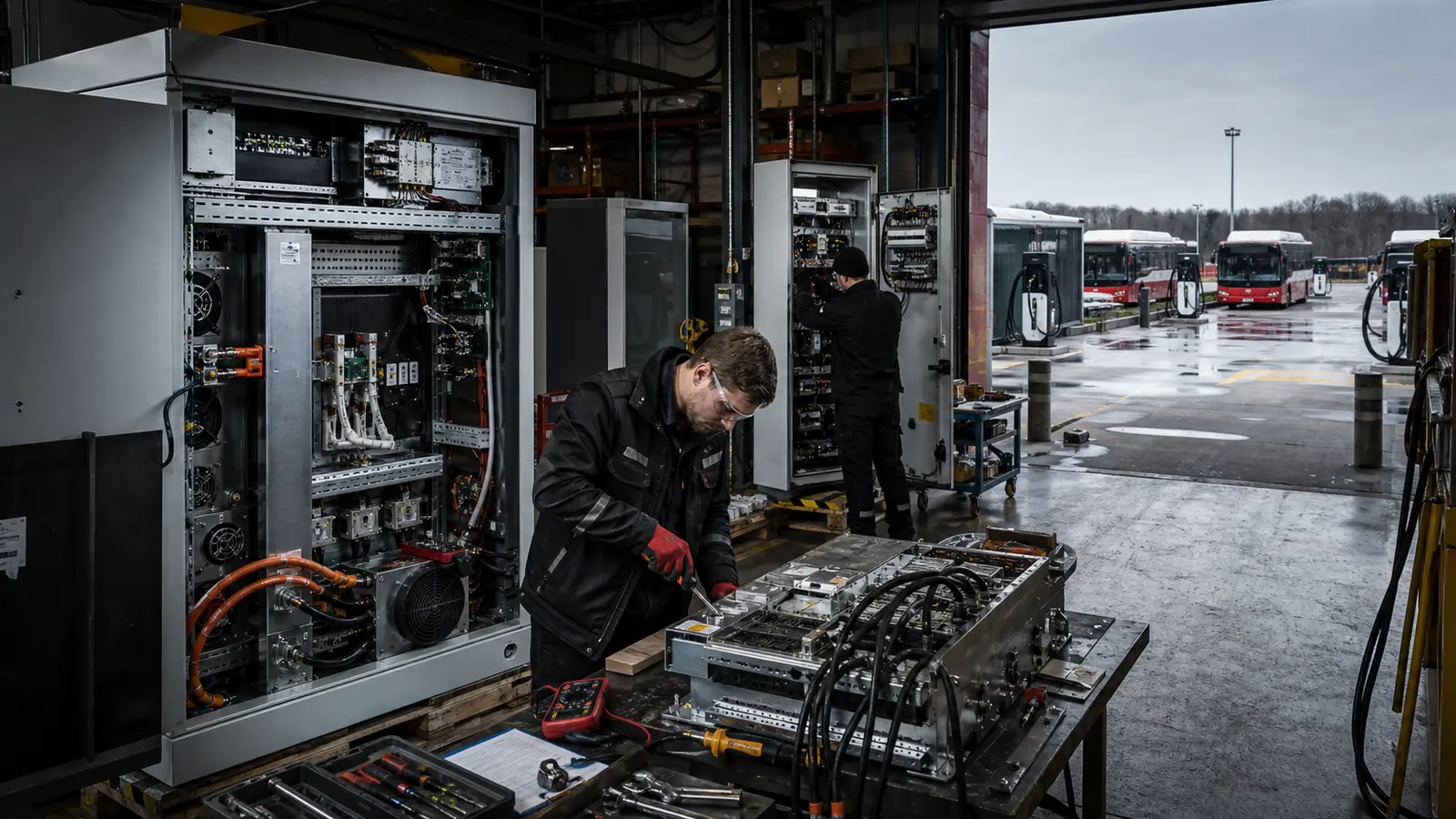
Dmitry Petrov, chief executive of charging-station manufacturer Yablochkov, emphasized the speed of small enterprises. In a large organization, a change of direction may pass through budgets, committees and a procurement calendar. A compact engineering company can reassign people within days and begin designing for newly visible demand. That agility becomes especially valuable when logistics chains, technical requirements or purchasing rules shift.
Speed does not eliminate vulnerability. A founder may risk capital, reputation and personal time at once. A mistaken demand forecast or a delayed payment can halt development even when the underlying technology is promising. A functioning ecosystem should therefore do more than issue a general subsidy. It should reduce the specific risks of transition by providing access to testing, a real customer, guarantees, equipment leasing and working-capital finance.
Alexander Isaevich, chief executive of SME Corporation, used unmanned aviation to illustrate the role of specialized smaller manufacturers. Official data published by SME Corporation in March 2025 confirmed that more than 70% of unmanned-system manufacturers were small or medium-sized businesses: 619 out of 889 enterprises. The number had nearly doubled from 2022, while employment in the segment was estimated at about 7,200 people.
The figures show that smaller businesses can provide core technological specialization rather than peripheral labor. It is inefficient for a major corporation to develop every sensor, communications module and software component internally. A network of specialist firms offers more design options and responds faster to user feedback. Yet such a network survives only when purchasing rules are transparent, intellectual property is protected and payment timing is predictable.
A large customer must design a market, not merely select a supplier
Conventional procurement begins after the product has been fully specified. That is too late for an emerging technology: a complete offer may not yet exist, and a rigid specification often preserves the attributes of the solution that should be replaced. A more productive process starts with the function and performance boundary. The customer states the result it needs, the constraints that cannot be breached and the method by which value will be tested.
A staged route can then be used. Several teams first receive access to a test environment. The second stage compares verified performance rather than presentations. The strongest candidate then receives a limited serial order with explicit quality and service requirements. Finally, expansion is tied to measured effect. This sequence reduces the risk of buying an immature product while giving the developer evidence of demand that can support a capital raise.
The corporate customer gains more than a lower price. It creates a reserve of suppliers, gains access to narrow expertise and can change product architecture faster. The smaller company receives a visible route to growth. A development institution can see exactly where its guarantee or concessional loan removes a constraint. Coordination then stops being a slogan and becomes a system of contracts, tests and reciprocal obligations.
Capital must match the stage of risk
Nikolay Tsekhomsky, first deputy chairman of VEB.RF, referred to more than 80 megaprojects worth about RUB 20 trillion being implemented with the institution’s participation. The scale matters, but so does the implied distinction between funding proof of concept, financing a first production line and supplying capital for a large infrastructure asset. One instrument cannot serve all three stages equally well.
At the beginning, an investor accepts technological uncertainty. The amount is relatively limited and control focuses on technical milestones. Once a pilot operates, demand risk becomes dominant, and the project needs a contract showing that a customer is prepared to pay. Construction of serial capacity shifts attention toward schedule, equipment cost, suppliers and the team’s ability to manage execution. Export adds payment, logistics, certification and service-network risks.
Dmitry Mazepin, a member of the governing bureau of the Russian Union of Industrialists and Entrepreneurs, connected entrepreneurial growth to the availability of bank liquidity. Yet access to money cannot be judged by the interest rate alone. A technology company is sensitive to tenor, the grace period before revenue, collateral requirements and the treatment of intangible assets. A loan that amortizes quickly can weaken an otherwise viable project when the industrial cycle is longer than the banking schedule.
VEB.RF chairman Igor Shuvalov described syndicates that could bring together dozens of commercial banks. In that structure, a development institution does not displace the market; it helps allocate risk and creates a standardized framework. The company receives a larger and longer resource, commercial lenders gain a clear division of responsibilities, and public support does not have to concentrate the entire exposure in one balance sheet.
A capital map for an industrial technology
- Research: a grant or internal budget pays to test the scientific principle.
- Prototype: venture or strategic partner capital absorbs engineering uncertainty.
- Pilot: the customer, developer and development institution share the cost of real-world testing.
- First series: guarantees, equipment leasing and a long-term contract enable production assets.
- Scale: a banking syndicate funds a plant and the required working capital.
- Export: insurance, pre-export credit and a service partner reduce external-market risk.
This progression works as a management map rather than a demand for one universal public program. At every stage, the participant best able to assess the relevant risk should take the lead. A project is damaged when it carries bank debt too early, but it can also become dependent on grants when support continues without proof of paying demand.
Export capability begins inside the supply chain
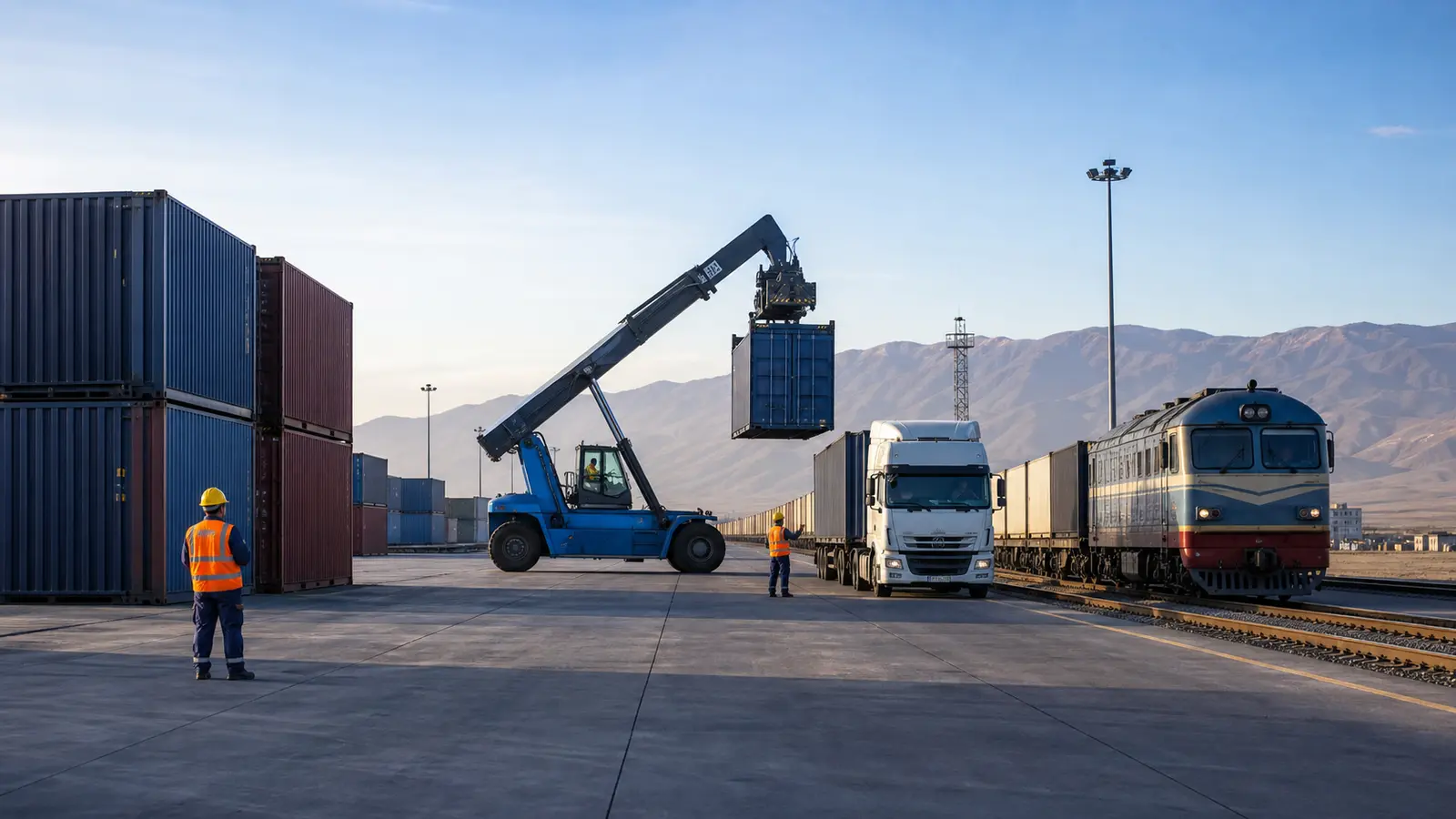
Veronika Nikishina, chief executive of the Russian Export Center, described the economy as one connected system of large, medium and small enterprises. According to the figures cited at the session, large companies generate roughly 90% of export value, while about 90% of exporting organizations by number belong to the SME segment. The two statistics are not contradictory. They describe different layers of the same production network.
A flagship exporter rarely produces a complex offering entirely on its own. Components, software, engineering services, packaging, testing and maintenance are supplied by many partners. Export competitiveness therefore depends not only on the headline corporation but on the quality of its domestic supplier base. If a specialist manufacturer cannot finance growth or demonstrate process stability, that weak link limits the entire chain.
Support institutions should consequently help SMEs qualify for the specifications of major customers rather than simply placing standalone products in a catalog. A supplier may need a production audit, certification, digital data exchange, a clear claims process and a plan for capacity expansion. Export support starts long before a shipment crosses the border; it begins when a company becomes a reliable part of a serial product.
The external customer also tests the strength of collaboration. It does not care which legal entity is responsible for an individual module; it expects one level of warranty and service. The lead supplier therefore needs visibility into second- and third-tier risks, while smaller firms need to understand the end customer’s requirements. A shared quality system is not bureaucratic overhead. It protects the margin and reputation of the whole network.
How management can build a commercialization system
The forum discussion suggests a practical model for a board or owner. The starting point is not the creation of another innovation unit but the appointment of an owner for the business outcome. That executive is accountable for the whole route from problem definition to serial economics. Research, manufacturing and sales retain professional autonomy, but they work against one set of stages and decision criteria.
The portfolio should be divided by the type of advantage it creates, not by the novelty of the underlying technology. Some initiatives lower cost, some protect access to a critical component, some create a new product and others open an export channel. Each group requires a different horizon and risk tolerance. Comparing fundamental research with a factory-automation program on payback time is as misleading as judging a machine tool by the number of experiments it supports.
A governance cycle can use seven gates:
- the problem is supported by data and has an accountable owner;
- the technical principle has been proved in a controlled environment;
- manufacturing has confirmed feasibility and component availability;
- a customer has tested usefulness inside a real operating process;
- first-series economics include quality, service and working capital;
- financing matches the stage and does not create premature debt pressure;
- scale is based on a contract and measured impact.
At each gate, a project can proceed, change or stop. Ending a weak initiative is not a portfolio failure; it releases engineers and capital for a stronger objective. Keeping a pilot alive solely because money has already been spent is more dangerous. That inertia turns an innovation program into a museum of demonstrations.
Metrics that reveal actual progress
Idea and pilot counts are easy to report, but they say little about business impact. Better indicators include the share of projects reaching paid operation, time from proof of principle to first series, quality repeatability, cost of scaling to an additional site, local component share, number of trained operators, revenue from the new product, export margin and order value won by SME suppliers.
The health of coordination should also be measured. Time required to approve an engineering change, payment duration, repeated test cycles, defect rates among newly qualified suppliers and the speed of resolving claims show where the system loses momentum. These figures should not punish the participant who reports a problem first. Early discovery is cheaper than concealment until a serial launch.
Cooperation does not remove conflicting interests; it makes them manageable
Every participant has a different objective. The scientist wants research freedom, the entrepreneur wants a fast market entry, the plant avoids stoppages, the bank protects repayment and the exporter guarantees delivery. Hiding these differences under a broad declaration of partnership only postpones conflict. A functioning ecosystem defines rights to results, price-adjustment rules, quality accountability and exit terms before the technology becomes valuable.
Intellectual property is particularly important. A corporate customer may seek exclusive ownership because it finances testing. A small developer risks losing the foundation of its future business. The parties can compromise through field-of-use licensing, joint ownership of improvements or exclusivity for a limited period. The critical point is to decide before technical success dramatically changes their bargaining positions.
Dependence on one customer presents another risk. An anchor contract can fund the first series, but the requirements of a single corporation may turn a product into a custom project with no broader market. Product architecture should therefore separate a standardized core from customer-specific modules. That design serves the anchor account while preserving the ability to scale.
The 2025 lesson: competitiveness comes from a connected system
The SPIEF 2025 strategic session showed that the gap between science and business cannot be closed by one more fund, laboratory or digital platform. It requires a sequence in which each participant adds what the previous one cannot provide: research contributes new knowledge, engineering creates a workable design, the entrepreneur supplies speed and accountability, the plant delivers repeatability, the customer verifies demand, the bank provides scale and export infrastructure opens the external market.
The practical implication for a company is straightforward. An innovation strategy should be drawn as a map of transitions rather than a list of technologies. Each transition needs a visible owner, admission criteria, a next source of capital, a manufacturing constraint and a customer prepared to test the effect. If one transition has no accountable owner, that is where the project is most likely to stop.
Cooperation cannot guarantee that every development succeeds. It can make mistakes cheaper, learning faster and scaling more predictable. That matters when capital is expensive and resources are limited: companies cannot afford endless demonstrations without a route to serial production. The winner is not the organization with the largest number of pilots, but the network that can turn selected ideas into dependable products, jobs, revenue and long-term export relationships.


















ADI News
Leave a comment